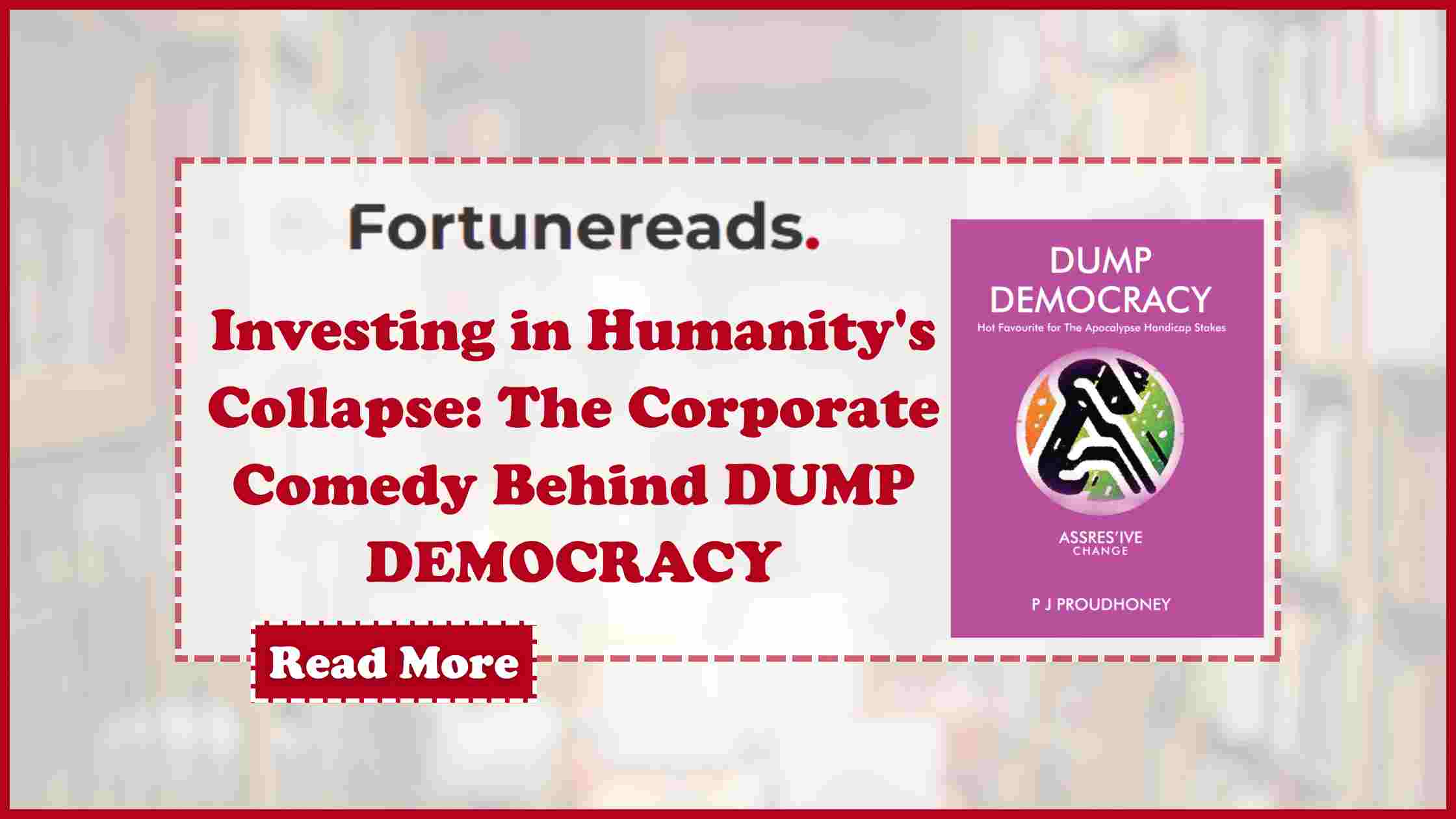
Peter J. Proudhoney’s DUMP DEMOCRACY offers a wickedly clever critique of capitalism’s dark underbelly, using satire to expose how corporate greed thrives amidst global crises. Framed as an investor briefing for the fictional Assertive Change Group, the book presents a grotesquely humorous scenario: what if humanity’s self-destruction was not just inevitable but profitable?
The Assertive Change Group is depicted as a corporation that views societal collapse as a lucrative business opportunity. Its strategic plans to usurp power in the UK and capitalize on the apocalypse are laid out with chilling detachment, parodying real-world corporate indifference to human suffering. Proudhoney’s satire is razor-sharp, highlighting how modern capitalism often operates with similar callousness, prioritizing profits over people even in the face of humanitarian disasters.
Through this fictional investor briefing, DUMP DEMOCRACY draws uncomfortable parallels to contemporary corporate practices. The absurdity lies in how the company’s proposals mirror real-life strategies: exploiting economic downturns, environmental degradation, and political instability for financial gain. Proudhoney amplifies this absurdity to expose the ethical void at the heart of profit-driven systems. The grotesque humor arises from the unsettling realization that such scenarios are not entirely fictional—corporations have historically profited from wars, environmental disasters, and public health crises.
One of the book’s most striking elements is its commentary on disaster capitalism. The concept that crises can be monetized is presented with ruthless clarity. The Assertive Change Group’s investors are promised high returns not despite global catastrophe but because of it. This satirical framing forces readers to confront how deeply entrenched capitalist interests are in perpetuating systemic vulnerabilities. Proudhoney suggests that for some, the collapse of civilization is not a tragedy but a business model.
Proudhoney also skewers the corporate world’s penchant for buzzwords and empty rhetoric. The investor briefing is filled with corporate jargon, strategic plans, and risk assessments, all designed to sanitize the brutal reality of what the company is proposing. This mirrors how real corporations often use polished language to mask unethical practices, turning exploitation into an abstract financial strategy. The satire here is both hilarious and horrifying, as it reflects the disconnection between corporate speech and the human consequences of business decisions.
Despite its dark humor, DUMP DEMOCRACY carries an undercurrent of urgency. Proudhoney’s exaggerated portrayal of corporate greed serves as a cautionary tale about the consequences of unchecked capitalism. The book challenges readers to consider the moral implications of a system that incentivizes exploitation and rewards apathy toward global suffering.
Moreover, the book implicitly critiques the passive role of the public in enabling such systems. The satire extends beyond corporations to include society’s complacency. By presenting humanity as both the product and the consumer of its own downfall, Proudhoney highlights the cyclical nature of systemic failure. The grotesque comedy forces readers to question their complicity in sustaining a system that profits from their potential demise.
In conclusion, DUMP DEMOCRACY is more than just a satirical novel; it is a bold, unflinching examination of capitalism’s darkest tendencies. Through the absurd yet eerily familiar lens of the Assertive Change Group, Proudhoney invites us to laugh at the madness of it all—and then to reflect on the uncomfortable truths hidden beneath the punchlines.