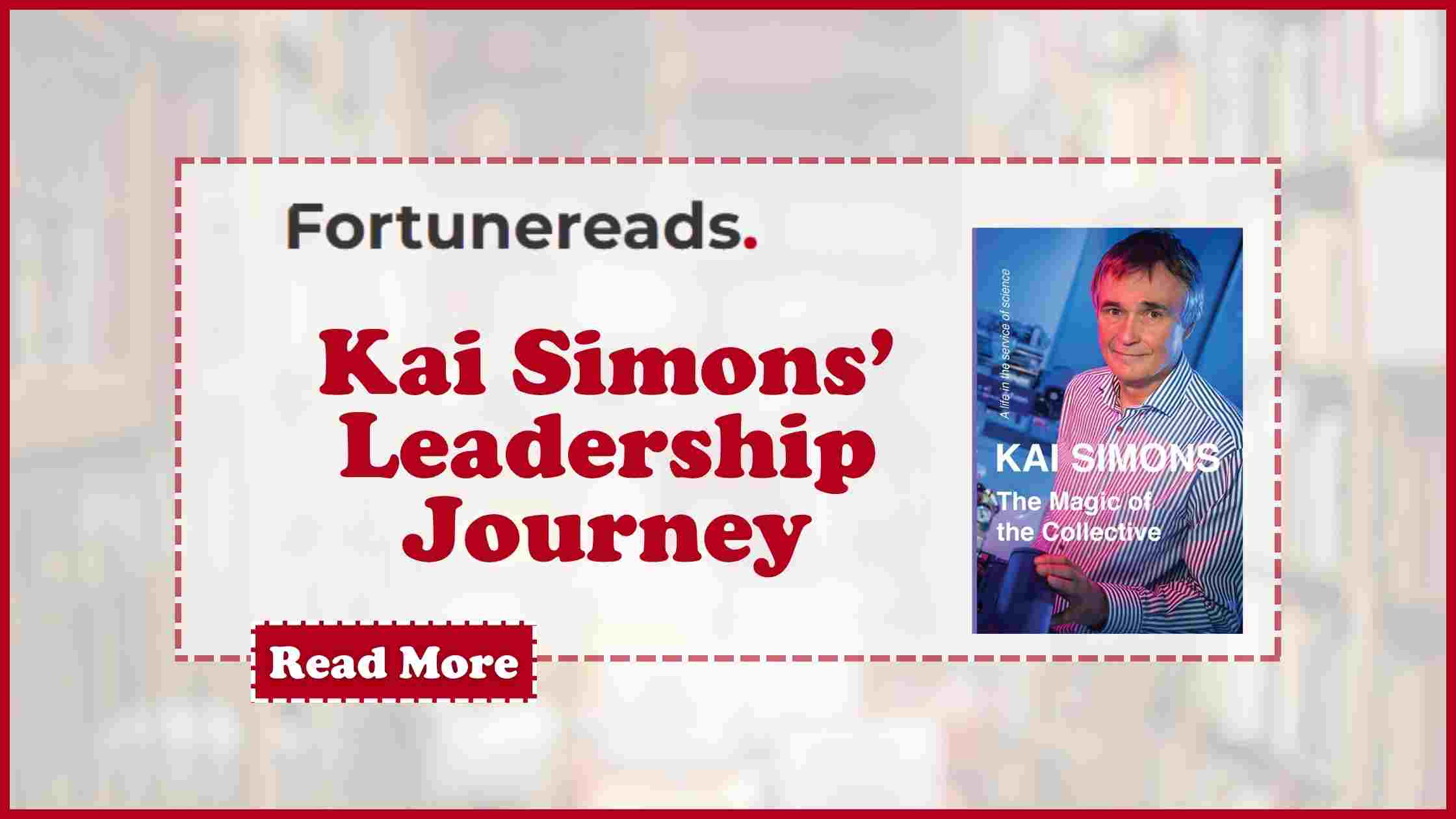
Kai Simons’ career as a leader in science, particularly during his time at the Max Planck Institute of Molecular Cell Biology and Genetics, offers invaluable insights into the challenges and rewards of heading major research institutions.
In “The Magic of the Collective: A Life in the Service of Science,” Simons shares his reflections on leadership, highlighting the importance of fostering collaboration, building diverse teams, and creating environments that encourage innovation.
His leadership philosophy was shaped by his early experiences in competitive, individualistic environments where scientists worked in isolation. At Rockefeller University in New York, Simons observed how researchers were driven by personal achievement rather than collective goals, often leading to inefficiencies and missed opportunities for groundbreaking discoveries. In contrast, Simons’ leadership at the Max Planck Institute was defined by a commitment to fostering teamwork and interdisciplinary cooperation.
When Simons founded the Max Planck Institute in Dresden in the late 1990s, he saw an opportunity to create a research environment that prioritized collaboration over competition. His vision was to bring together scientists from different disciplines—biology, chemistry, physics—and encourage them to work together on complex biological problems.
Simons believed that the most innovative solutions emerged when diverse perspectives were integrated, allowing researchers to approach challenges from multiple angles.
Simons understood that leadership also involved creating an inclusive, supportive environment where every team member felt valued. He placed great emphasis on mentorship, ensuring that younger scientists had access to experienced researchers who could guide them in their work.
Simons’ leadership style was not about top-down control but about empowering others to take ownership of their projects and explore new ideas without fear of failure.
One of the most significant challenges Simons faced as a leader was navigating the practicalities of funding and infrastructure. When he established the Max Planck Institute, Germany had recently undergone reunification, and Dresden, located in the former East Germany, was undergoing a period of rapid transformation. Simons had to secure funding for the institute at a time when resources were being stretched to support the rebuilding of the region’s infrastructure.
However, he successfully advocated for long-term investments in science, recognizing that sustained funding was essential for fostering innovation.
Simons also reflects on the importance of intellectual humility in leadership. He believes that scientists, and leaders in particular, must be willing to admit when they are wrong and to learn from their mistakes. This will foster a culture of continuous learning and improvement, aiming to push the boundaries of knowledge. Simon’s commitment to self-correction and openness to new ideas fosters collaboration and encourages researchers to take risks and explore unconventional approaches to their work.
Another critical aspect of Simons’ leadership journey was his focus on diversity. Under his leadership, the Max Planck Institute became known for its international and interdisciplinary teams, drawing researchers from all over the world. Simons actively sought to create an environment that was welcoming to scientists from different backgrounds, ensuring that the institute benefitted from a wide range of ideas and approaches.
The rewards of Simons’ leadership were clear in the success of the Max Planck Institute, which quickly became one of the leading research institutions in molecular cell biology. The collaborative culture he cultivated allowed the institute to make significant contributions to the field, particularly in areas such as cell membrane research and lipid rafts. Simons’ ability to build a cohesive, innovative team demonstrated the power of collective effort in driving scientific progress.
In conclusion, Kai Simons’ leadership journey offers valuable lessons for anyone leading a research institution or working in science. His focus on collaboration, mentorship, intellectual humility, and diversity created an environment at the Max Planck Institute where innovation thrived.
As Simons reflects in The Magic of the Collective, leadership is not just about guiding research. Instead, it is about fostering a culture where everyone is empowered to work together, explore new ideas, and push the boundaries of knowledge.
Get your copy on Amazon: https://www.amazon.com/dp/1917007027.