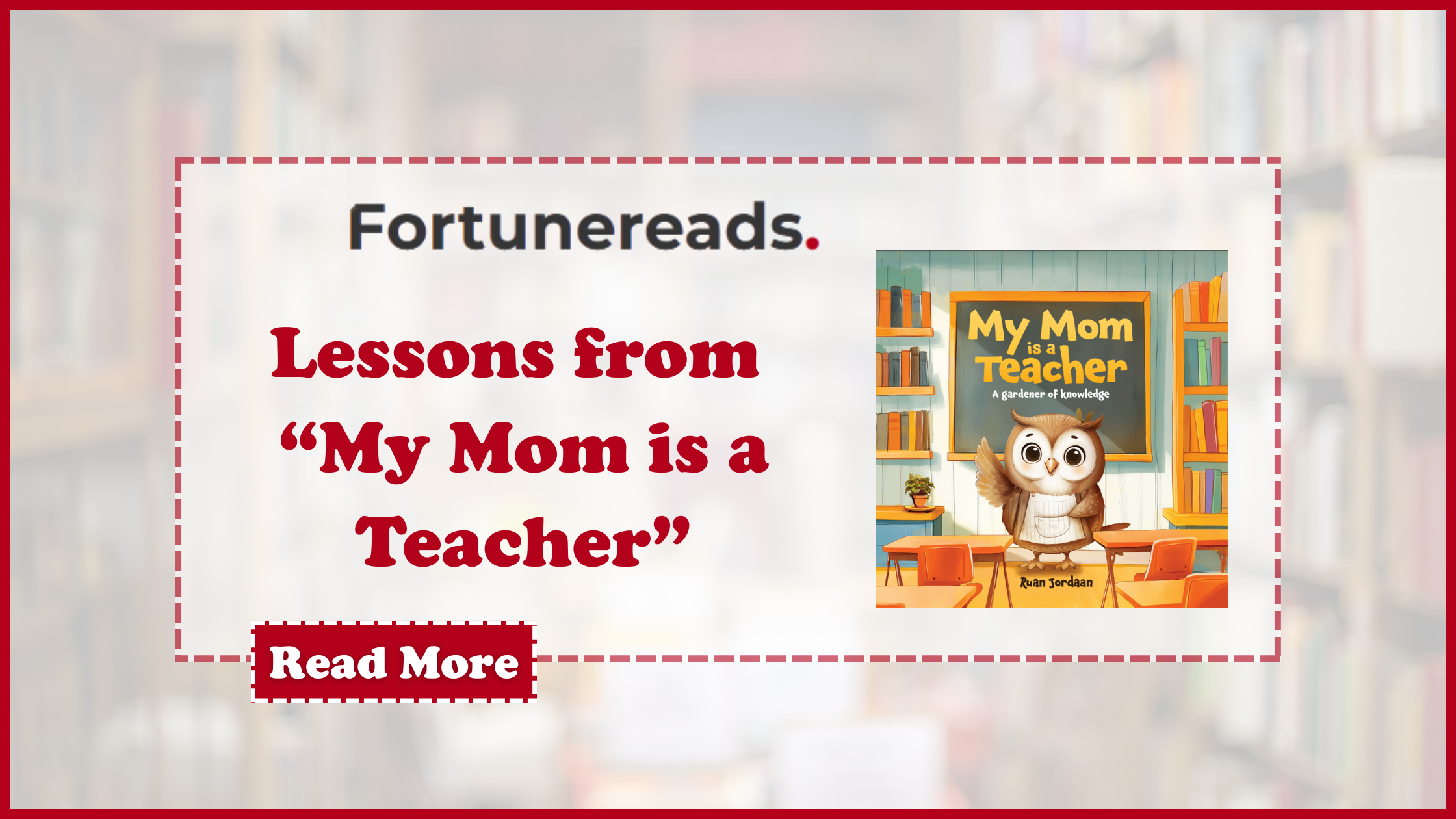
A day at home might seem worlds apart from a day in the classroom. But as My Mom is a Teacher by Ruan Jordaan beautifully shows, learning isn’t limited to desks and blackboards; it grows in the everyday moments we share with our children. The book follows a curious child whose mother, a teacher, explains her work through simple, relatable activities. Everyday experiences such as cooking, sorting and gardening become part of the story’s charm and offer practical ideas families can use at home.

Baking cookies, for example, becomes a way to talk about sequencing steps, testing ideas, and improving skills, which are the foundations of problem-solving. Parents can turn cooking into an engaging lesson by inviting children to measure ingredients, follow a recipe, or predict what might happen if one step changes. This builds early math and science skills while encouraging patience, creativity, and curiosity. The beauty of this approach is that it mirrors how teachers use practical activities to explain big concepts in ways children can grasp.
The book also compares sorting toys by color or size with how students about grouping and patterns. This simple idea is one of the easiest to bring into a home setting. Whether cleaning after playtime, organising books on a shelf, or even setting the table, sorting teaches children to recognise similarities and differences, spot patterns, and think logically. These skills are essential building blocks for understanding numbers, classification, and problem-solving later on. And just like in the classroom, making it into a game, timing how quickly items can be sorted, or counting the groups, makes learning feel like play.
In My Mom is a Teacher, perhaps the most memorable image is the garden, where watering and tending flowers become a metaphor for how teachers nurture growth. Gardening gives children a hands-on way to explore science: planting seeds, tracking growth, and noticing the effects of sunlight and water can spark rich conversations about nature, biology, and caring for the environment. Children learn to observe, ask questions, and see how small actions create change, an empowering lesson that extends far beyond plants.
What the book captures so well is that learning thrives when it is connected to life. Children are naturally curious, and when parents tap into that curiosity through familiar activities, learning feels less like work and more like discovery. These moments also strengthen parent-child bonds, inviting conversation, teamwork, and shared pride. A parent who takes the time to explain and explore with their child is, in many ways, doing exactly what the best teachers do: guiding with patience, encouraging exploration, and celebrating growth.
Families don’t need to recreate a school timetable to make home a place of learning. Instead, they can follow the gentle wisdom of this book and look for opportunities hidden in daily life. When approached with curiosity and care, a recipe, a box of toys, and a patch of soil can become stepping stones to knowledge By seeing the world through a child’s eyes, and explaining it in child-friendly ways, parents can turn the ordinary into something extraordinary.
In the end, the book’s message is simple: teaching isn’t just a profession. It’s a way of seeing the world and helping others grow within it. With a little creativity, every parent can bring that spirit of learning, curiosity, and fun into their home.
This book will soon be available on Amazon.