In 1950s Belfast, love wasn’t just about two people—it was about two worlds colliding. Every glance, every conversation, every budding romance carried the weight of invisible boundaries. Class and religion weren’t just background details; they were maps drawn in ink, telling you where you belonged and who you could be with. Crossing those lines could change your life—or end it.
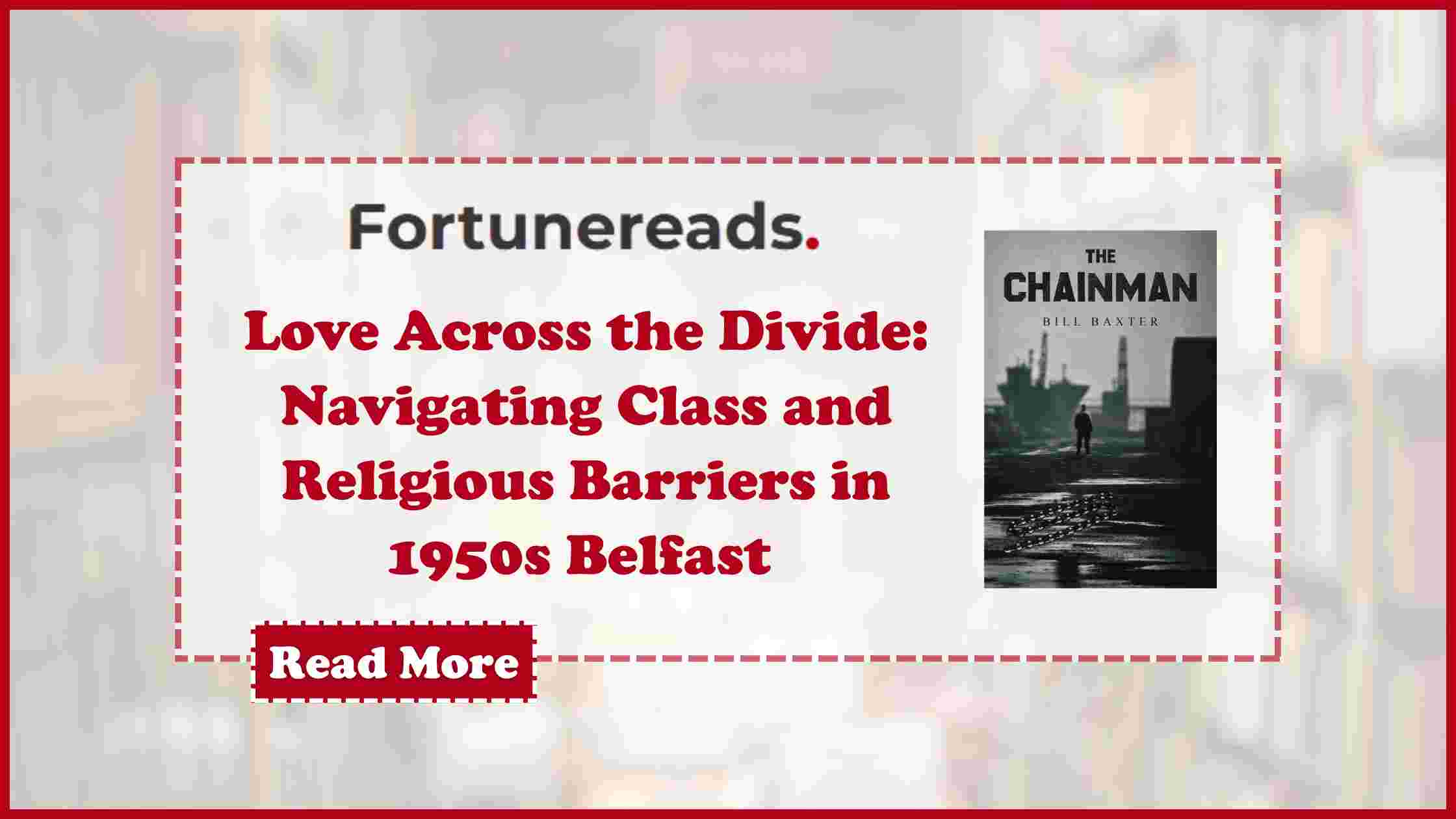
In The Chainman by Bill Baxter, the spark between Billy and Sarah glows against a backdrop of quiet but ever-present division. On the surface, it’s the simple story of two young people meeting at a dance, sharing stolen moments, and dreaming of more. But beneath the flirtation lies an unspoken truth: in Belfast of that era, even a hint of the “wrong” background could snuff out a connection before it began.
Billy knows this. He hesitates before revealing where he works, aware that the shipyard isn’t just a workplace—it’s a signal. Protestants dominated the apprenticeships there, and Catholics were kept out. One wrong assumption about his religion could end things with Sarah before they truly start. Sarah, for her part, feels the subtle pressure of her own social world—family expectations, community whispers, the constant vigilance about who you’re “seen with.”
Class deepens the divide. In a city where the cut of your clothes, the polish on your shoes, and the street you lived on could betray your place in the social order, love had to fight for air. Billy crafts his image carefully—American jeans, Lucky Strikes, a sailor’s swagger—not just to impress Sarah, but to claim a space in her world. And yet, the more he tries, the more he feels the pull of the gulf between them.
What makes this kind of love so compelling is its mix of sweetness and risk. There’s the heady thrill of being with someone you “shouldn’t” be with, of imagining a life beyond the boundaries you’ve always known. But there’s also the fear—fear of rejection, of community judgment, of the silent, suffocating disapproval that can shadow every step.
In real life, couples who braved these divides often carried a heavy burden. Some endured estrangement from family. Others faced open hostility. And yet, in that push against the current, there was a strange kind of freedom—the freedom of choosing love for love’s sake, not because it fit the map laid out for you.
Billy and Sarah’s story reminds us that love is never lived in a vacuum. It’s shaped by the times, the place, and the unspoken rules that surround it. But it also reminds us that, even in the most divided places, there will always be people willing to risk something precious for the chance to bridge the gap.
Sometimes, the most radical thing you can do is simply reach across the line—and hold on.