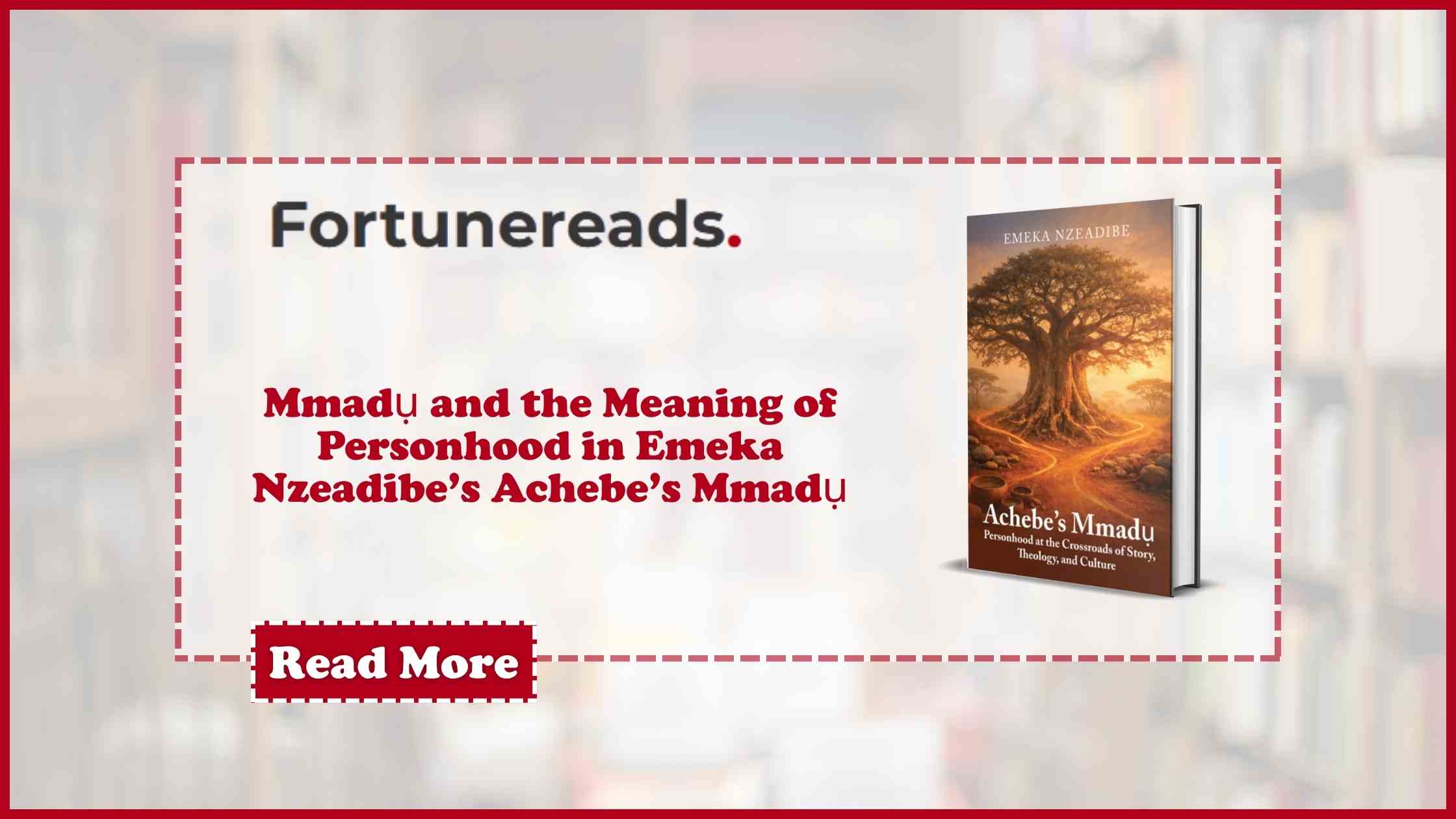
In Achebe’s Mmadụ: Personhood at the Crossroads of Story, Theology, and Culture, Emeka Nzeadibe offers readers a rich and timely study of what it means to be human through the lens of Chinua Achebe’s Igbo world. The book moves beyond a narrow reading of Achebe as only a literary figure and presents his work as a profound source for thinking about personhood, dignity, community, theology, and culture.
At the heart of the book is the Igbo word Mmadụ, which points to the human person, but also carries deeper meanings tied to identity, moral worth, social belonging, and spiritual depth. Nzeadibe shows that personhood in Achebe’s world is not limited to individual achievement or private selfhood. A person becomes fully understood within a living network of family, community, ancestry, divinity, responsibility, and story.
This makes Achebe’s Mmadụ especially powerful for modern readers. In a world often shaped by individualism, isolation, cultural conflict, and the loss of shared values, the book invites us to reconsider the human person as relational. To be Mmadụ is not simply to exist. It is to live meaningfully among others, to recognise one’s dignity, to honour the dignity of others, and to take part in the moral life of the community.
Nzeadibe’s engagement with Achebe’s fiction is both scholarly and deeply human. Through works such as Things Fall Apart and Arrow of God, he examines figures like Okonkwo and Ezeulu, not merely as tragic characters, but as windows into larger questions of identity, pride, failure, destiny, and belonging. Their stories reveal the tension between personal ambition and communal responsibility, between spiritual calling and human limitation, between cultural strength and historical disruption.
One of the book’s great strengths is its connection between Igbo thought and Christian theological anthropology. Nzeadibe places Mmadụ in conversation with the idea of the human person as created in the image of God. This dialogue does not erase cultural difference. Instead, it shows how African intellectual traditions can enrich global theological reflection and deepen the conversation about human dignity.
Achebe’s Mmadụ is more than an academic work. It is a call to see African literature as a serious space for philosophy and theology. It reminds readers that stories do not merely entertain. They preserve memory, protect identity, challenge injustice, and teach us how to recognise the human face of the other.
For readers interested in Chinua Achebe, African literature, Igbo culture, theology, philosophy, or the question of human dignity, Emeka Nzeadibe’s Achebe’s Mmadụ is an essential and rewarding book. It offers a thoughtful path into Achebe’s world and reveals why the question of Mmadụ remains urgent today.
Get your copy today! https://www.amazon.com/dp/B0GZFB5P25/