Some books entertain, others teach, and then some quietly change how you see the world. Olive’s Day cleverly does both. More than a story, it offers a vivid, authentic window into the life of a child whose experiences are shaped by Pathological Demand Avoidance—or Persistent Drive for Autonomy (PDA). By the final page, you feel as though you’ve truly walked beside Olive on her day, with all its twists, hurdles, and joys.
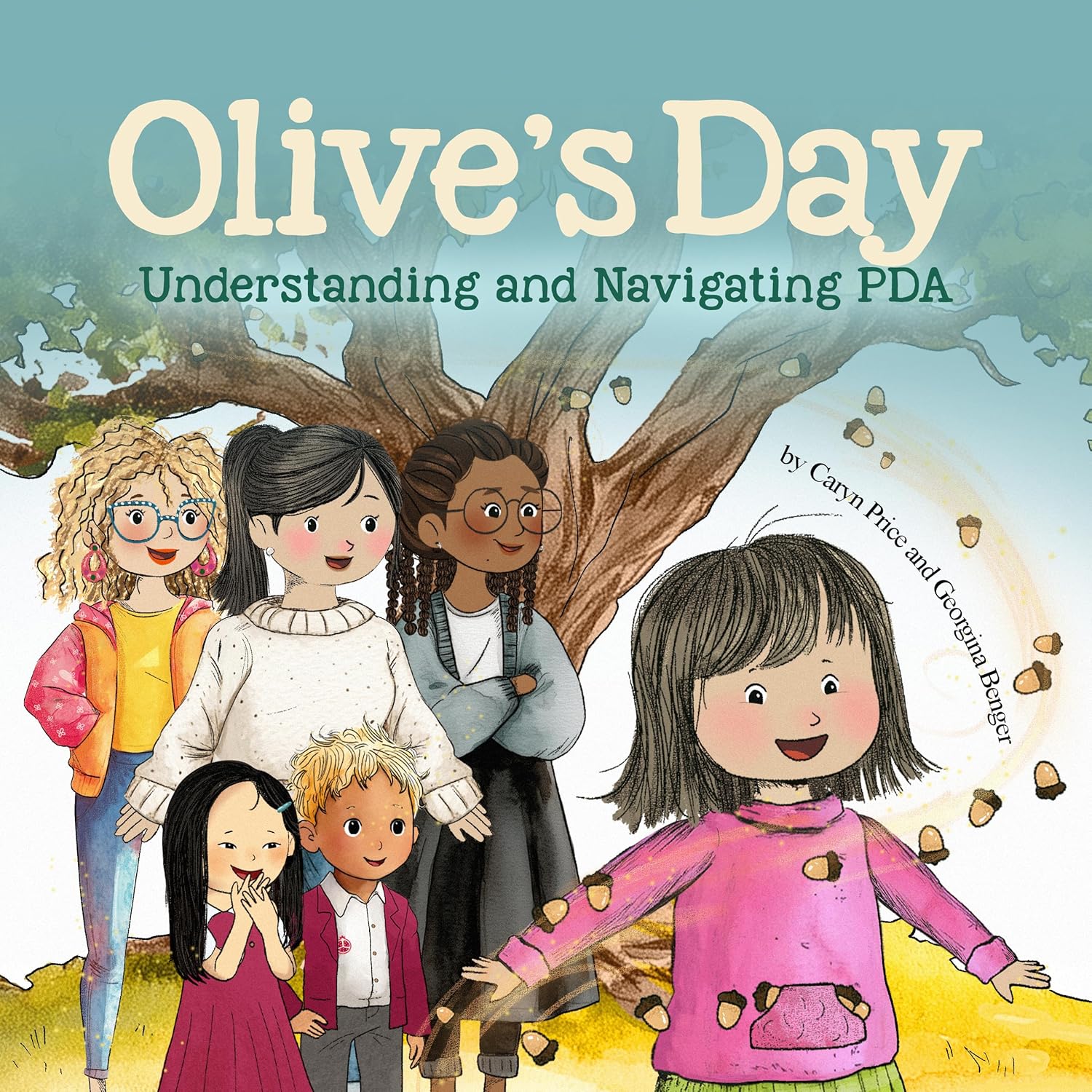
Olive’s voice shines through from the start—insightful, clever, and honest. She delights in the smell of new books and the crunch of cereal. Alongside these joys, everyday demands sometimes feel intense and heavy. Her “big NO” moments are not tantrums or mischief, but explicit expressions of anxiety and a deep need for autonomy.
What makes the story powerful is the way people around Olive respond and empower her. Instead of force, they use creativity. Instead of pressure, they use play and flexibility. When getting dressed feels overwhelming, her mum reframes it as a warrior’s morning routine. Laughter softens the moment, and Olive steps into her day more easily. These scenes show how respectful, flexible strategies allow Olive’s strengths and humour to surface.
The illustrations add another layer, drawing readers into sensory worlds full of bright lights, ticking timers, or jangly earrings. You can almost feel the intensity Olive navigates and the relief she feels when she finds balance: an “I need a break” card, ear defenders, or the calming weight of a blanket.
But Olive’s Day isn’t only Olive’s story. It reflects the experiences of many children whose responses are often misunderstood as defiance rather than distress. By highlighting PDA, the book invites families, teachers, and peers to pause, listen, and understand. It teaches gently, weaving guidance into story without ever feeling heavy-handed.
Most of all, Olive herself lingers with you. She is resourceful, funny, and imaginative—a reminder that children with PDA are defined not by difficulty, but by creativity, resilience, and perspective. As the day closes, her quiet reflection leaves you thinking not about struggle, but about possibility: what might tomorrow bring, and how will Olive meet it in her own way?
In short, Olive’s Day is a tender, empowering book that fosters empathy, sparks conversations, and offers practical tools. For children, it nurtures recognition and connection. For adults, it provides gentle reminders of the power of flexibility and respect.
The book concludes with seven practical steps—complete with real-life examples—for parents and school staff, making it both deeply moving and immediately useful.
👉 Get your copy here: Olive’s Day : Understanding and Navigating PDA