Small nations rarely operate on equal footing with global powers. The imbalance is structural, rooted in differences in military strength, economic capacity, and political influence. Yet history shows that size alone does not determine outcomes. Resistance, when strategically and psychologically grounded, becomes a defining force that allows smaller nations to preserve sovereignty and shape their own trajectory.
The first dimension of resistance is identity. For small nations, survival is closely tied to a strong sense of national consciousness. When people view themselves as part of a shared historical and cultural mission, external pressure becomes more difficult to impose. Resistance begins not with confrontation, but with clarity about who they are and what they standby. This internal cohesion transforms vulnerability into strength.
Equally important is strategic asymmetry. Small nations cannot attain the capabilities of larger powers, so they must operate differently. Resistance often takes forms that avoid direct comparison, focusing instead on flexibility, unpredictability, and long term endurance. Rather than seeking decisive victories, the objective becomes persistence. The ability to endure pressure over time can erode the effectiveness of even the most powerful adversaries.
Political unity also plays a central role. External influence frequently targets internal divisions, attempting to fragment societies from within. A unified political direction reduces these vulnerabilities. This does not mean the absence of disagreement, but rather the presence of a shared commitment to sovereignty that overrides internal differences. Unity, in this sense, becomes both a defensive mechanism and a strategic asset.
Economic resilience further strengthens resistance. Dependence on external systems can limit a nation’s ability to act independently. Small nations that prioritize self-reliance, diversification, and resource management are better positioned to withstand external pressure. Economic strategy becomes inseparable from political strategy, as stability in one reinforces stability in the other.
Another critical factor is the use of ideas. Resistance is not confined to physical or economic domains. It is also intellectual. By shaping narratives, articulating clear principles, and communicating effectively, small nations can influence how they are perceived both domestically and internationally. Ideas create legitimacy, and legitimacy attracts support. This dimension of resistance extends beyond borders, allowing smaller states to amplify their voice on the global stage.
Diplomacy complements these efforts. Building relationships with other nations, particularly those facing similar challenges, creates networks of cooperation that reduce isolation. Alliances provide not only material support but also symbolic strength. They signal that resistance is not an isolated act but part of a broader pattern of global interaction.
Leadership remains a decisive element throughout this process. In environments defined by pressure and uncertainty, leadership must provide direction without losing adaptability. It must balance firmness ensuring that resistance does not become rigidity. Effective leadership aligns national identity, strategy, and communication into a coherent approach that can be sustained over time.
There is also a psychological aspect that cannot be overlooked. Constant pressure can lead to tiredness, doubt, and fragmentation. Maintaining morale becomes essential. Resistance must be reinforced through education, communication, and visible progress, even if incremental. A population that believes in its ability to endure is far more resilient than one that feels overwhelmed.
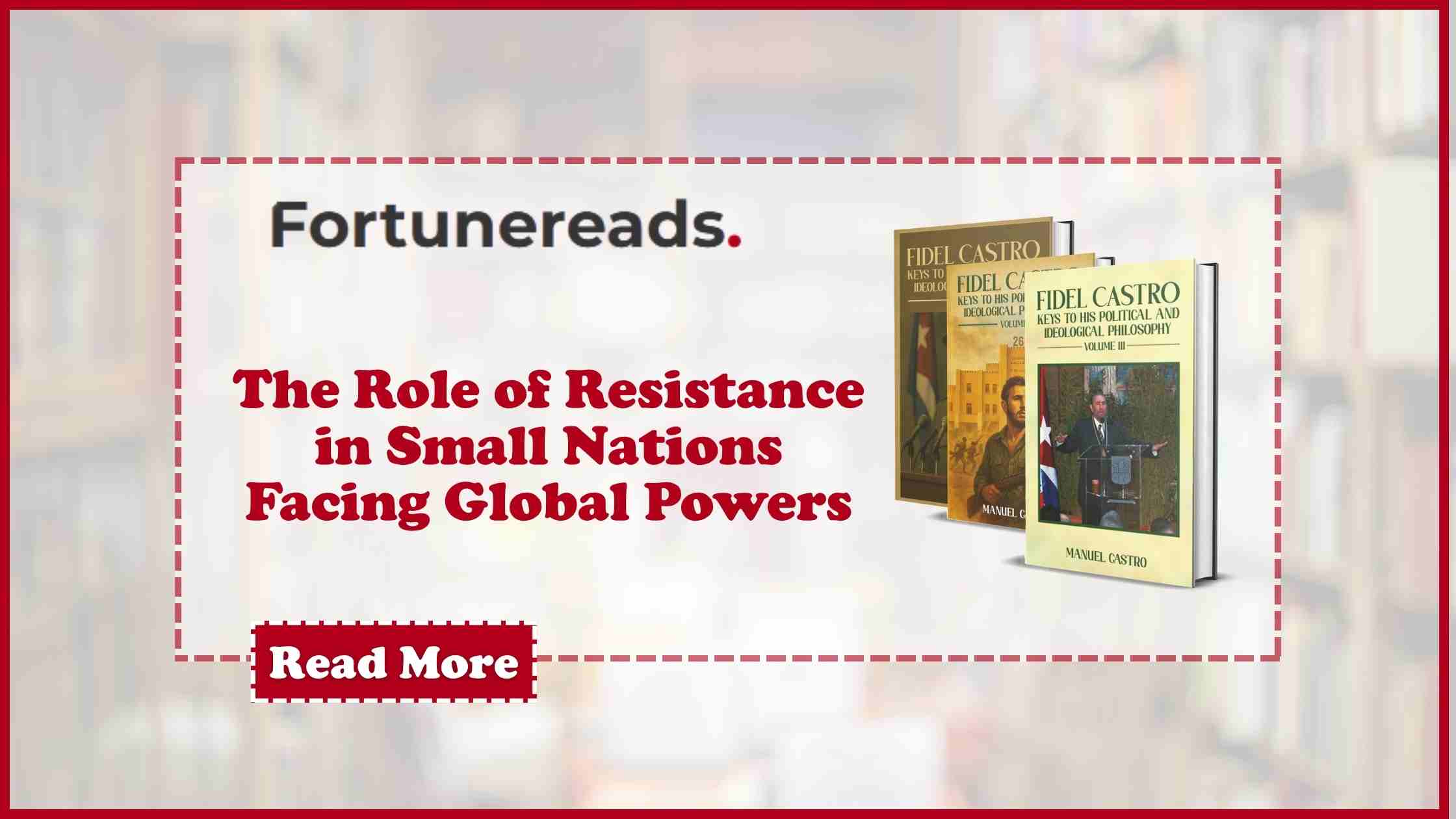
For readers seeking a deeper understanding of how these dynamics operate in practice, Fidel Castro: Keys to His Political and Ideological Philosophy by Manuel A. Castro offers a detailed and structured exploration. The work examines the principles of sovereignty, resistance, and strategic adaptation, providing insight into how a small nation can sustain itself while facing sustained external pressure.
Head to Amazon to purchase your copy: https://www.amazon.com/dp/197213454X