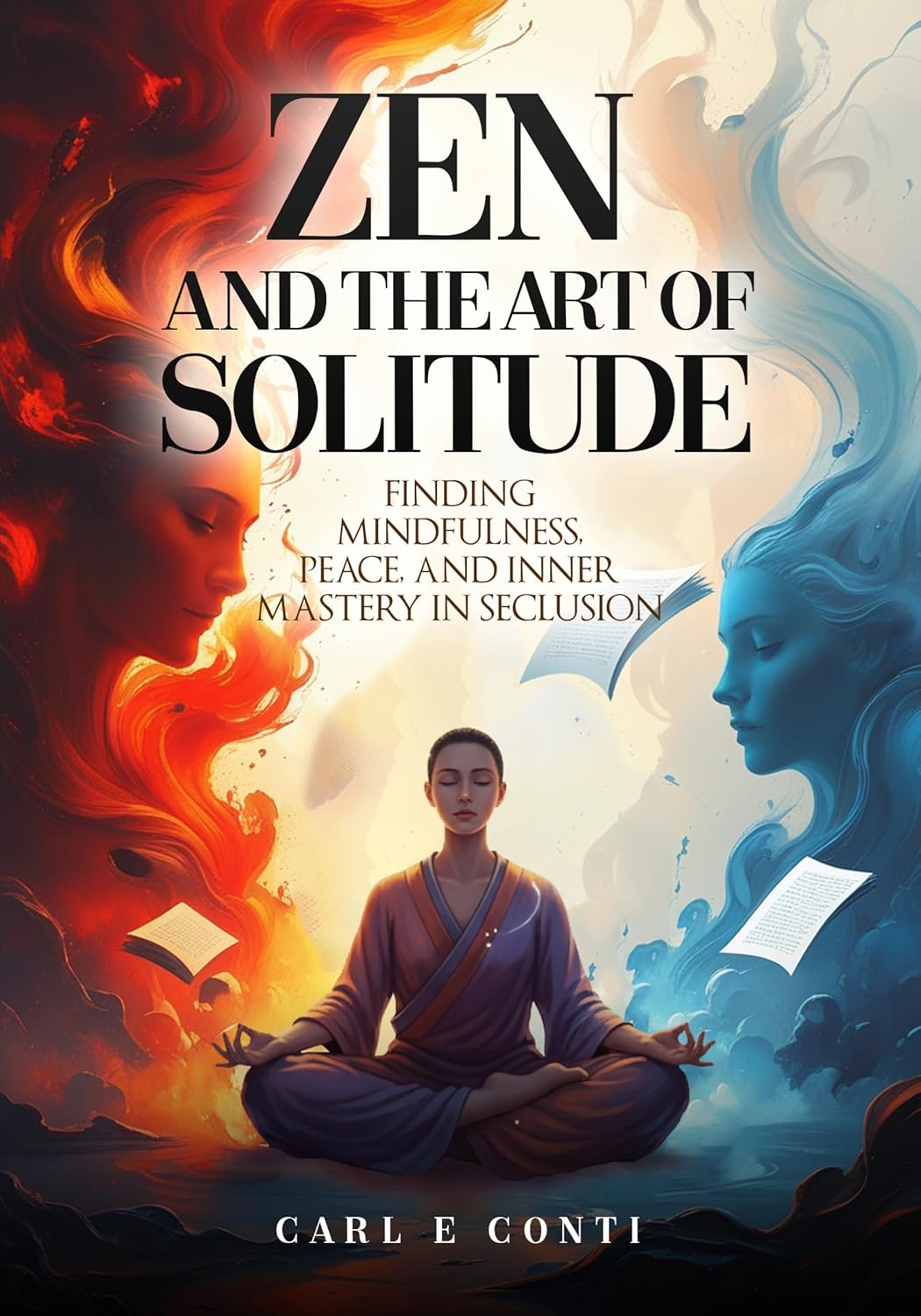
There comes a moment in life when constant motion no longer brings progress. Many people try to push harder in search of clarity or purpose, only to find themselves more overwhelmed than before. That is where Zen steps in. Its teachings offer a quieter, steadier path toward mastery that begins not with doing more, but with understanding the mind as it is. Zen and the Art of Solitude by Carl E Conti draws from this foundation and presents it in practical ways that match the needs of modern life.
At the heart of Zen is simplicity. It teaches that mastery begins when we let go of the habits that complicate our inner world. For example, instead of chasing every thought that appears, Zen encourages a return to what is present in the moment. Consider someone stuck in a cycle of overthinking at work. Instead of trying to control every outcome, a simple pause for mindful breathing can create enough space for clarity to emerge. It is not a mystical idea. It is a practical reminder that the mind becomes lighter when we strip away the noise we add to it.
Mindfulness is another core principle. In Zen, mindfulness means paying attention without judgment. It is the practice of being aware of thoughts, emotions, and actions as they occur. A small example can be found in daily routines. When washing dishes, instead of rushing through the task while thinking about the next responsibility, Zen invites us to be fully present with the warm water, the sound of the sink, and the slow, rhythmic movement. These small moments build focus and steadiness, which carry into more demanding parts of life. Carl E Conti emphasizes this approach in Zen and the Art of Solitude, showing readers how these quiet practices strengthen emotional balance.
Non-attachment supports this path by helping individuals release unnecessary expectations. Many setbacks in life come not from events themselves, but from the resistance we carry toward them. A student preparing for a major exam may become overly anxious about the fear of failing, which can only increase stress. Through non-attachment, the focus shifts from the fear of loss to the act of studying with clarity and insight. The goal remains, but the emotional weight lessens. Zen teaches that when we release the grip of fear or control, we create room for better action.
Inner mastery also requires understanding the ego. Zen does not treat the ego as an enemy, but as a part of the mind that often takes more space than it needs. When the ego becomes overly assertive, it demands validation and reacts strongly to even minor triggers. Zen suggests observing the ego instead of fighting it. For example, if a colleague criticizes your work, the ego may respond with defensiveness. Through mindfulness, you can notice that reaction, pause, and respond from a grounded place. This simple shift becomes a decisive step toward mastery.
Zen and the Art of Solitude by Carl E Conti offers practical guidance for applying these principles in daily life. Readers seeking a grounded and thoughtful approach to personal growth will find this a valuable and accessible resource.