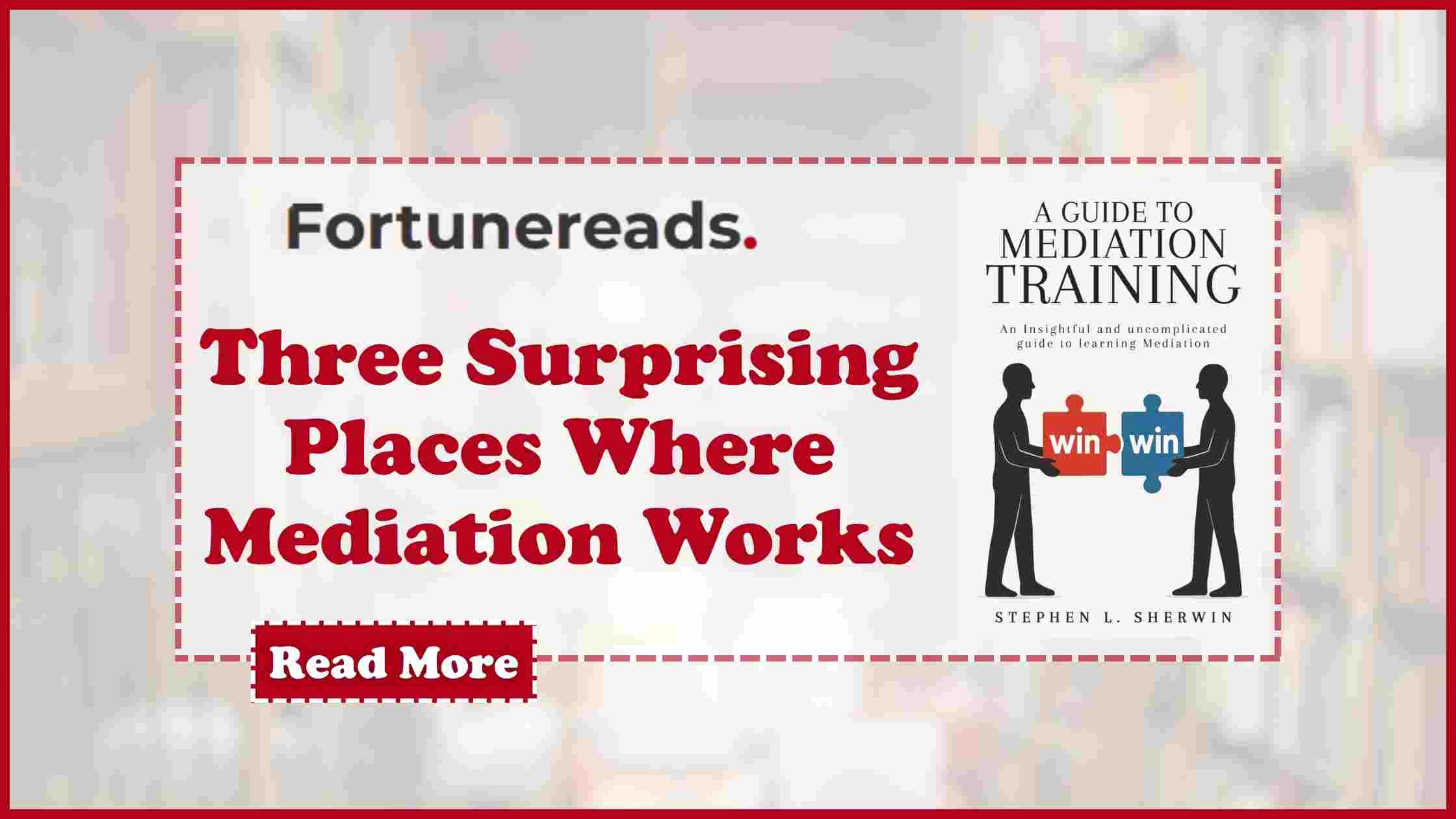
When most people think of mediation, they often envision lawyers, courtrooms, and legal disputes. While mediation is often employed in legal settings, its value extends far beyond the legal world. In fact, mediation has become a powerful tool in schools, police departments, and community centers, where everyday conflicts can quickly spiral out of control if not handled well. Stephen L. Sherwin’s A Guide to Mediation Training highlights just how wide the reach of mediation can be, demonstrating that its principles can be applied in unexpected places.
- Schools: Teaching Young People to Resolve Conflicts Peacefully
Schools are natural places for conflict. Students come from diverse backgrounds and face academic pressure, social challenges, and personal struggles. Disagreements can quickly turn into fights or long-lasting resentment if left unchecked. Some schools have started using peer mediation programs, where trained students help their classmates discuss problems in a safe and structured manner. Instead of sending a student to detention for an argument, schools invite the students to sit down with a mediator, share their perspectives, and work toward a mutually agreed-upon resolution. This approach not only solves the problem but also teaches valuable life skills, such as empathy, active listening, and personal accountability. Sherwin’s book stresses that when young people learn mediation early, they are better equipped to manage conflict in adulthood.
- Police Departments: Building Trust Through Dialogue
Law enforcement officers often find themselves in situations where tensions run high. Traditionally, these situations might end in arrests or escalating disputes, but some police departments have turned to mediation training as a way to build trust with the community. Officers trained in mediation techniques employ active listening, reframing, and neutral communication to de-escalate encounters before they escalate into crises. For example, a disagreement between neighbors that once required repeated police visits can now be addressed through a mediated conversation facilitated by trained officers. This approach helps officers reduce stress in their daily work while demonstrating to communities that the goal is not just enforcement, but also resolution. In A Guide to Mediation Training, Sherwin reflects on his own experience teaching police officers, noting how mediation provided them with practical tools that enhanced both their effectiveness and their relationships with the public.
- Community Centers: Restoring Harmony Among Neighbors
Community centers often serve as gathering places for people from diverse backgrounds. While these centers bring people together, they can also be sites of tension. Neighbors may disagree about noise, shared spaces, or cultural differences. Mediation offers a constructive approach to resolving these conflicts. Imagine two neighbors who argue constantly about parking spots. Instead of letting resentment grow, a community mediator brings them together to explain their needs and brainstorm solutions. Often, people leave not just with an agreement but with a better understanding of one another. Sherwin’s manual explains how community mediation fosters inclusion and trust, ensuring that voices are heard and respected.
These three examples show that mediation is not limited to courtrooms. It can be just as effective in classrooms, police stations, and community halls. Wherever people gather, disagreements are unavoidable, but mediation provides a way to resolve them without anger, blame, or lasting harm.
For anyone interested in learning how mediation works in these diverse settings, A Guide to Mediation Training by Stephen L. Sherwin is a practical resource. It combines real-world examples with easy-to-follow steps, making it a valuable resource for anyone who wants to foster understanding and build stronger connections within their community.
Stronger schools, safer communities, better workplaces. Find the steps in A Guide to Mediation Training by Stephen L. Sherwin, available on Amazon: https://www.amazon.com/dp/B0FLM7XQ5L.