Luxury hotels are recognised for their beautiful design, exceptional cuisine, meticulous standards and memorable service. Yet behind every outstanding property lies something less visible, but ultimately more influential: leadership.
Drawing on more than four decades of international luxury hospitality leadership, Pierre Barthes maintains that managing a great hotel has never been solely about operations. It is about creating an environment where people, culture and purpose come together to deliver exceptional experiences.
According to Barthes, the defining responsibility of a hotel leader is not simply to manage performance, but to inspire it. Technical excellence remains essential, but it achieves its greatest impact when combined with trust, empathy and sound judgment.
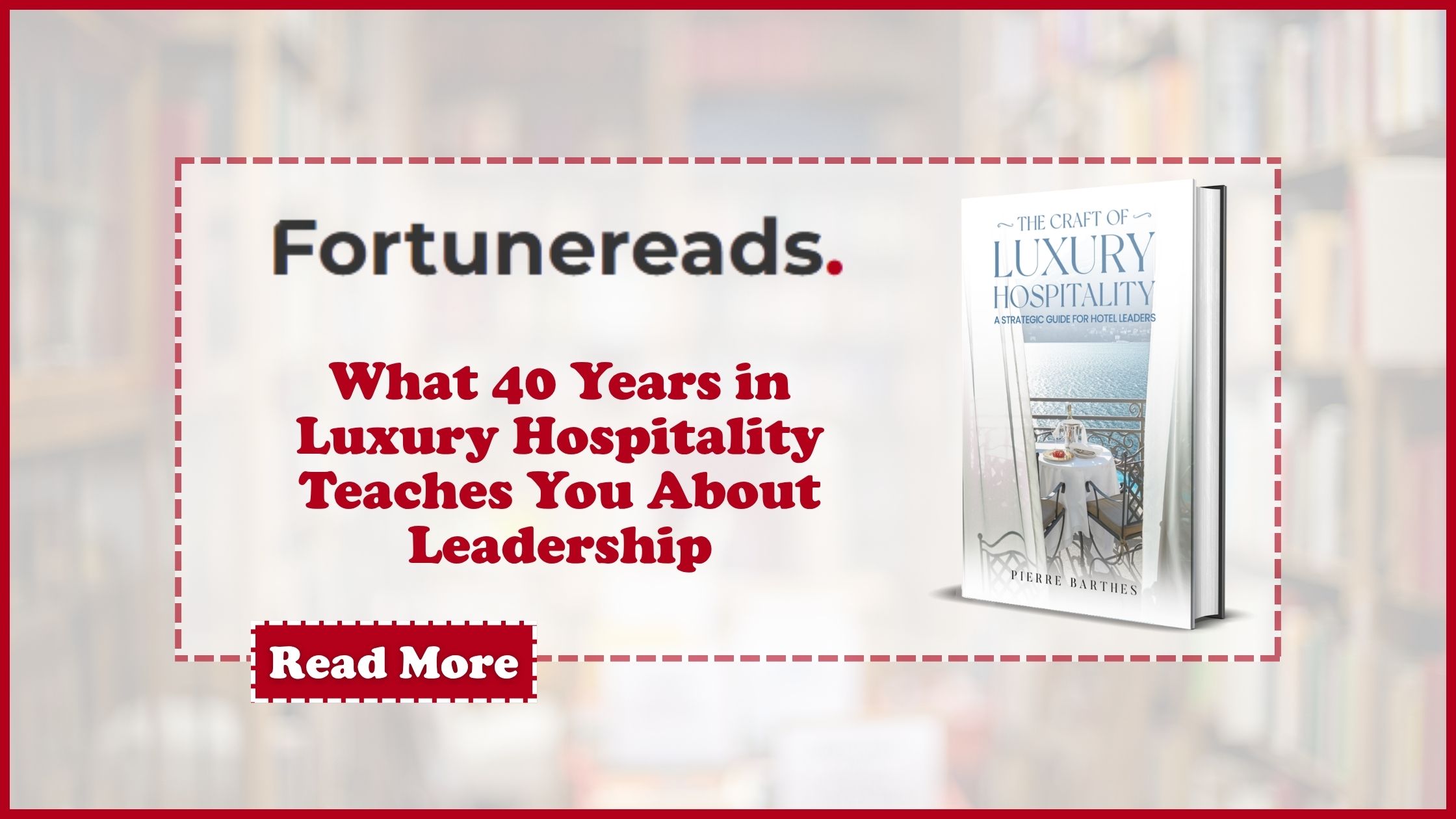
These ideas are explored throughout The Craft of Luxury Hospitality: A Strategic Guide for Hotel Leaders, where Barthes examines how leadership shapes every aspect of the luxury guest experience.
Leadership Begins with Purpose
According to Barthes, effective leadership begins with clarity of purpose. Every hotel exists to create value for its guests, and that purpose should guide every operational and strategic decision.
Policies, procedures, budgets, technology and brand standards all play an essential role. Yet they are not objectives in themselves. They exist to support the guest experience and should always be evaluated against that broader purpose.
This perspective changes the questions leaders ask.
Rather than focusing solely on whether standards have been followed, Barthes encourages leaders to ask whether those standards contribute meaningfully to the guest experience. Operational excellence remains essential, but leadership requires the judgment to recognise when flexibility, empathy or initiative will create greater value than rigid adherence to process.
According to Barthes, this balance between discipline and judgment is one of the defining characteristics of exceptional leadership.
Culture Is Built From the Top
Barthes argues that organisational culture cannot be created through mission statements or corporate slogans alone. It is shaped by the behaviour leaders demonstrate every day.
Employees pay close attention to how leaders respond under pressure. They observe how decisions are made, how mistakes are handled, how colleagues are treated and whether the organisation’s stated values are reflected in everyday actions.
Leadership therefore becomes culture in practice.
Compassion, humility, consistency and accountability are not simply desirable leadership qualities. They establish expectations that influence how teams work together and, ultimately, how they care for guests.
Barthes’ experience leading hotels through periods of social unrest, economic uncertainty and global disruption reinforced one enduring lesson: organisational culture is tested most when circumstances are difficult. Great leaders do not define culture during times of stability. They reveal it when pressure is at its highest.
People Deliver the Luxury
Luxury hospitality has always been, and will always remain, a people business.
Buildings can be renovated. Brands can evolve. Technology will continue to transform the guest experience. Yet the defining difference between exceptional hotels and average ones will always be the people who bring the brand to life.
For Barthes, leadership begins with hiring people whose values align with the organisation’s culture and then giving them the training, confidence and support to succeed.
Technical skills can be taught. Character, curiosity and a genuine desire to serve are far more difficult to develop.
This places an important responsibility on every leader. Creating exceptional guest experiences begins with creating an environment where employees feel trusted, respected and empowered to perform at their best.
According to Barthes, employee experience and guest experience are inseparable. Leaders who invest in one inevitably strengthen the other.
Walking the hotel, recognising talent, coaching future leaders and creating meaningful opportunities for development are therefore not simply management responsibilities—they are leadership responsibilities.
The Modern GM Must Lead in Every Direction
The role of the luxury hotel General Manager has evolved significantly over the past two decades.
Operational excellence remains a fundamental expectation, but today’s GM must also navigate an increasingly complex environment shaped by changing guest expectations, technological innovation, commercial pressures, workforce transformation and growing owner expectations.
Financial discipline, commercial awareness and operational expertise remain essential. So too do communication, cultural intelligence, sound judgment and the ability to build trust across diverse teams.
According to Barthes, modern leadership is no longer defined by authority alone. It is measured by the ability to influence, inspire and align people around a common purpose.
On any given day, a General Manager may be reviewing financial performance, coaching an emerging leader, supporting a colleague through a difficult situation, representing the hotel publicly or balancing the long-term interests of owners, employees and guests.
That complexity is precisely why leadership has become the defining capability of today’s luxury hotel General Manager.
Looking Ahead
Luxury hospitality will continue to evolve. New technologies will reshape operations, guest expectations will continue to rise and commercial pressures will become increasingly complex.
According to Barthes, these changes make leadership more important, not less.
The leaders who will shape the future of luxury hospitality will not be defined solely by operational excellence or financial performance. They will be remembered for the cultures they build, the people they develop and the standards they inspire others to uphold.
This philosophy lies at the heart of The Craft of Luxury Hospitality: A Strategic Guide for Hotel Leaders, where Barthes explores the leadership principles that have guided more than four decades of international hospitality leadership.
His message to today’s and tomorrow’s hotel leaders is straightforward.
Master the numbers.
Respect the standards.
Embrace innovation.
But never lose sight of the people.
Because the greatest legacy of any leader is not the hotel they manage.
It is the people they inspire.