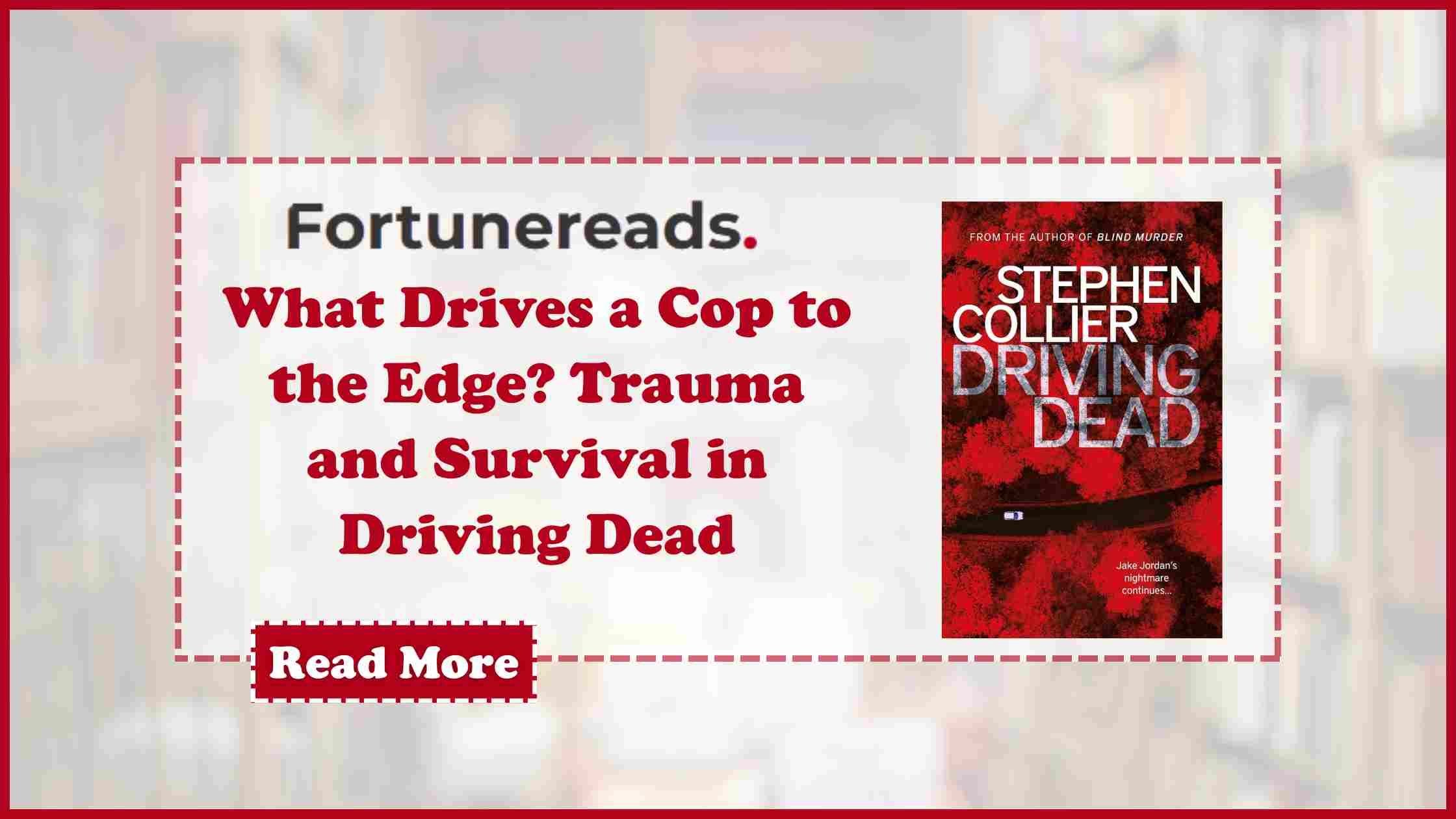
In Driving Dead by Stephen Collier, we meet Sergeant Jake Jordan at his breaking point. The story begins not with a murder, but with a man haunted, waking from nightmares drenched in sweat, suffocated by memories that won’t let him go. Collier’s novel doesn’t just tell a crime story. It opens a door into the raw psychological landscape of a veteran officer consumed by grief, guilt, and the enduring shadows of the past.
Jake isn’t your typical action-driven hero. He’s burned out, sleep-deprived, and emotionally scarred. The trauma that drives him is deeply rooted in a case that changed everything: the pursuit of a violent killer named Bingham Tyler. It’s a case that left officers dead, families shattered, and Jake permanently altered. Collier pulls no punches as he explores the cost of service in a world where mistakes are punished, and sacrifice is rarely acknowledged.
This isn’t trauma framed as a trope. It’s layered, personal, and believable. Jake’s flashbacks, his failed marriage, the lingering ghost of guilt from Tyler’s destruction, and his bond with Kirsty Kingsfield—the widow of his fallen colleague—all speak to a man barely holding on. Through him, the novel explores the silent epidemic of mental health decline in law enforcement, a topic often ignored in traditional crime thrillers.
Jake’s struggle is also institutional. He’s burdened not just by what he has seen, but by how the system has responded. Despite risking his life to confront Tyler, Jake wasn’t rewarded. Others were promoted. He was left behind, reprimanded, and cast in the shadow of bureaucratic scapegoating. The resentment this breeds is central to his internal collapse. You don’t need to be in uniform to understand it, you need to know what it feels like to be overlooked for doing the right thing.
One of the most poignant aspects of Driving Dead is how it explores grief through connection. Jake’s relationship with Kirsty is tender, uncertain, and complicated. Their emotional bond—formed through shared trauma, offers him brief moments of humanity. But even here, Jake struggles with boundaries. He wants to protect her, maybe even love her, but his loyalty to her dead husband and his own battered psyche hold him back. Their scenes together are intimate without being romanticised, and speak volumes about what it means to try and live after loss.
Yet for all the emotional weight, Driving Dead is still a crime thriller, and Collier knows how to build suspense. A fatal road accident, a strange woman at the scene, and new deaths connected to old cases push Jake back into action. But his investigation is never just about justice—it’s about reclaiming his sense of purpose, perhaps even his sanity. This balance between procedural urgency and psychological depth is what gives the book its power.
In a genre often dominated by fast-paced plots and clear-cut heroes, Driving Dead stands out by asking more profound questions. What happens when the job becomes your identity, and that identity breaks? How do you keep serving the public when you’re barely holding yourself together?
Jake Jordan isn’t a detective. He’s a portrait of survival. Of what it means to keep driving forward, even when the road behind you is littered with ghosts. For readers who want a thriller with emotional weight, a character they can genuinely believe in, and a story that respects the reality of those who serve under pressure, Driving Dead delivers.
The novel was a finalist in the Page Turner Awards of 2021