Most people think of death as an ending.
It closes a chapter, separates the living from the departed and leaves behind questions that can never be answered. But what if death were something entirely different? What if it were not a final destination, but a doorway into another stage of existence?
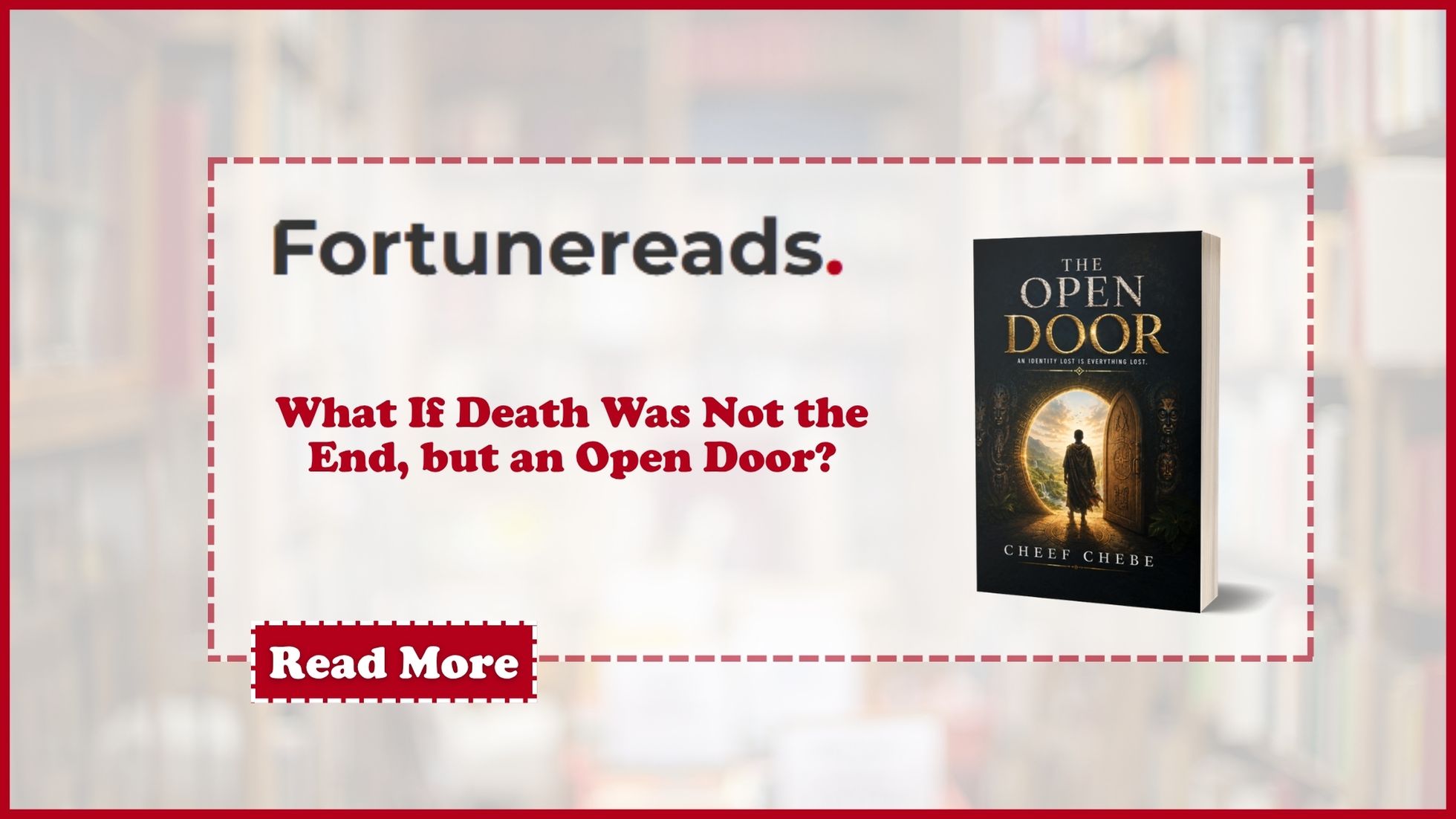
That intriguing possibility lies at the heart of The Open Door by Cheef Chebe.
The story begins with confusion rather than certainty. Djambay awakens in a strange treehouse with little understanding of where he is or even who he is. Invisible voices seem to know more about him than he knows about himself and the world around him refuses to follow the rules he once understood.
Gradually, an extraordinary truth begins to emerge: Djambay has already lived another life.
When an Ending Becomes a Beginning
As memories return, Djambay discovers that he was once known as Dr. Peter Morgan, a man who lived in Glasgow. His former life included a career, family relationships, friendships, struggles and unresolved questions.
Yet learning who he used to be does not immediately tell him who he is supposed to become.
That is where The Open Door moves beyond a simple reincarnation story.
Guided by Father Godson, Djambay begins exploring a spiritual universe filled with unfamiliar dimensions, new ideas about consciousness and the mysterious Ambatarian tradition. Death, within this imaginative world, becomes less about disappearance and more about transformation.
Djambay has another chance to look at the life he lived, the beliefs he accepted, the mistakes he made and the cultural identity he gradually left behind.
Remembering More Than a Name
One of the most meaningful parts of Djambay’s journey is his rediscovery of his African roots.
Memories of his grandfather, ancestral healing traditions, childhood and cultural teachings begin returning to him. These memories force him to reconsider ideas he once learned about what was “modern,” what was “primitive,” and which parts of his heritage deserved to be remembered.
His second chance therefore becomes more than survival.
It becomes an opportunity to understand himself more completely.
Cheef Chebe uses this journey to raise larger questions about cultural identity, spirituality, mental health, social judgement and the way societies decide which beliefs are acceptable.
An Open Door to a Bigger Purpose
Djambay’s journey eventually stretches far beyond his personal history.
Through Glasgow, Ambatonia, the City of Light and the wider world of the story, he begins thinking about leadership, inequality, religion, technology, environmental responsibility and humanity’s future.
His transformation suggests that a second life should not simply repeat the first one.
It should mean something.
That idea gives the title The Open Door much of its power. The “door” can represent many things: another existence, a recovered identity, a forgotten culture, forgiveness, spiritual discovery or even the possibility of building a better society.
Chebe does not present death merely as something to fear. Within the story’s speculative and spiritual framework, it becomes a threshold that invites new questions.
What would you change if you were given another chance? What beliefs would you reconsider? What relationships would you repair? And what would you finally understand about yourself?
For readers drawn to imaginative fiction that blends spirituality, African cultural perspectives, satire, philosophy and social commentary, The Open Door offers far more than an adventure beyond death.
It offers an invitation to think about what we might do with the doors still open in front of us.
Read the book on Amazon: https://www.amazon.com/dp/B0HKXFPZLN/