We live in a culture obsessed with the grind. From social media feeds flashing luxury lifestyles to the relentless pressure to optimize every hour of our day, modern success is almost always measured by what we can accumulate, display, and control. It is an exhausting way to live, yet we are taught that to slow down or choose a different path is to fail.
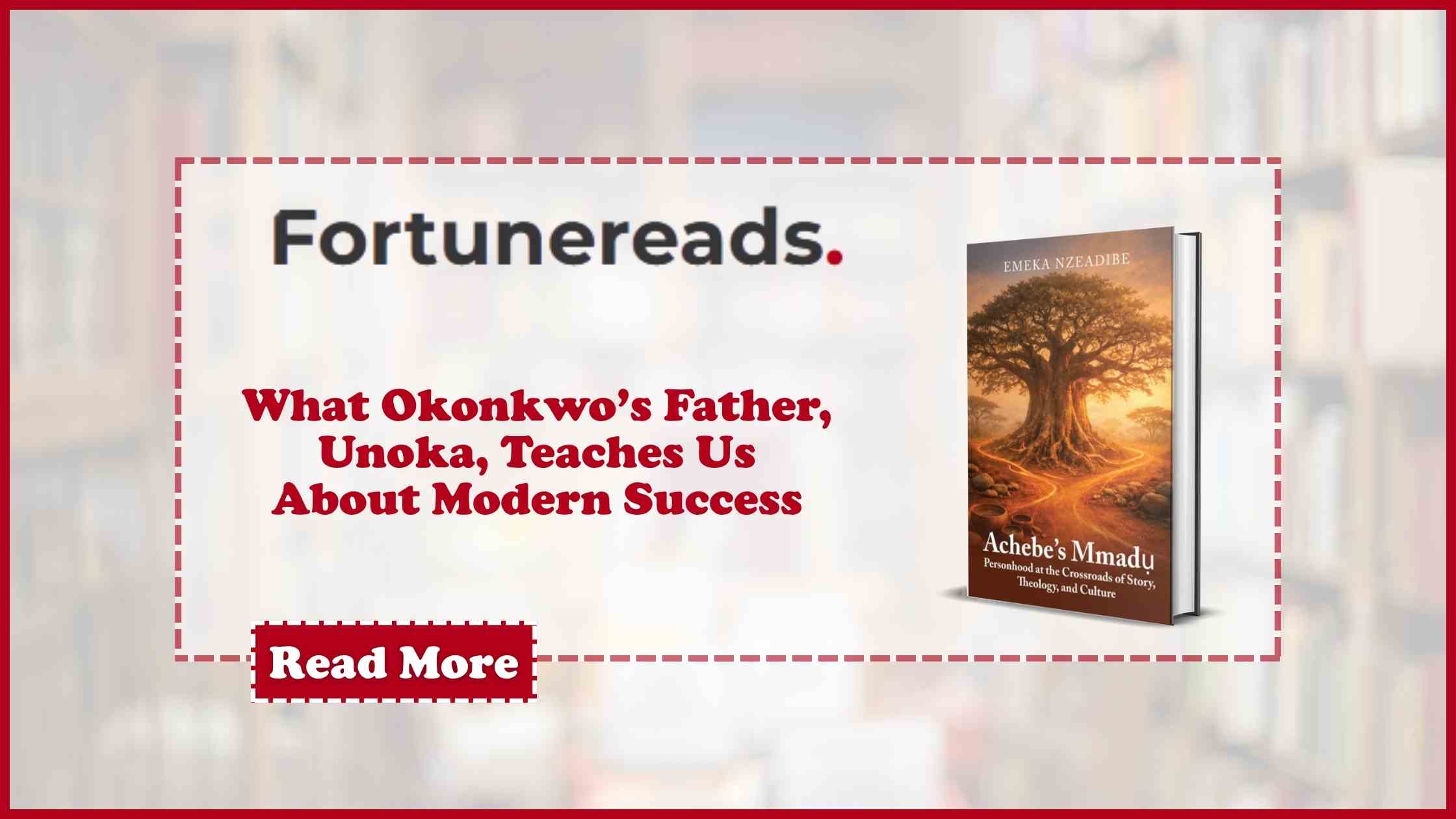
This frantic pursuit of external validation is a human struggle that echoes across time and literature. In Emeka Nzeadibe’s Achebe’s Mmadụ: Personhood at the Crossroads of Story, Theology, and Culture, particularly within the character analysis, we find a profound historical mirror to our modern anxieties. By looking closely at Chinua Achebe’s classic narrative through Nzeadibe’s philosophical lens, we encounter two contrasting lives: Okonkwo, the fiercely driven warrior, and his father, Unoka, the gentle flute player.
To the casual reader of Things Fall Apart, Unoka is often dismissed the way his society dismissed him, as a failure, a man who was a debtor and preferred music to money. But a deeper theological and psychological analysis reveals something far more complex. Unoka was a man who practiced a quiet, artistic nonconformity. He refused to let a hyper-masculine, title-obsessed community dictate his intrinsic worth. Unoka loved the flutes, the warmth of a community gathering, the changing of the seasons, and the simple beauty of being alive. He possessed an internal peace, or psychological wholesomeness, that his son could never grasp. Unoka’s life validates the artist’s soul, proving that a person’s value cannot be reduced to material production or societal rank.
In stark contrast stands Okonkwo. Driven by an intense, toxic fear of looking weak or resembling his father, Okonkwo spends his entire life chasing the external trappings of success. He accumulates titles, barns of yams, and wives, converting his anxiety into raw, aggressive ambition. Yet, despite his high standing in Umuofia, Okonkwo is utterly hollowed out by fear. He cannot enjoy his success because he is constantly defending it. He suppresses his emotions, destroys his relationships, and ultimately destroys himself. Okonkwo’s trajectory is a tragic cautionary tale for the modern workaholic. It shows that when your drive is fueled by fear and the desperate need to prove others wrong, no amount of wealth or status will ever be enough to quiet your internal storms.
The lesson Unoka leaves for us today is the courage to resist communal pressures. It reminds us that it takes immense bravery to stand still when everyone around you is running a race you never wanted to join. Unoka chose to protect his inner world, favoring emotional and spiritual wellness over the brutal, competitive metrics of his peers. True success is not found in the titles we collect or the status we display to the world. True success is an inside job. It is the ability to look at your life, your passions, and your peace of mind and realize that you are already enough.
By reclaiming Unoka’s narrative, we can find the permission we desperately need to stop grinding, pick up our own metaphorical flutes, and value our psychological wholeness over a lifetime of empty accumulation. By reading this book and the story of Unoka, we can have the strength and courage to be who we are without having to burden ourselves with external pressure. If you have been struggling with external pressure and want to maintain a balance in your life, this book has many aspects to help you reach that goal.
Get your copy today! https://www.amazon.com/dp/B0GZFB5P25/