Constant criticism does not always arrive as open malice. It often appears in small, repeated moments that slowly mold how a person thinks, speaks, and sees themselves. Over time, these moments accumulate, creating a quiet but powerful psychological impact that can be difficult to recognize until it has already taken hold.
One of the earliest signs is hesitation in communication. You may begin to second guess your words before speaking, replaying sentences in your mind to avoid being corrected or dismissed. What was once natural expression becomes cautious and restrained. Conversations start to feel like risks rather than opportunities to connect.
As criticism continues, confidence begins to erode. Comments that question your intelligence, decisions, or understanding do not simply pass by. They linger. Even when you try to dismiss them, they settle into your thinking. Gradually, you may start to believe them, or at the very least, doubt your own identity. This shift can make even simple choices feel overwhelming.
Another impact is the distortion of self-perception. When someone repeatedly challenges your thoughts or rewrites your intentions, it becomes harder to trust your own perspective. You may find yourself asking whether you remembered something correctly or whether your reaction was justified. This confusion creates a sense of instability, where your own mind no longer feels like a reliable place.
There is also a physical and emotional weight. Living under constant scrutiny can lead to anxiety, tension, and exhaustion. The need to remain alert, to avoid mistakes, or to prepare for criticism can keep your mind in a state of continuous strain. Over time, this can affect sleep, mood, and overall well-being.
In many cases, the loss of voice is not only about speaking less. It is about feeling less entitled to have a voice at all. You may begin to withdraw from conversations, avoid expressing opinions, or remain silent even when something matters to you. This silence is not a choice made freely. It is a response made by repeated experiences of being dismissed or undermined.
The impact often extends into relationships with others. When your confidence is reduced, it becomes harder to engage openly or assert boundaries. You may accept behavior that you would once have challenged, simply because it feels easier than facing further criticism. This can reinforce the cycle, making it even more difficult to regain a sense of control.
In family environments, these patterns can influence others as well. Children, in particular, observe how communication is handled and may adopt similar behaviors. What begins as criticism directed at one person can shape the tone of the entire household, affecting how people speak, respond, and relate to each other.
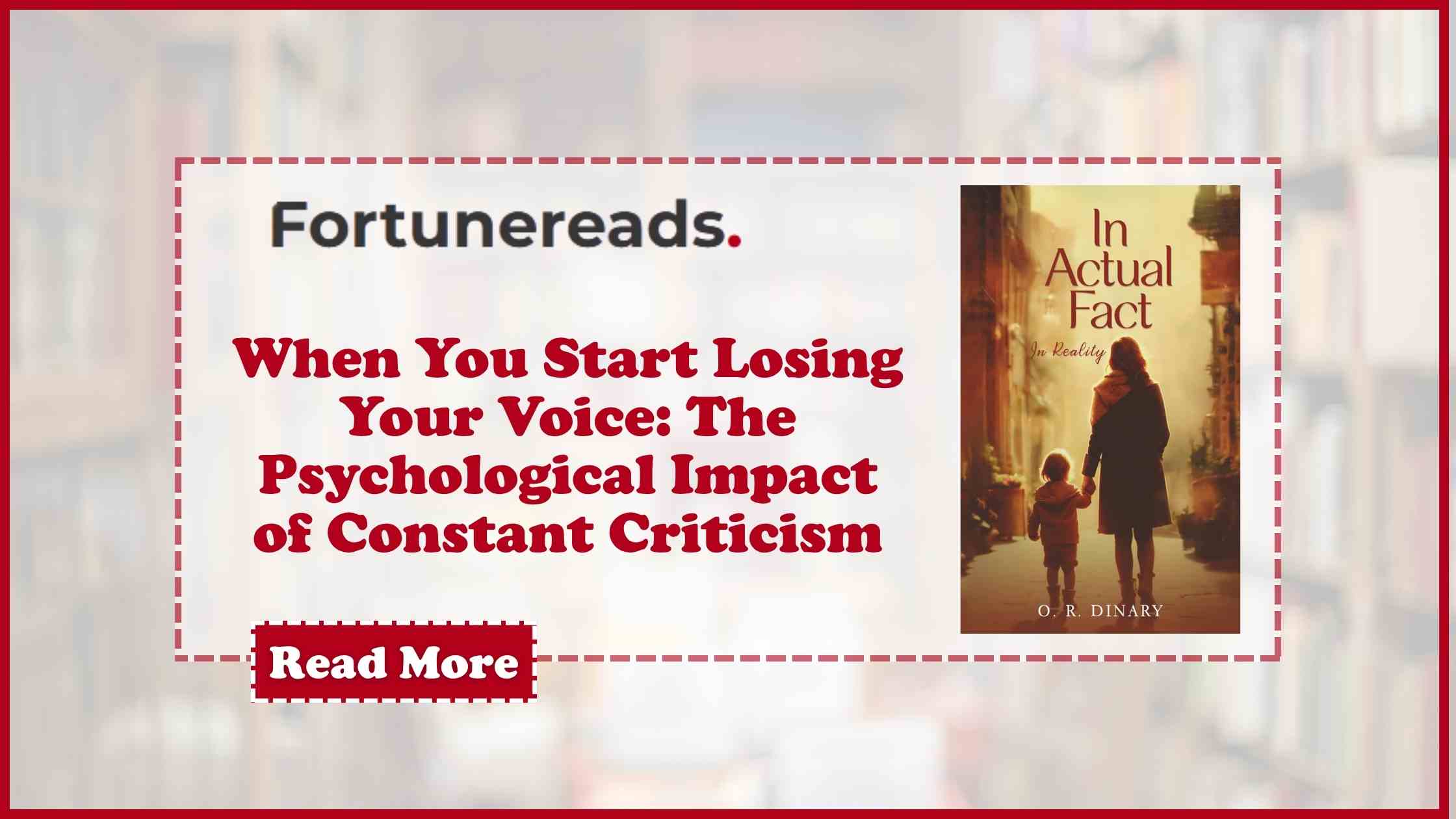
The emotional reality of this experience is explored with clarity in In Reality by O. R. Dinary. The narrative reflects how repeated correction and dismissive behavior can lead to confusion, self-doubt, and a gradual loss of confidence. It presents a lived perspective on what it means to feel unheard and to question your own voice.
Finding your voice again is not about becoming louder. It is about becoming certain. It is about trusting your thoughts, expressing them without fear, and recognizing that your perspective has value. Even small steps, such as speaking honestly in safe spaces or setting simple boundaries, can begin to restore that sense of self.
The effects of constant criticism are real and lasting, but they are not permanent. With awareness and effort, it is possible to rebuild confidence and reconnect with your own voice. That voice has not disappeared. It has simply been waiting for the chance to be heard again.
Available Now On Amazon: https://www.amazon.com/dp/1971610690/