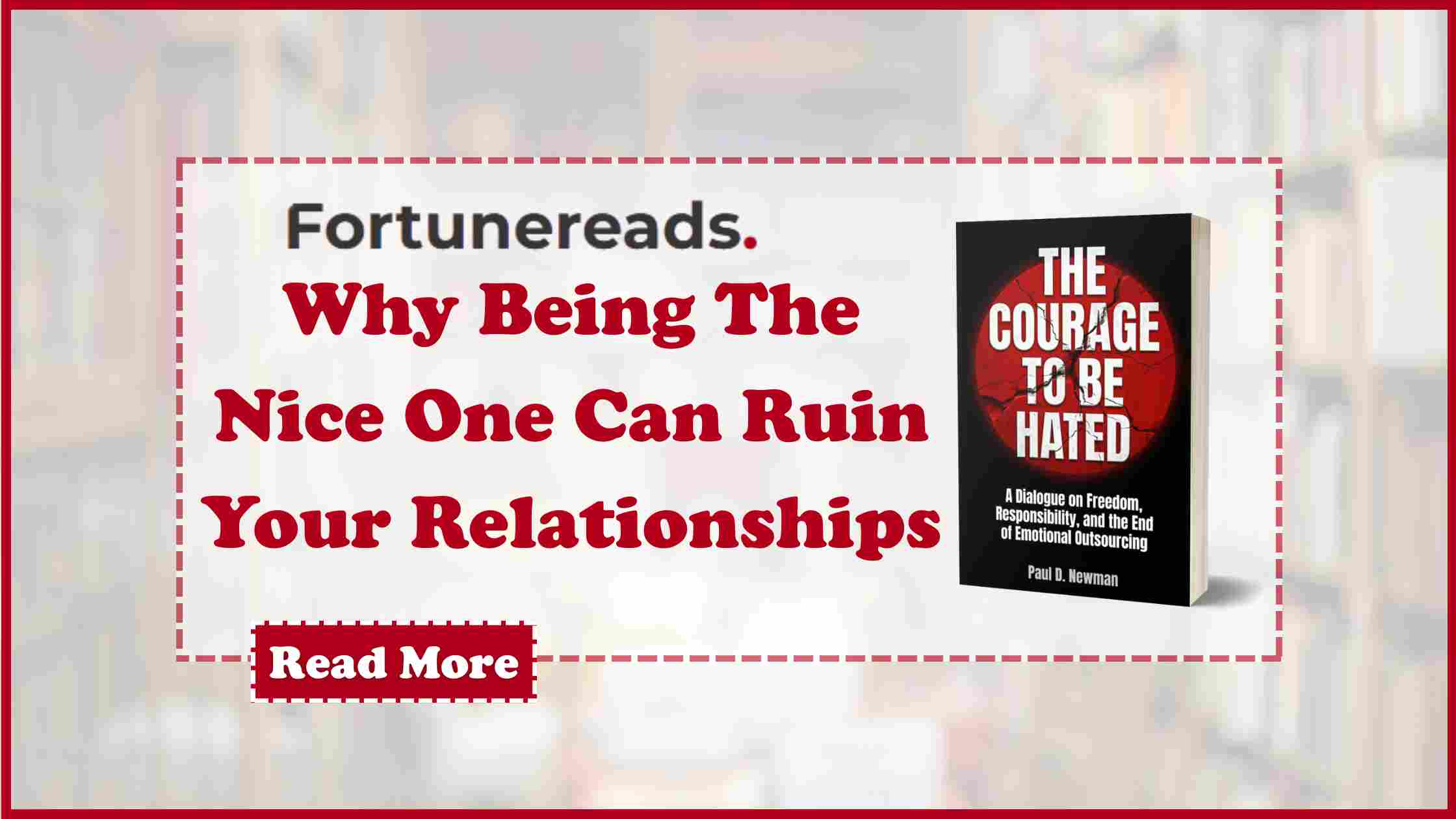
Many people grow up believing that being the nice one is the best way to keep relationships healthy. They try to stay agreeable, helpful, patient, and understanding at all times. They avoid conflict, soften their needs, and give more than they receive. On the surface, this seems like a recipe for harmony. Yet The Courage To Be Hated shows that this approach often leads to frustration, resentment, and strained relationships. Being nice without boundaries can create patterns that slowly damage connection rather than strengthen it.
One reason this happens is that niceness can hide discomfort. You agree to things that trouble you. You stay silent when you should speak. You offer help even when you feel stretched thin. Over time these small sacrifices shape the entire relationship. Other people learn to rely on your constant availability. You learn to ignore your own limits. This creates an imbalance that cannot last.
In friendships, this imbalance often turns into an emotional landfill dynamic. You become the person who listens to every crisis but rarely receives support. Your friends may not intend to burden you, but they become accustomed to turning to you for emotional relief. Meanwhile, your own feelings stay in the background. This pattern does not build closeness. It builds silent pressure.
Romantic relationships can show a similar pattern. If you always accommodate your partner to avoid conflict, the relationship becomes one-sided. Your partner may begin to expect more flexibility, more patience, or more effort from you. You might feel uncomfortable asserting your needs because you fear it might disrupt the peace. This fear creates distance. True intimacy requires honesty, not constant compliance.
Family relationships can also encourage the nice one role. You may feel responsible for keeping everyone calm or happy. You may take on tasks without being asked. Family guilt often appears when you try to step back. You might hear comments about loyalty or kindness, which reinforces the belief that your worth comes from service. Yet when your needs remain unheard, resentment begins to rise. Resentment is a sign that something inside the relationship is not balanced.
The Courage To Be Hated explains that being nice often comes from fear. It is the fear of being disliked, misunderstood, or judged. These fears make you believe that saying no will harm the relationship. In reality, the opposite is true. Constant niceness removes honesty from the relationship. Without honesty, there is no room for mutual respect.
Healthy relationships require boundaries. Boundaries are not walls. They are clear statements about what you can give and what you cannot. They allow others to understand you and treat you with respect. When you have boundaries, you can be kind without sacrificing yourself. You can care without becoming overwhelmed.
A helpful question is this. Are you being nice or are you avoiding conflict. When kindness comes from genuine care, it feels peaceful. When it comes from fear, it feels heavy and tiring. That heaviness is a sign that you are drifting away from your own needs.
Another question is whether your niceness has turned into a silent expectation that others should treat you the same way. For instance, if you secretly hope others will see your effort and repay it, you may be giving in order to receive something in return. When they do not respond as you hope, resentment begins.
The path forward is simple but challenging. Therefore, start by paying attention to moments when you say yes too quickly and give yourself time to think before agreeing to something. Ask yourself whether you want to do it or whether you feel obligated. Practice expressing small preferences. These small steps build confidence over time and will help you to choose where to be nice and where you should be rigid and stand firm on your ground.
Being kind is valuable, but being honest is even more important. When you show up as your real self, relationships become stronger. They become based on understanding rather than pressure. You do not need to be the nice one to be loved. You only need to be yourself, with respect for your own needs and room for others to meet you with theirs. In short, you should have The Courage To Be Hated to become successful and more fulfilled in life.
Read this book now. Head to Amazon: https://www.amazon.com/dp/B0G3KT926J/.