A property can be easy to fall for.
Maybe it has beautiful architecture, a promising neighborhood, impressive curb appeal or the kind of renovation potential that immediately sparks ideas. Before long, an investor may stop looking at the property as a financial decision and start imagining everything it could become.
That is exactly when caution matters most.
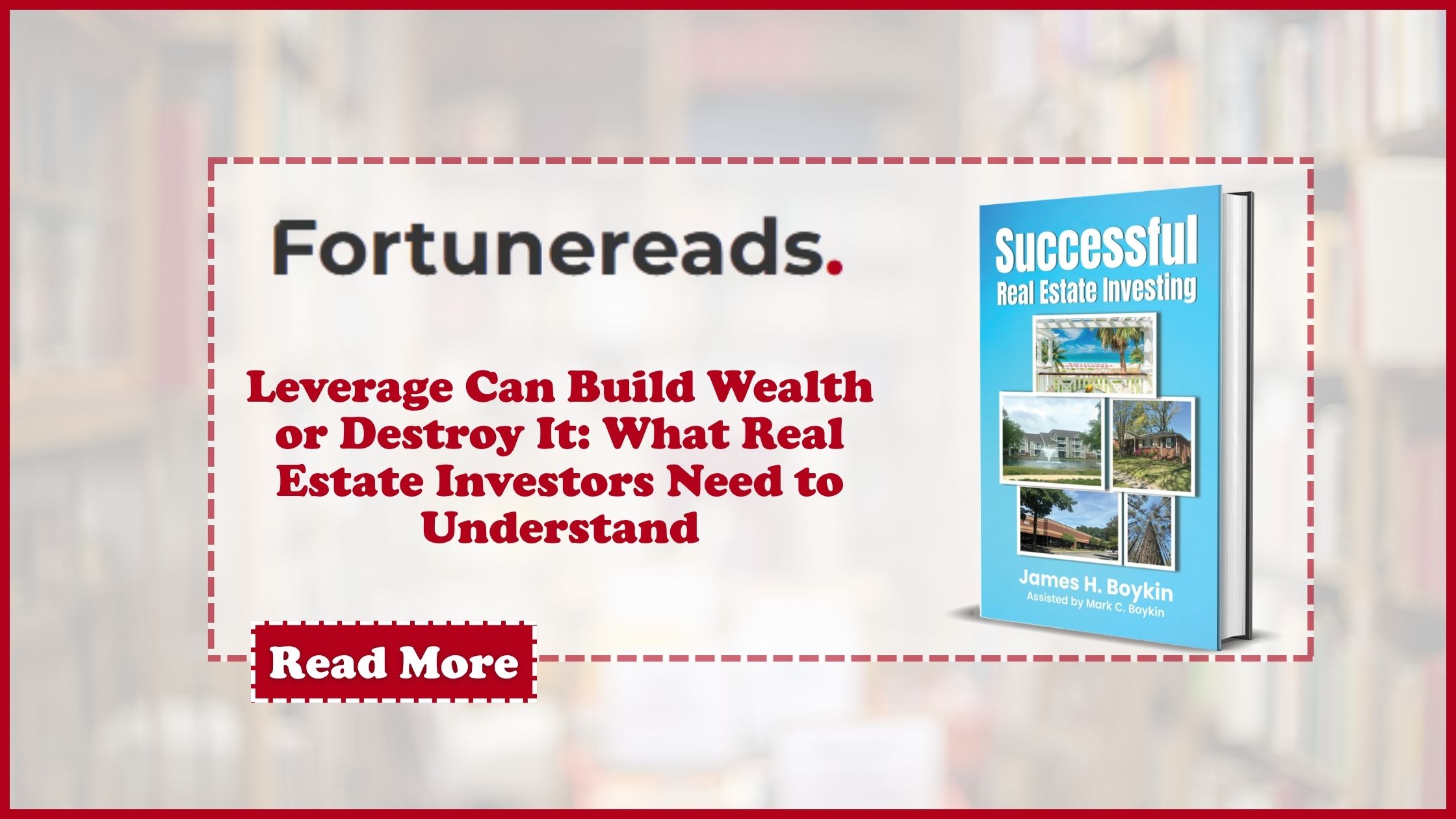
In Successful Real Estate Investing, James H. Boykin warns investors never to let ego or emotion outweigh an objective evaluation of the facts. A buyer may “fall in love” with a particular investment property, but the purchase still has to make financial sense.
Excitement Can Distort the Numbers
Emotional attachment can make investors more willing to overlook problems.
A buyer who badly wants a property may convince themselves that rents will rise quickly, renovations will stay under budget, vacancies will remain low or the neighborhood will improve. But Boykin cautions that investors naturally tend to overestimate rent and occupancy while underestimating expenses.
That optimism can turn a questionable deal into an attractive one at least on paper.
Unfortunately, paper profits do not pay mortgages, property taxes, insurance, maintenance bills or unexpected repair costs.
A disciplined investor should therefore challenge every assumption, especially the ones that make the deal look irresistible.
A Beautiful Property Can Still Be a Bad Investment
Investment value and personal appeal are not the same thing.
You may love the layout, the view, the historic character or the location. Future tenants and buyers may not share the same enthusiasm.
Boykin emphasizes the importance of studying the property’s neighborhood, market conditions, renovation requirements and future resale prospects. A poorly located or badly designed property can remain difficult to sell even when purchased at what appears to be a bargain price.
Some problems can be corrected. Paint can be changed. Kitchens can be modernized. Landscaping can be improved.
Other problems are much harder to overcome.
Boykin notes that an unappealing, declining, unsafe or remote neighborhood can undermine an investment regardless of how much work is done to the property itself.
Let Professionals Challenge Your First Impression
One way to control emotion is to bring objective experts into the decision.
Boykin recommends relying on qualified professionals who can evaluate areas outside an investor’s expertise. Inspectors, contractors, appraisers, attorneys and other specialists can identify structural, financial, legal or environmental concerns that an excited buyer might overlook.
Their job is not to share your enthusiasm. Their job is to help determine whether the investment actually works.
Professional inspections are particularly important. Boykin warns against trying to save a small amount by avoiding specialized inspections when hidden defects could result in costs many times greater.
Be Willing to Walk Away
Perhaps the hardest skill in real estate investing is walking away from a property you genuinely want.
Yet some problems should end the discussion. Boykin identifies serious concerns such as foundation damage, deteriorating neighborhoods, inferior design and severe shoreline erosion as potential deal breakers.
Walking away may feel like losing an opportunity. In reality, it may be protecting your capital for a better one.
Successful Real Estate Investing by James H. Boykin encourages readers to approach property ownership with discipline, research, realistic financial analysis and risk awareness.
The lesson is worth remembering: admire the property if you want but invest in the numbers.
Discover more practical lessons for making smarter property decisions in Successful Real Estate Investing by James H. Boykin.
Read the book on Amazon: https://a.co/d/0gjvN7zf