Political philosophy is often associated with history books, universities, and famous thinkers from the past. Yet its influence extends far beyond academic discussion. Every debate about leadership, justice, equality, freedom, national security, economic policy, or international cooperation is shaped by political ideas. Understanding political philosophy helps explain not only how governments function but also why societies make the choices they do.
Every nation is guided by principles, whether they are clearly defined or gradually developed over time. These principles influence laws, public institutions, education, healthcare, economic priorities, and foreign policy. Political philosophy provides the framework that connects these decisions, offering a vision of how society should be organised and what responsibilities governments owe to their citizens.
In today’s interconnected world, political philosophy remains especially relevant. Countries face challenges that require careful consideration of competing values, including economic inequality, climate change, technological innovation, migration, national security, public health, and international conflict. Different political traditions often propose different solutions, making it essential to understand the ideas that shape public policy.
Political philosophy also encourages critical thinking. Rather than accepting political systems at face value, it invites readers to examine the principles behind government decisions and evaluate their long-term consequences. Questions about liberty, equality, justice, sovereignty, and human rights remain as important today as they were generations ago, even though the circumstances surrounding them continue to evolve.
Fidel Castro’s political philosophy developed in response to many of these enduring questions. He believed that leadership should be grounded in social responsibility, national sovereignty, education, healthcare, and collective development. His ideas reflected a broader effort to define how political systems could promote equality, strengthen national independence, and improve the lives of ordinary people. Whether readers agree or disagree with his conclusions, studying his philosophy offers valuable insight into one of the most influential political movements of the modern era.
Political philosophy also reminds us that history continues to shape the present. The ideas developed by political leaders, reformers, and philosophers influence contemporary debates on democracy, economic development, global cooperation, and the role of the state. Understanding these foundations allows readers to engage more thoughtfully with current events while appreciating the historical experiences that continue to shape modern societies.
Perhaps the greatest value of political philosophy is that it encourages informed discussion rather than simple opinion. By exploring different perspectives, historical contexts, and competing ideas, readers gain a deeper understanding of the complex issues that affect nations and individuals alike.
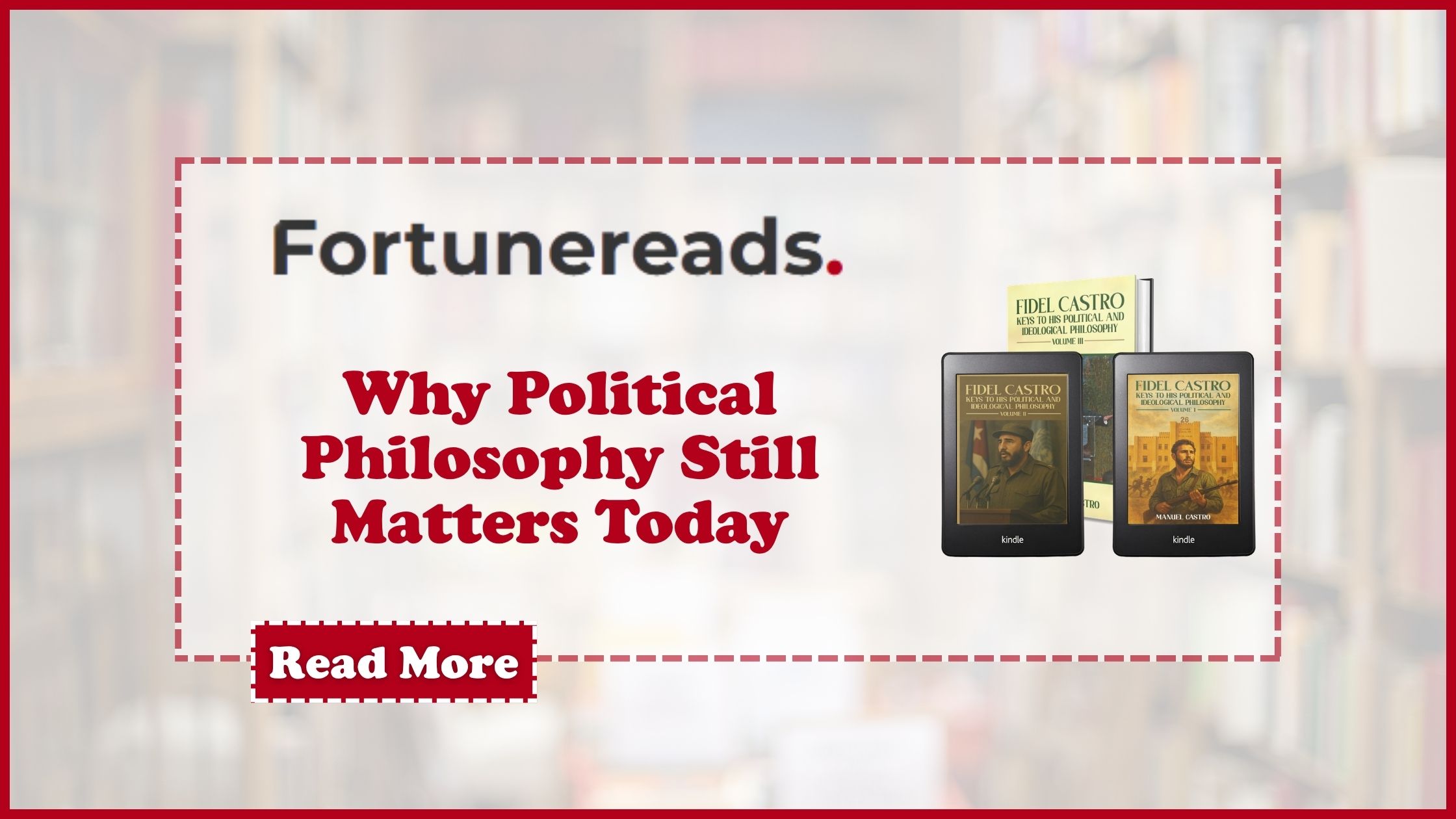
In Fidel Castro: Keys to His Political and Ideological Philosophy, Manuel A. Castro presents a comprehensive exploration of Fidel Castro’s political thought across three volumes. Covering themes such as revolution, socialism, sovereignty, leadership, ethics, education, economics, and international relations, the series offers readers an opportunity to examine the ideas that shaped one of the twentieth century’s most influential and widely debated political leaders.
For students, historians, political scientists, and anyone interested in understanding the relationship between ideas and public policy, this collection provides a thought-provoking study of why political philosophy continues to matter in today’s rapidly changing world.
Start reading today and rethink history.
Volume I: https://www.amazon.com/dp/197213454X
Volume II : https://www.amazon.com/dp/1972134558
Volume III : https://www.amazon.com/dp/1972134566