Children today grow up in a world of convenience, often receiving things before they can even articulate what they want. They enjoy quick access to food, comfortable homes, and daily education, which all seem normal to them. However, they may not fully recognize how fortunate they are for the things they have. Teaching gratitude isn’t about making children feel guilty; it’s about helping them appreciate the value of what they have and recognize the effort that went into it.
When children learn to be thankful, they begin to see the world more clearly and notice the work that goes into daily life, as well as the support they receive from family, teachers, and their community.
Gratitude Builds Strong Character
Thankfulness is more than good manners. It shapes how children think and respond to the world around them. A child who understands gratitude is more likely to respect others, appreciate effort, and value opportunities. Gratitude also encourages patience. When children understand that many things require time and effort, they become less focused on immediate rewards. Instead, they begin to value persistence and hard work. These qualities support emotional growth and help children develop a balanced outlook on life.
Learning Gratitude Through History
One of the most effective ways to teach gratitude is through stories about the past. When children learn how people lived in earlier times, they gain perspective on how much life has changed. Many families in history worked long hours just to meet basic needs. The everyday comforts children enjoy today were not always available. By learning about these experiences, children begin to understand that the conveniences they have are the result of progress and effort across generations. History helps children see that many people worked under difficult conditions so that future generations could have better opportunities.
Recognizing the Effort Behind Everyday Life
Another important lesson in gratitude is understanding the effort behind everyday objects and services. It is easy to overlook the work that makes modern life possible. Food does not appear on the table by chance. Homes do not build themselves. Books, tools, and clothing all require people who dedicate their time and skill to creating them. When children understand the effort that goes into these things, they begin to appreciate them more deeply, and as a result, their gratitude grows because they realize that every comfort is connected to someone’s work and care.
Gratitude Encourages Empathy
Teaching gratitude also helps children develop empathy. For instance, when they learn about the challenges people have faced in the past, they begin to recognize how fortunate they are. This awareness encourages kindness and respect for others, and children become more thoughtful about how they treat people and how they respond to difficulties. This empathy also helps them understand that not everyone has the same opportunities and that fairness and compassion are important values.
Using Stories to Teach Appreciation
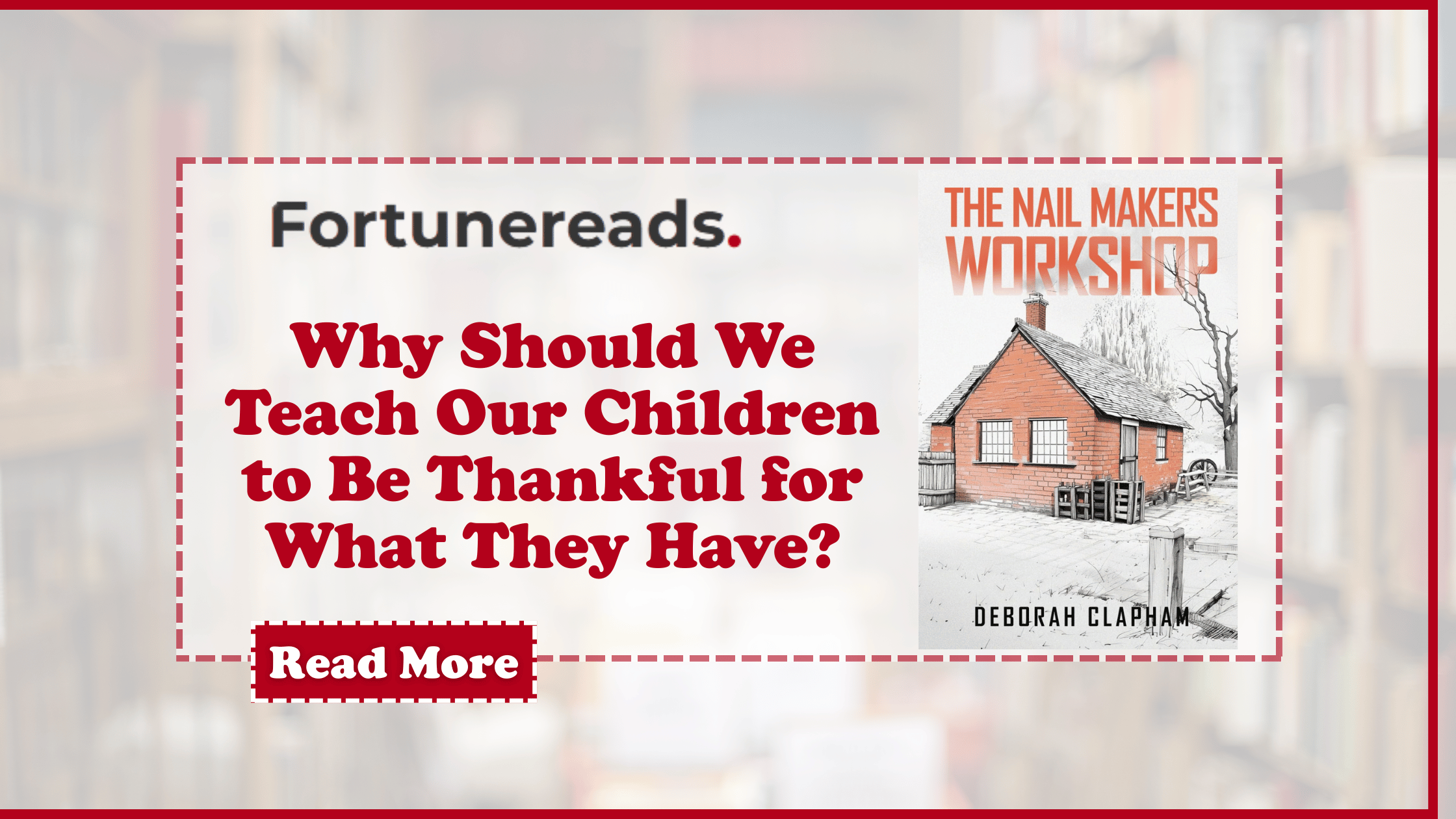
While there are many ways to teach children empathy, stories are one of the best ways to introduce these lessons. In this regard, a well-told story allows children to see the world through another person’s experience. For young readers who want to learn more about this perspective, Emily’s Adventures: The Nail Makers’ Workshop by Deborah Clapham offers a thoughtful example. Through Emily’s story, children gain insight into the daily life of a working family and can reflect on how much has changed over time.
Told through the voice of Emily, a curious young girl, the book explores how nails were once made by hand in small workshops and how entire families relied on this demanding trade to survive. As Emily observes her father and brother working with fire, iron, and heavy tools, readers learn about the process of nail making, the challenges of unfair wages, and the everyday struggles faced by working families. At the same time, the story highlights resilience, family cooperation, and the quiet hope that education can offer. With clear storytelling and helpful illustrations, the book provides an accessible way for children to understand a forgotten craft and the social realities of the past while encouraging empathy and curiosity about history.
The book is now available on https://www.amazon.co.uk/dp/1971610682/
Teaching gratitude does not require complicated lessons; it should begin by helping children understand how life has changed and why appreciation matters.
Books that explore working life and family struggles, such as Emily’s Adventures: The Nail Makers’ Workshop from earlier times, can support this understanding. They allow children to see how hard people worked to build the world we live in today.