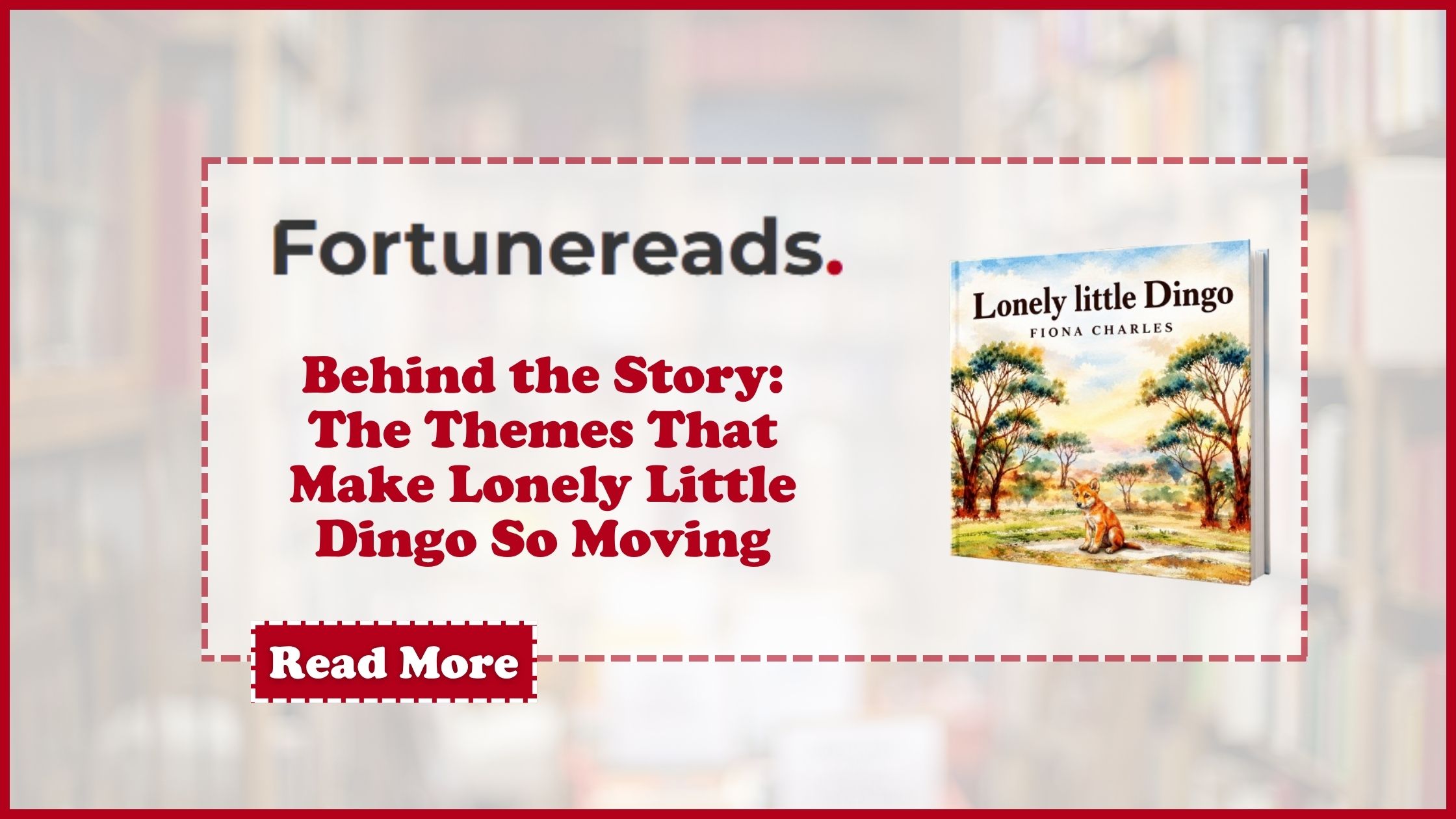
Some children’s books stay with readers because of their characters. Others linger because of the feelings they quietly uncover. Fiona Charles’s Lonely Little Dingo does both, telling the story of a vulnerable young dingo while exploring themes of fear, loneliness, resilience, trust and hope.
At first, Little Dingo’s world is anything but secure.
He opens his eyes beneath the Southern Cross in a crowded den filled with other wild dogs. Instead of comfort, he experiences growling, snapping, biting, hunger and uncertainty over who will care for him.
This difficult beginning establishes one of the book’s central themes: loneliness can exist even when someone is not physically alone. Little Dingo is surrounded by others, yet he lacks the sense of safety and belonging he needs.
As he grows older, another theme begins to emerge: courage.
Little Dingo starts exploring beyond the den. The outside world feels calmer, the air fresher and each journey gives him a little more confidence. He gradually moves farther from the chaos of home, showing young readers that bravery does not always arrive in one dramatic moment. Sometimes it develops through small steps into the unknown.
But confidence does not protect him from hardship.
A trap catches Little Dingo’s hind leg, leaving him in severe pain and unable to run. Hungry, tired and weak, he is forced once again to wait without knowing what will happen next.
When unfamiliar hands finally rescue him, the story introduces another powerful idea: being safe and feeling safe are not always the same thing.
Little Dingo is taken to a warm, clean environment. He is fed, cared for and physically begins to recover. Yet he remains defensive. He hisses, bares his teeth, tears apart his bed and strikes at his cage.
His reaction gives the story emotional depth. Healing is not presented as something instant or simple. Little Dingo remembers the growling and biting of his previous den and those memories bring sadness and anger back to him. Even more poignantly, he still longs to see his fractured family despite the pain associated with his past.
That complexity gives parents, caregivers and educators plenty to discuss with young readers. It can encourage conversations about why someone might remain afraid after a difficult experience, why trust may take time and why people can hold several emotions at once.
Perhaps the most important theme in Lonely Little Dingo, however, is hope.
The book does not conclude with every problem neatly solved. Little Dingo is eventually released and left to face an uncertain future on his own. Beneath the familiar Southern Cross, he walks forward without knowing where his journey will take him. His only companion is hope.
That final image captures what makes Fiona Charles’s story so moving. Hope is not presented as a guarantee that life will be easy. It is the strength to continue when the future remains uncertain.
Through one small dingo’s journey, Lonely Little Dingo offers children an engaging animal story while giving adults deeper themes to reflect on. It is a story about hurt, resilience, belonging and the courage to keep moving.
Lonely Little Dingo by Fiona Charles is available now on Amazon: https://www.amazon.com/dp/B0HLYCX8X3