Many organizations operate in a state that feels productive on the surface but chaotic underneath. Teams are busy, deadlines are met, and activity is constant. Yet, results remain inconsistent, and progress feels slower than it should. This disconnect often signals a deeper issue, a lack of clarity.
Chaos in the workplace does not always look like disorder. It often appears as misaligned priorities, unclear expectations, and constant shifts in direction. Without clarity, even the most talented teams struggle to perform at their best.
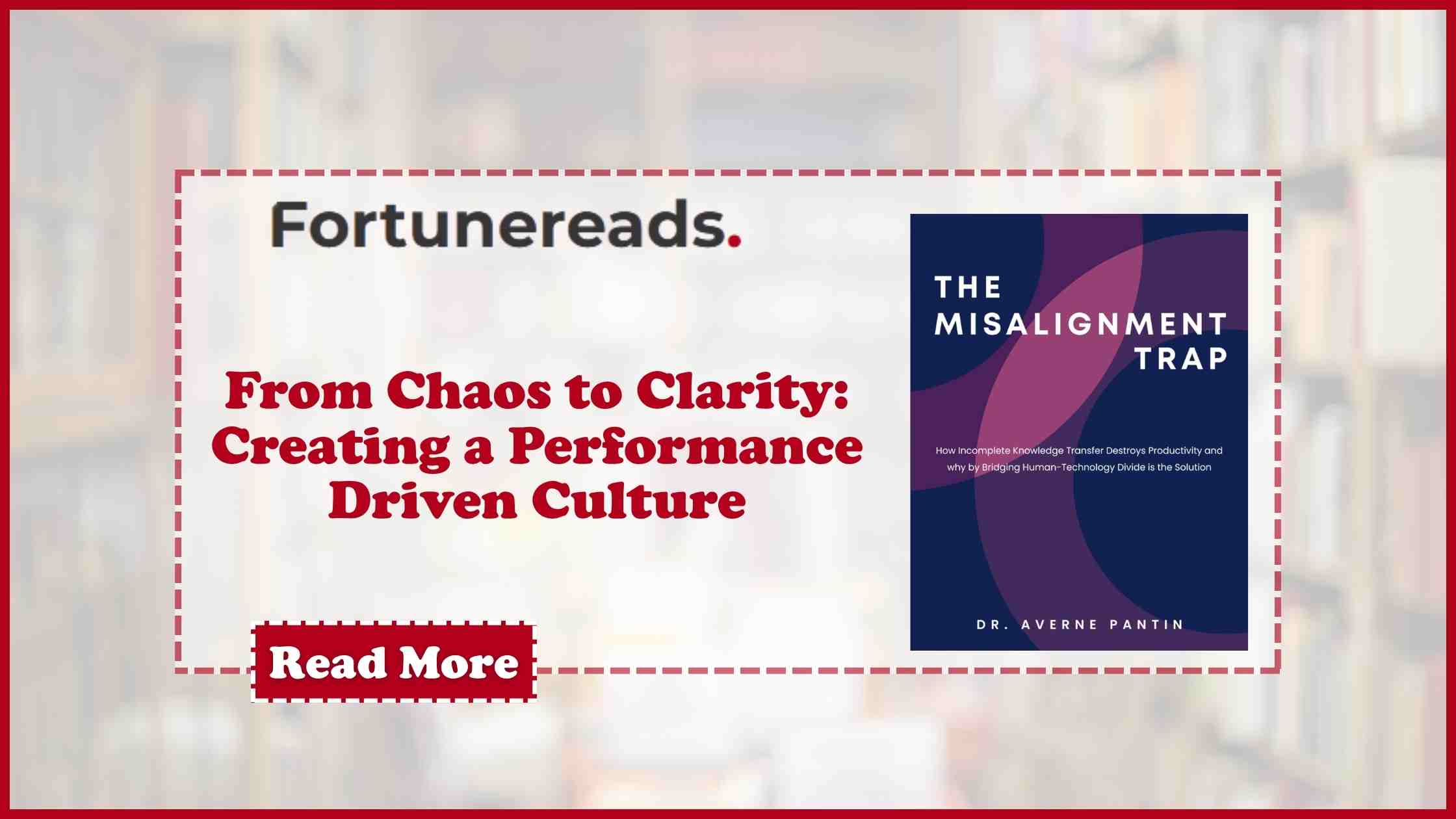
Dr. Averne Pantin, in The Misalignment Trap, explains that performance is not driven by effort alone. It is driven by alignment, structure, and clear direction. When these elements are missing, organizations fall into patterns of confusion that limit their potential. The first step in moving from chaos to clarity is defining a clear vision. Teams need to understand not just what they are doing, but why they are doing it. A well-defined vision provides direction and ensures that every action contributes to a larger goal. Without this, efforts become scattered and disconnected.
Clarity must then extend to strategy. Many organizations create ambitious plans but fail to translate them into actionable steps. A performance driven culture requires strategies that are specific, measurable, and easy to execute. When teams know exactly what is expected, they can focus their energy more effectively. Communication is another critical factor. In chaotic environments, communication is often inconsistent or unclear. Information may be shared, but not fully understood. Leaders must create systems for ongoing communication that reinforce priorities and provide regular updates. This ensures that everyone remains aligned and informed.
Structure also plays a key role. Clearly defined roles and responsibilities eliminate confusion and prevent duplication of effort. When team members understand their specific contributions, they can work with greater confidence and efficiency. Accountability naturally follows when expectations are clearly outlined. A performance driven culture also depends on consistency. Frequent changes in direction create uncertainty and disrupt progress. Leaders must maintain focus and avoid unnecessary shifts in priorities. Consistency builds trust and allows teams to operate with stability.
Another important element is measurement. Without clear metrics, it is difficult to assess progress or identify areas for improvement. Performance driven organizations establish measurable goals and track results regularly. This allows leaders to make informed decisions and adjust strategies when needed.
Feedback and continuous improvement are equally essential. In a culture driven by performance, feedback is not seen as criticism but as an opportunity for growth. Regular evaluations help teams refine their approach and maintain high standards.
Leadership behavior ultimately shapes the culture. Leaders who demonstrate clarity, consistency, and accountability set the tone for the entire organization. Their actions influence how teams think, communicate, and perform. When leadership is aligned, the rest of the organization follows.
The Misalignment Trap by Dr. Averne Pantin provides valuable insight into how organizations can overcome chaos and build clarity. It highlights the importance of alignment at every level, ensuring that vision, strategy, and execution work together seamlessly.
Creating a performance driven culture is not about increasing pressure. It is about removing confusion. When clarity replaces chaos, teams become more focused, decisions become more effective, and results become more consistent.
Organizations that achieve this shift do not just work harder. They work smarter, with purpose, direction, and a clear path toward success.
Get Your Copy On Amazon https://www.amazon.com/dp/1970749768/.