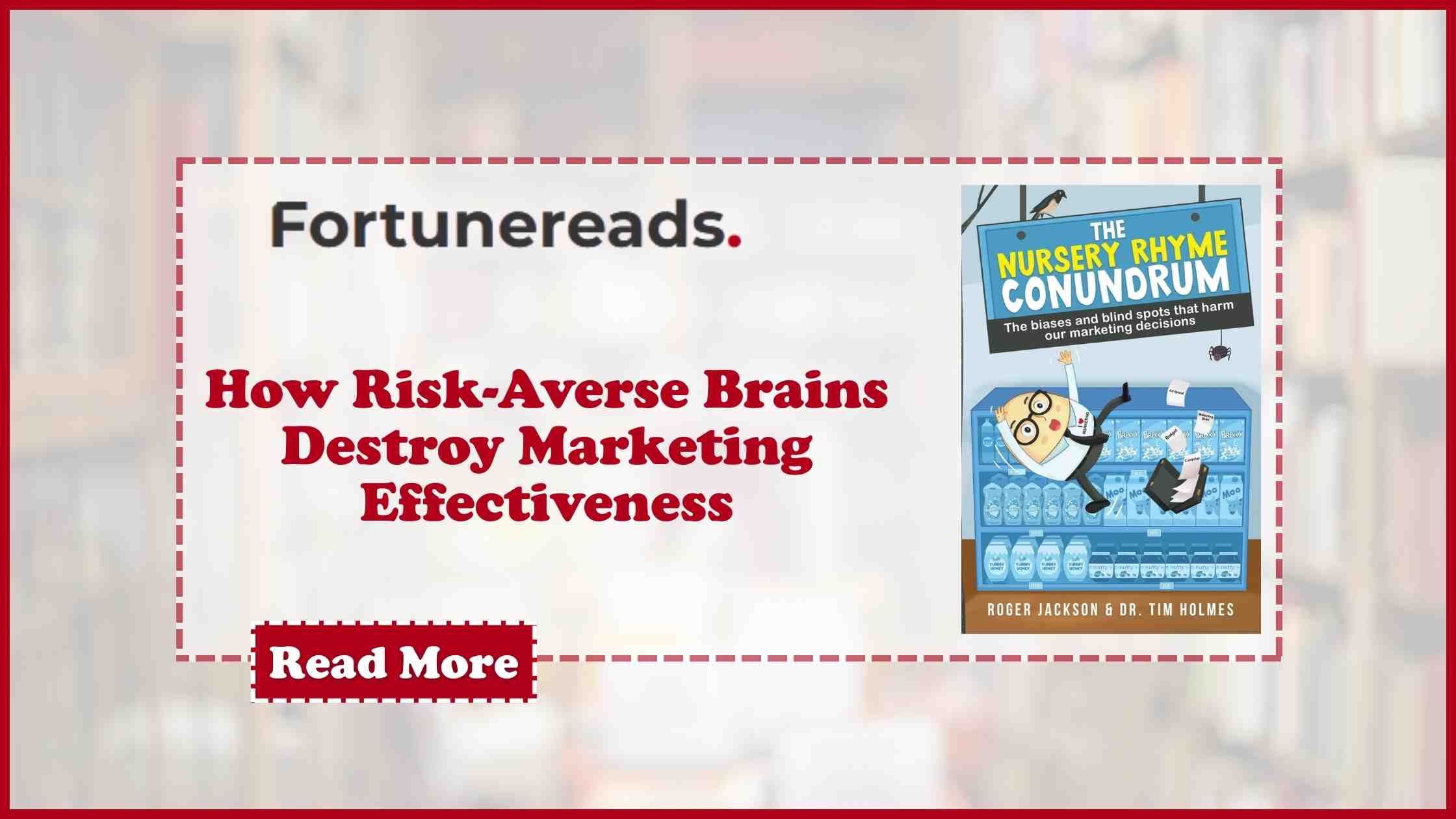
Most marketers believe they choose safe ideas because they want to avoid failure, but the real problem runs much deeper. Many of the decisions made inside meeting rooms come from automatic fear-based reactions in the brain, not from strategic thinking. When teams avoid bold choices, they often create work that feels comfortable but does not get noticed. This quiet damage adds up, and it is one of the main reasons so much marketing fails to make an impact.
The book The Nursery Rhyme Conundrum by Roger Jackson and Dr Tim Holmes helps explain why this happens by showing how the brain’s natural fear of loss shapes creative choices long before any message reaches the public.
The Trap of Playing It Safe
Risk aversion makes marketers cling to ideas that feel familiar. Familiarity feels secure, but it usually results in bland campaigns that blend into a crowded space. This instinct is rooted in the brain’s preference for reducing potential harm. Even when a bold idea could deliver strong attention, the mind pushes toward safer ground.
The authors explain that this fear-shaped response is rarely questioned. Teams often convince themselves that safe work is smart work when, in reality, it limits the chance of real effectiveness. A safe idea may avoid criticism, but it also avoids impact.
Why Most Ads Go Unnoticed
Many leaders assume their campaigns will be seen, understood, and remembered. Yet data shared in the book shows a different story. Most ads fail to spark interest, and almost nine out of ten go completely unnoticed. It happens because people are exposed to huge amounts of information every day. To manage this overload, the brain filters out anything that does not feel distinctive or emotionally charged.
A simple example can be seen in consumer goods advertising. A team may choose a standard message, a predictable visual style, and a neutral tone because it feels professional. But when this ad appears next to competitors with similar choices, it becomes invisible. Nothing stands out, so nothing is remembered.
How Fear Blocks Creative Bravery
Inside organisations, the biggest barrier to effectiveness is often the fear of making the wrong choice. A CMO may quietly reject a bold concept because it feels too different. A brand manager may soften a strong message to avoid upsetting someone. These decisions think small, but each one removes a layer of distinction.
The book shares stories that show how comfort-seeking behaviours weaken creative work. When leaders do not challenge their own instincts, they unintentionally support ideas that feel safe but fail to earn attention.
Moving Toward Calculated Bravery
Effective marketing requires thoughtful bravery. That does not mean taking wild risks. It means understanding how the brain responds to uncertainty and choosing ideas based on real evidence rather than fear. Distinctive ideas attract attention. Memorable messages work harder over time. Brands grow when leaders support creative work that stands out.
For a deeper understanding of risk aversion and how it silently shapes marketing decisions, readers should explore The Nursery Rhyme Conundrum by Roger Jackson and Dr Tim Holmes.
Grab your copies from Amazon. Here’s the link: https://www.amazon.com/dp/1970749032/.
Here is the full podcast where the author dives deeper into the message of the book:
Spotify link: https://open.spotify.com/episode/2LwnCYYPNYOEOIZ51UEuVr?si=yC2xIf0QQja18gztiBw0_w
Apple link: https://podcasts.apple.com/gb/podcast/new-marketing-podcast-available-3-3-26/id1879799244?i=1000751205875