Stories play a key role in helping children process grief and loss because they provide a safe and gentle way to approach emotions that can otherwise feel overwhelming. Children often lack the language or emotional capacity to explain what they are feeling after a loss. Sadness, confusion, fear, and even guilt can exist all at once. Stories create a space where these emotions can be experienced indirectly, allowing children to recognize their feelings without being forced to confront them head on.
When grief enters a child’s life, it can disrupt their sense of stability. Familiar routines may change, trusted people may be gone, and the world can suddenly feel unpredictable. Stories restore a sense of order by offering structure. A beginning, middle, and end helps children understand that pain exists within a larger narrative. This does not remove grief, but it reassures children that emotions move and change rather than remaining fixed forever.
Stories also give children permission to feel multiple emotions at once. Grief is rarely just sadness. It can include anger, longing, fear, and even moments of joy or curiosity. When stories reflect this emotional complexity, children learn that their reactions are normal. They understand that missing someone does not mean they cannot still laugh, play, or imagine. This balance is essential for healthy emotional development.
Another important function of storytelling is memory preservation. For children, the fear of forgetting a loved one can be as painful as the loss itself. Stories show that remembrance does not require constant sorrow. Memories can live through symbols, rituals, and moments of connection. This helps children shift from grief defined by absence to grief that includes ongoing emotional presence.
Magical and imaginative stories are especially effective for young readers. Fantasy creates symbolic language for emotions that are otherwise difficult to explain. Magic can represent love that endures, guidance that continues, or connection that transcends physical absence. These symbols allow children to engage with grief in a way that feels comforting rather than frightening. Imagination becomes a bridge between what was and what still remains emotionally true.
Stories also model coping strategies. Characters who grieve show children different ways of responding to loss. Some withdraw, some ask questions, some seek comfort, and others find healing through creativity or connection. Seeing these varied responses teaches children that there is no single correct way to grieve. It reinforces the idea that healing is personal and that taking time is acceptable.
Importantly, stories do not rush resolution. They acknowledge that grief does not disappear quickly. This pacing mirrors real emotional recovery and reassures children that there is no deadline for feeling better. By allowing space for sadness without demanding immediate happiness, stories foster patience and self-compassion.
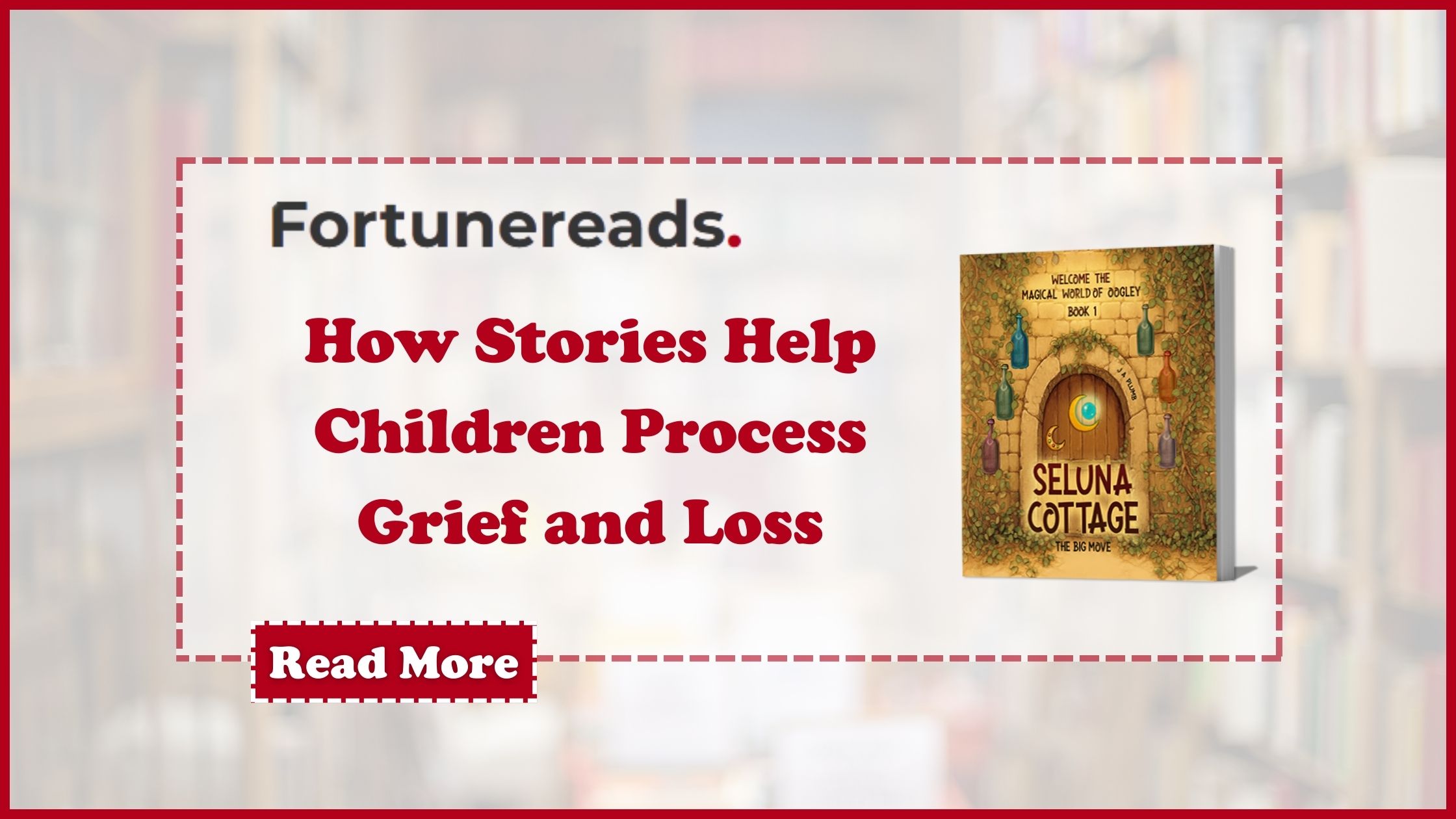
These themes are gently and thoughtfully explored in Welcome to the Magical World of Oogley: Book 1, Seluna Cottage, The Big Move by Janine Plumb. The story weaves the loss of Nanan Niecey into a comforting narrative where love, memory, and gentle magic coexist. Through imaginative discovery and family support, the book shows children that while loss changes life, it does not erase connection. Instead, stories and imagination help keep love present, offering reassurance that even in grief, wonder and healing can still be found.
Available now on Amazon: https://www.amazon.com/dp/B0G5HSKH76