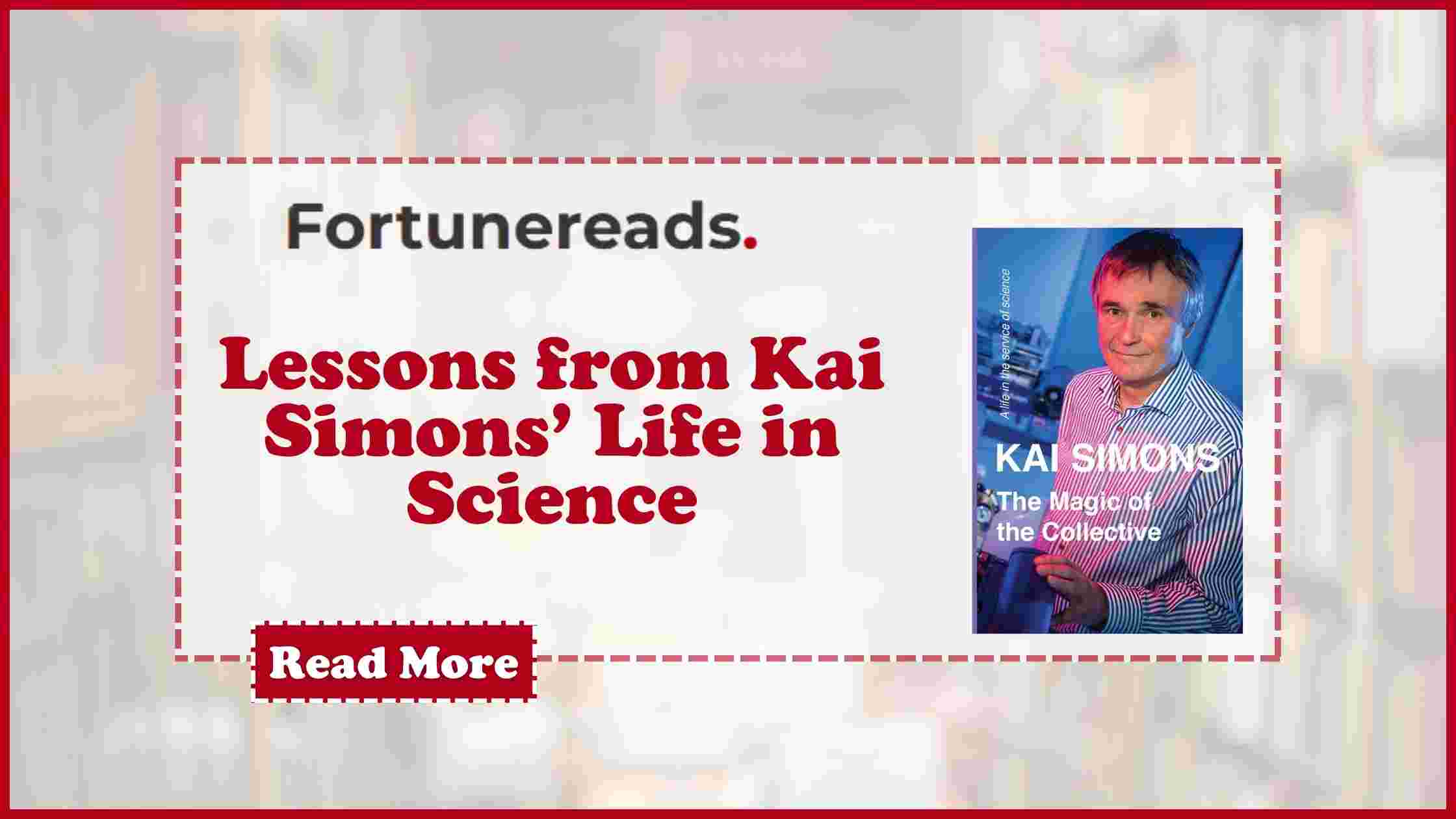
When Kai Simons began his career in Helsinki, he was far from the world’s leading centers of molecular biology. This distance, however, shaped his outlook in ways that would define his life in science. Rather than chasing individual glory, he came to believe that collaboration was the real driver of discovery. His memoir, The Magic of the Collective, reflects on this journey and makes a strong case for why cooperation must be central to modern research.
Simons describes the culture of science as one that often prizes competition. Success is measured by individual accomplishments: securing grants, publishing papers, and building a reputation. This creates an environment where egos dominate, and researchers are forced to focus on their own advancement. The result is a community where many talented people feel excluded or discouraged. Simons calls this a lost opportunity because science needs all the diversity of thought and perspective it can get.
But science is also built on a paradox. While individual careers may depend on competition, the scientific process itself is collective. Ideas are tested, challenged, and refined by others. Knowledge grows not from one voice but from many. Errors are exposed, new insights are added, and understanding advances only when researchers build on each other’s work. For this system to function, humility and cooperation are essential. Simons believes these values are too often forgotten.
His career offers clear examples of how collaboration can succeed. At the European Molecular Biology Laboratory in Heidelberg, scientists from across Europe worked together in ways that had rarely been seen before. By bringing different skills and backgrounds into the same environment, EMBL created a space where disciplines could overlap. As a result, innovation flourished. Later, in Dresden, Simons founded the Max Planck Institute of Molecular Cell Biology and Genetics with the same vision. It quickly became one of Europe’s most dynamic research centers, in large part because of its cooperative culture.
The pandemic made these lessons visible on a global scale. The rapid sequencing of the virus and the creation of vaccines were remarkable achievements, made possible by open collaboration across borders. Yet the story also highlighted the challenges that come after discovery. Distribution, fairness, and public trust proved to be as important as the science itself. Simons sees this as a sign that scientists must broaden their sense of responsibility. Research is not separate from society. It must engage with it, explain itself clearly, and anticipate the consequences of innovation.
Simons also reflects on the broader contradictions of scientific progress. Technology has improved lives but has also fueled crises such as climate change. This cycle, where one breakthrough creates new problems that require another, shows why science must be guided by cooperation, responsibility, and long-term vision. Scientists need to work across disciplines, and institutions must support environments where collaboration is the norm rather than the exception.
The Magic of the Collective is more than a personal memoir. It is a call to rethink how science is done and how it serves society. Simons argues that by embracing cooperation and humility, science can avoid some of the pitfalls of competition and ego. His career proves that collective environments not only lead to better research but also create communities that welcome diverse voices and ideas. For anyone curious about how science really works and how it might work better, his book offers valuable lessons that reach far beyond the laboratory.
Head to Amazon now: https://www.amazon.com/dp/1917007027.