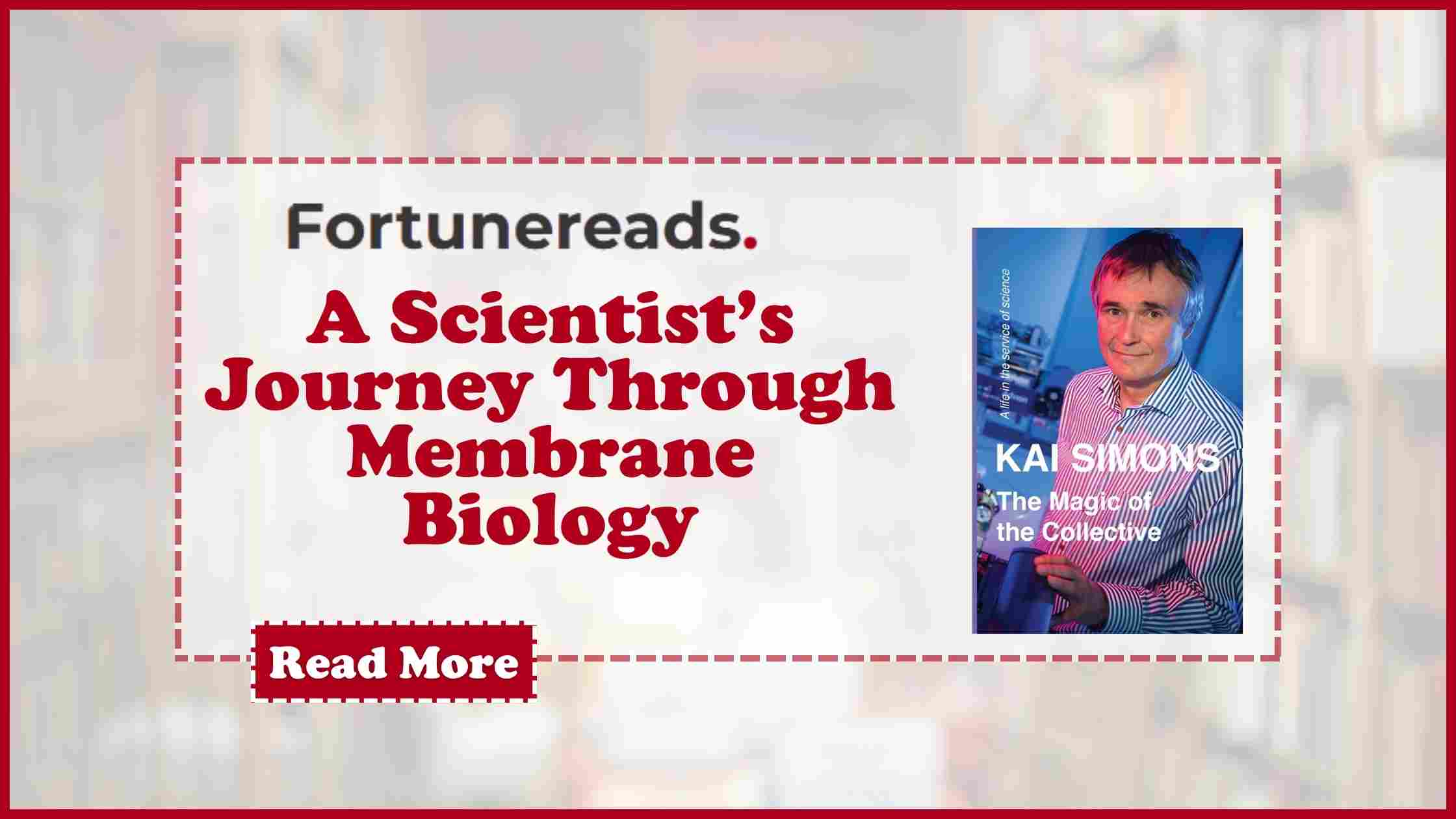
What does it mean to truly understand the cell? For many scientists, the answer lies in DNA, proteins, or signaling pathways. But for Kai Simons, the gateway to understanding life at the cellular level has always been the membrane. Over a career spanning decades, he has changed how we think about this vital structure and helped reshape the field of modern cell biology.
Cell membranes are dynamic, complex environments that control what enters and exits a cell, organize internal components, and facilitate communication with the outside world. Yet for much of the twentieth century, membranes were difficult to study. Their lipid composition made them resistant to the standard tools of molecular biology.
Simons was among the first to see the untapped potential of studying membranes directly. Early in his career, he used enveloped viruses as a model to understand membrane behavior. This innovative approach allowed him to uncover how viruses fuse with host cells and exit to infect others. These insights opened new doors in membrane research.
One of his most influential contributions was the introduction of the lipid raft concept. While working with epithelial cells, Simons noticed that certain lipids and proteins were sorted to specific parts of the cell membrane. This led to the discovery that membranes contain small, dynamic subdomains enriched in cholesterol and sphingolipids. These regions, called lipid rafts, help organize signaling molecules and control many key cellular processes.
The lipid raft hypothesis was initially controversial, but it has since become foundational in fields as diverse as immunology, neuroscience, and cancer biology. Thousands of papers have built upon the idea, exploring how membranes orchestrate everything from immune responses to nerve cell communication. Simons’s work gave scientists a new framework for thinking about cell architecture and dynamics.
Simons recognized that better tools were needed to advance membrane biology further. For that, he championed the use of biochemical techniques that allowed for more precise analysis of membrane components. He also helped develop technologies for lipidomics, the study of lipids in cells and tissues, which now plays a central role in understanding metabolism and disease.
Simons’s work bridged biochemistry, virology, and molecular biology. He collaborated across fields and borders, and he built institutions where this kind of science could thrive. His story is also one of persistence. Many of his ideas were met with skepticism at first. But through rigorous research and a collaborative spirit, he turned those ideas into cornerstones of modern biology.
To follow the full arc of this scientific journey, from viruses to lipid rafts to biotech innovation, read The Magic of the Collective. This book recounts Kai Simons’s life and provides a thorough reflection on how one scientist’s path can lead to breakthroughs that change the way we understand life itself. This book has the potential to change your life if you wish to support the advancement of science and medicine.
Here is a link to purchase: https://www.amazon.com/dp/1917007027