On April 15 and May 12, US President Donald Trump signed two executive orders (EOs) implementing an MFN (Most Favored Nation) system to set US drug prices. The MFN target price is set as the lowest price an OECD country with a GDP per capita of at least 60 percent of the U.S. GDP per capita can get.
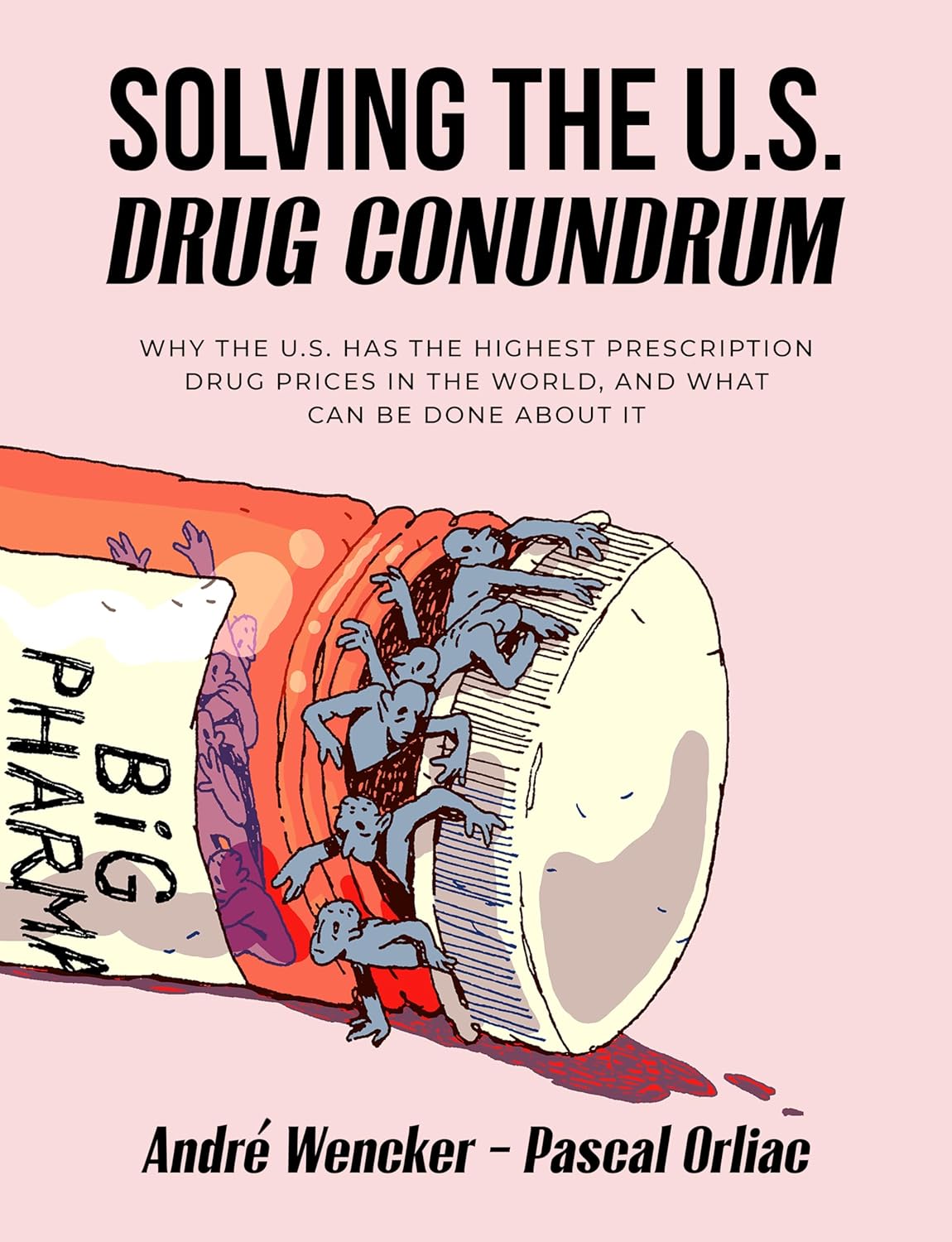
In our book, “Solving the US Drug Conundrum,” we demonstrate that, indeed, American patients pay far too much for their drugs, often skipping doses. In other words, they pay (far) more to receive (far) less. Based on IQVIA Institute data, we could establish that they use roughly 30% fewer drugs than people in Western European countries, a reality linked to the fact that prices at the manufacturer level are 4.5 to 4.8 times higher than in France or the UK.
The question is then: how is it possible to implement such a system since pharma companies make 50% of their turnover (at list prices), and 75% of their profits in the US?
The pharma industry is immensely rich and highly profitable
The pharmaceutical industry is very profitable; the data in Part One of our book shows that the 10 largest companies’ profit rates were 16.5% in 2020 and 22.9% in 2021, with marketing costs up 20%.
These ten largest companies were subject to a thorough investigation by the Congress House Committee on Oversight and Reform which revealed shocking realities: they paid their top executives over $2.2 billion from 2016 to 2020, including $797 million in compensation for their CEOs, with incentives tied to drug price raises, to meet revenue targets. In 2023, The Financial Times signaled that the industry was at the head of a $ 1.400.000.000 (1.4 trillion!) trove, which allows it what the paper called “splurges” to acquire smaller, innovative companies.
THE PROMISING POTENTIAL OF THE MFN SYSTEM DESPITE THE CHALLENGES
Imposing on other countries to pay more is legally impossible; they will argue that they were able to negotiate acceptable prices. In Part Three of our book, we present the systems of Germany, the UK, and France; the reader will see that there is no “freeloading” here, but the work of public servants and experts, devoted to the common good, working under the control of politicians of integrity. (In Appendix I of our book, we recall how the industry could prevent Medicare from negotiating prices…).
The Purchasing Parity Power to alleviate the effort?
Reaching the MFN target will be challenging. Here comes the PPP, Parity Purchasing Power. The industry will try to make the following argument: since the United States has a higher GDP per capita than other countries, cost-effectiveness thresholds based on the value of a statistical life will allow for a higher US price than in European countries such as France, Germany, or the UK.
Applied to pharmaceuticals, considering that a pharmaceutical treatment substitutes for another more expensive type of care, for example, surgery, this will allow the pharmaceutical industry to charge higher prices than in the reference countries.
This is not a “silver bullet”, but could alleviate part of the effort.
In return, will there be more control over the industry’s dubious practices on patents?
In return, the FDA should tighten its lax regulations and be mandated to conduct cost-effectiveness studies, as most countries that are able to do so have been performing them for years. Another legitimate objective should be to stop companies from gaming the US patenting system, as the European Commission did on the other side of the pond as early as 2008/2009. Our book has more on all these very important issues.