President Donald Trump’s EXECUTIVE ORDERS
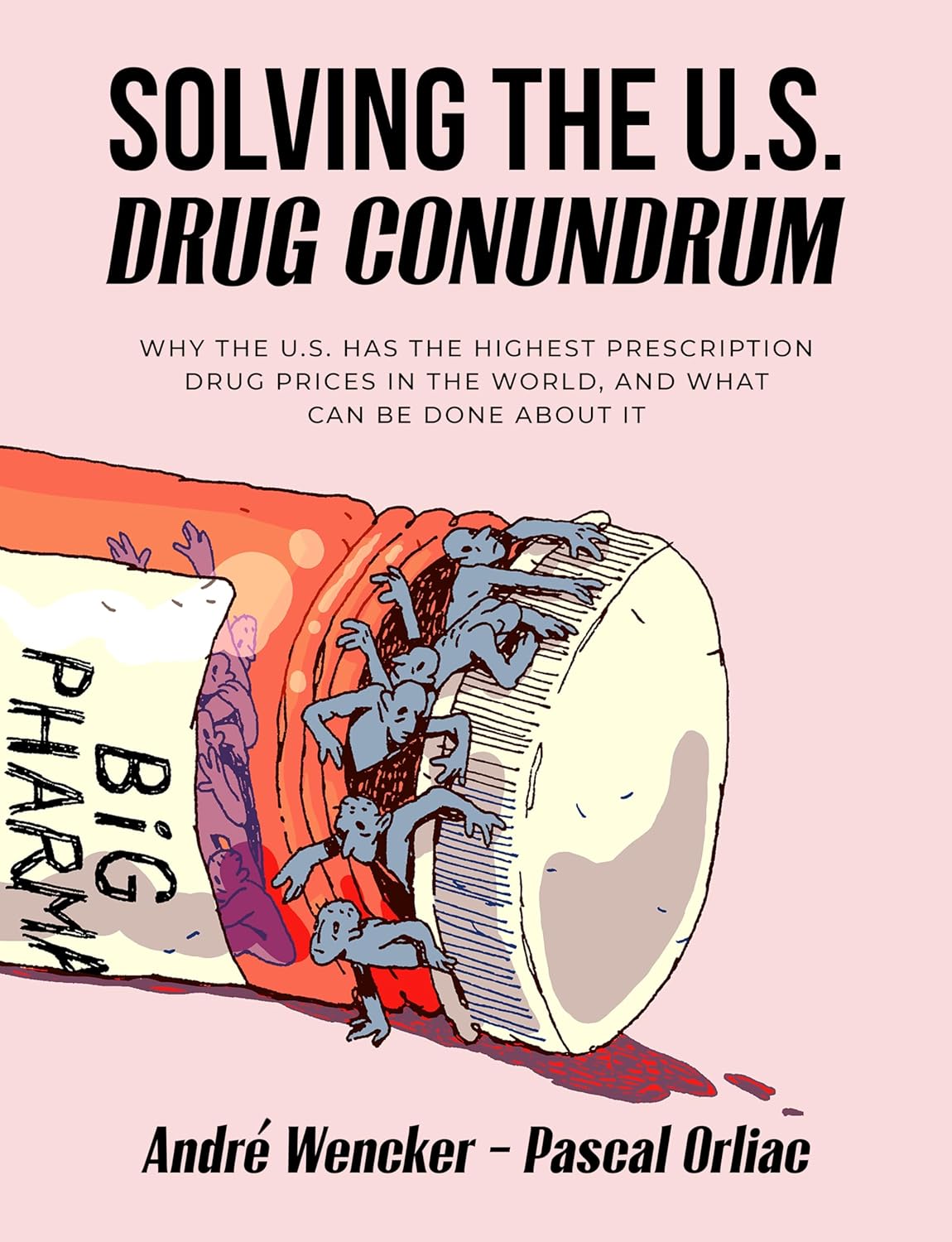
Throughout the last two years, Big Pharma has waged a powerful, effective press campaign to blame the PBMs for the very high drug prices in the USA. Wencker and Orliac describe extensively these actors’ incredible tactics to line their pockets, going for example so far as to sell generic drugs as specialty drugs! They nonetheless set the record straight and designated the real culprits: US drug prices at the manufacturer level could be lowered by 70 to 80% with a Most Favored Nation status, as recommended by President Trump’s recent EOs.
Moreover, they produce data showing the terrible, shocking consequences of this situation, which the industry is probably well aware of, but has hidden until now!
Appendix One of the book recalls the scandalous lobbying/corruption campaign surrounding the 2003 legislation creating Medicare Part D, which led to the present situation for retirees.
Debunking Big Pharma’s usual refrain: “Lowering drug prices would stifle innovation”
First, Wencker and Orliac bring data from reputable institutions showing the huge impact of US taxpayers’ financing of fundamental research;
Second, they contend that developing new drugs is not as costly as the industry argues. The authors, among others, cite Dr. “Vinay” Prasad’s (who is currently at the helm of the FDA’s CBER, the Center for Biologics Evaluation and Research) work on the subject; it doesn’t sustain the industry’s claims.
Changing the way drugs are admitted to the U.S. market and reimbursed
Wencker and Orliac present what Europe did: over decades, their national authorities built systems to evaluate drug efficiency, compare drugs, provide impartial, science-based information, and dispense it to doctors. In these countries, doctors are the only ones entitled to recommend their patients’ treatments and medicines, relying on impartial recommendations from these independent national bodies; no gaming here with tier placement by greedy players, solely obsessed with the return on their shares.
In the U.S., under the pressure of Big Pharma, the FDA is not allowed to recommend the best therapeutic strategies to doctors after evaluating a drug. Drug companies are not even required to provide all of their clinical trial results (which, the authors recall, led to the Vioxx tragedy)!
In Europe, hospitals deliver cancer treatments to patients for free. They are left with low, if any, copayment for their costly “specialty drugs” (a uniquely American concept!) that U.S. patients are often unable to afford.
Patenting issues and anti-competitive tactics are the “next frontier” to solve the U.S. Drug Conundrum.
In the aughties, the European Commission issued a sweeping report unveiling the industry’s tricks regarding “patent thickets”, to unduly extend the exclusivity on their drugs, an essential condition of their super profits (of 30%, at the time!). Amgen’s Enbrel, for instance, is protected in the U.S. until 2029, while it saw the entry of a biosimilar in Europe as early as 2016; AbbVie entered into anti-competitive agreements (which are forbidden in Europe), maintaining monopoly pricing for Humira until 2023, while it had lost its exclusivity in Europe as early as 2016. And the list goes on.
“Solving the U.S. Drug Conundrum”, a book that prepares you for the upcoming battle
Will Trump’s EOs finally put an end to Big Pharma’s extraordinary nuisance to American patients? Will they allow patients to access their treatments under conditions comparable to those in all other developed countries? André Wencker and Pascal Orliac’s book provides 90% of Americans backing the move, with the keys to understanding and even participating in the upcoming battle, with Americans’ health at stake.