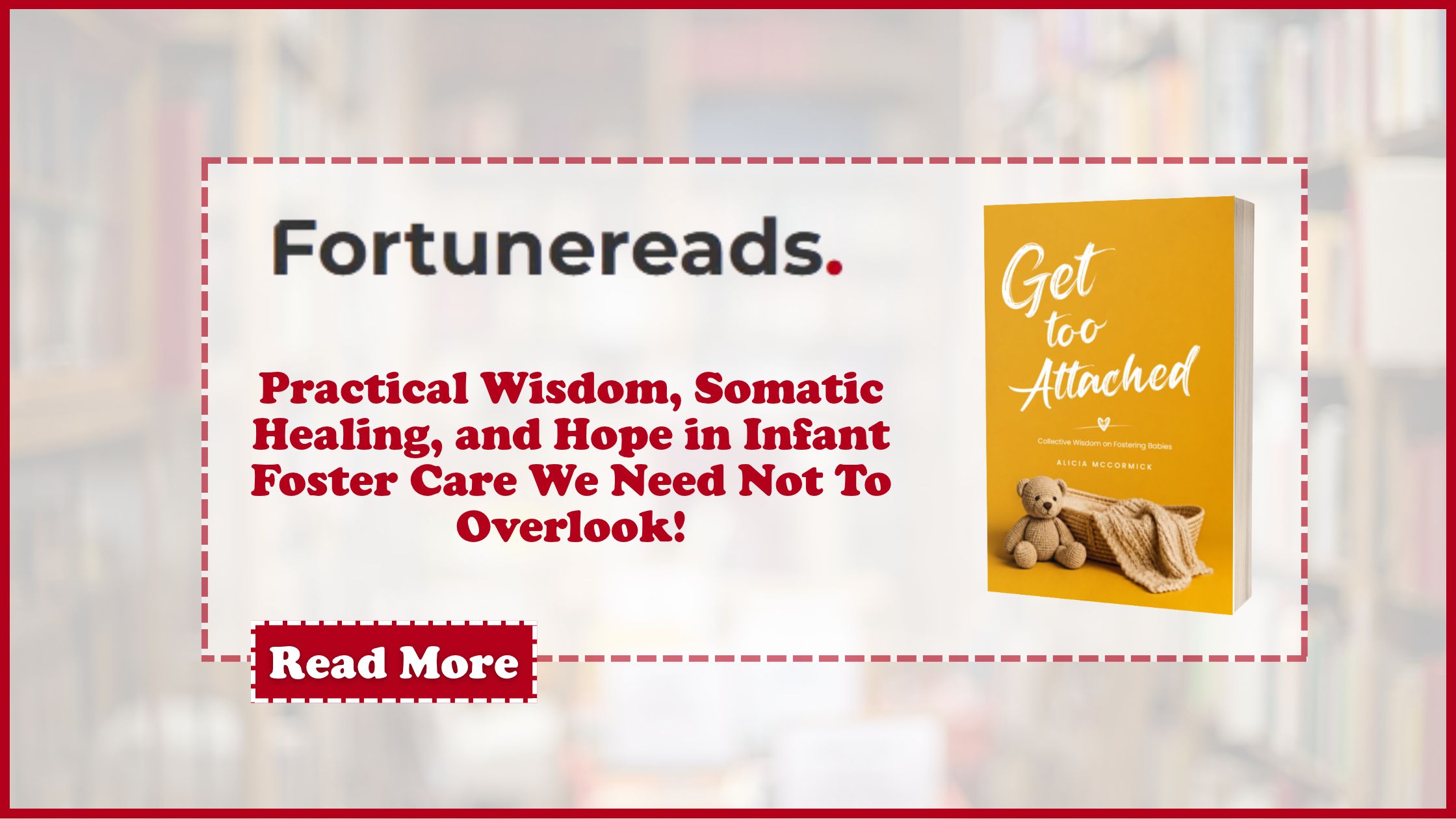
If you have ever considered fostering an infant or supporting a family that does but decided to step back from your decision because you think you might not be the best parents or become too attached to the child, you are not alone in this dilemma. In fact, many individuals or couples who think about fostering a baby are confused about their decision, primarily because they are not aware of the bigger picture. To help you in this regard, Dr. Alicia McCormick’s Get Too Attached: Collective Wisdom on Fostering Babies can be of great help. The book is organized into short chapters, and each of them features structured interviews with foster parents from all walks of life. This book feels like sitting down for coffee with a community of veteran foster mothers who tell you exactly what to expect without sugarcoating the hard parts.
Throughout the narrative, readers learn how infant behaviors, such as feeding struggles and extreme startle reflexes, and emotional withdrawal, are intertwined with preverbal trauma, NICU stays, and initial attachment wounds, which many foster parents might not even realize. The book details various aspects for foster parents to gain additional knowledge about their infant, including but not limited to:
- Preserving Roots and Identity: In Chapter Two, Bonnie shares her experience taking in a nine-day-old infant who was the biological younger brother of a teenager she had just adopted. Bonnie emphasizes the importance of making Shutterfly life books with pictures of the baby’s birth family, first foster family, and NICU nurses, showing how to honor a child’s full heritage from early infancy.
- Navigating Food Insecurity and Trauma: In Chapter Five, Liz details how her foster daughter, who suffered severe starvation as a newborn, stopped crying when she was hungry. As a young child, she experienced intense meltdowns and behavioral regressions whenever her body needed nourishment. Liz’s story illustrates how parents must learn to re-interpret dysregulation through a trauma-informed lens rather than relying on traditional discipline.
- The Necessity of a Specialized Village: Across multiple accounts, including Kimberly’s story in Chapter Thirty and Kim’s in Chapter Fourteen, the book proves that no one can foster in isolation. From church foster closets and meal trains to trauma-informed babysitters, the text showcases how communities can wrap around foster homes to prevent caregiver burnout.
One of the greatest strengths of Get Too Attached is its balanced, deeply empathetic view of biological parents. Unlike other books that paint birth parents as villains, the contributors repeatedly frame them as adult survivors of unaddressed generational trauma who urgently need grace, support, and systemic resources.
Indeed, Dr. McCormick has crafted a manual that balances neuroscience, early intervention strategies, and practical caregiving advice with deep emotional resonance. Get Too Attached equips caregivers not only to survive the sleepless nights and complex administrative hurdles, but to offer the radical, responsive love that gives trauma-exposed babies their very best chance at healing.
Read the book on Amazon: https://a.co/d/021kJ9Y3