When an infant is placed into a foster home, their entire world has just been upended, even if they are only a few days old. They have experienced the profound attachment wound of being separated from the only voice, scent, and heartbeat they knew in utero. For these infants, physical safety is not enough, and foster parents must build relational and physiological safety for them to find comfort in their new home. Kangaroo care and baby-wearing come into play as great approaches to caring for infants, and they serve as an absolute lifeline for foster infants navigating early trauma.
Infants process the world primarily through their bodies, and when they are exposed to prenatal stress, medical isolation in the NICU, or the chaos of removal from their biological mothers, their nervous system locks into a chronic state of fight-or-flight (or freeze). Traditional parenting advice often cautions against “spoiling” a baby by holding them too much. However, neuroscience proves that you cannot spoil a traumatized infant as their bodies literally store the memory of abandonment and unpredictability.
When an infant goes rigid when held, arches their back, or stares blankly into space, they are signaling that human touch feels foreign and unsafe. Overcoming this barrier requires intentional, consistent physical closeness that communicates safety directly to their autonomic nervous system.
How Kangaroo Care Works
Kangaroo care involves direct skin-to-skin contact where a diaper-clad baby is placed upright against a caregiver’s bare chest. It does wonders for an infant. For foster babies, skin-to-skin contact helps stabilize their heart rate, regulate body temperature, and improve oxygen saturation. More importantly, it builds attachment. Feeling a steady, calm adult heartbeat beneath their cheek teaches a dysregulated infant that another human being can be a safe harbor. Similarly, baby-wearing will keep an infant securely strapped to your chest through a soft wrap or structured carrier. Throughout the day and during housework, you mimic the womb’s constant motion and containment. The baby feels your body move, hears your voice vibrating through your chest, and absorbs your calm energy. It provides the sensation of being held without demanding forced, overwhelming face-to-face interaction that a traumatized baby might initially reject.
Foster infants often stop crying to conserve energy when their needs go unmet. But by wearing your baby close, you become finely attuned to their micro-cues, which will help them get used to you and stabilize them, allowing you to respond instantly before panic sets in.
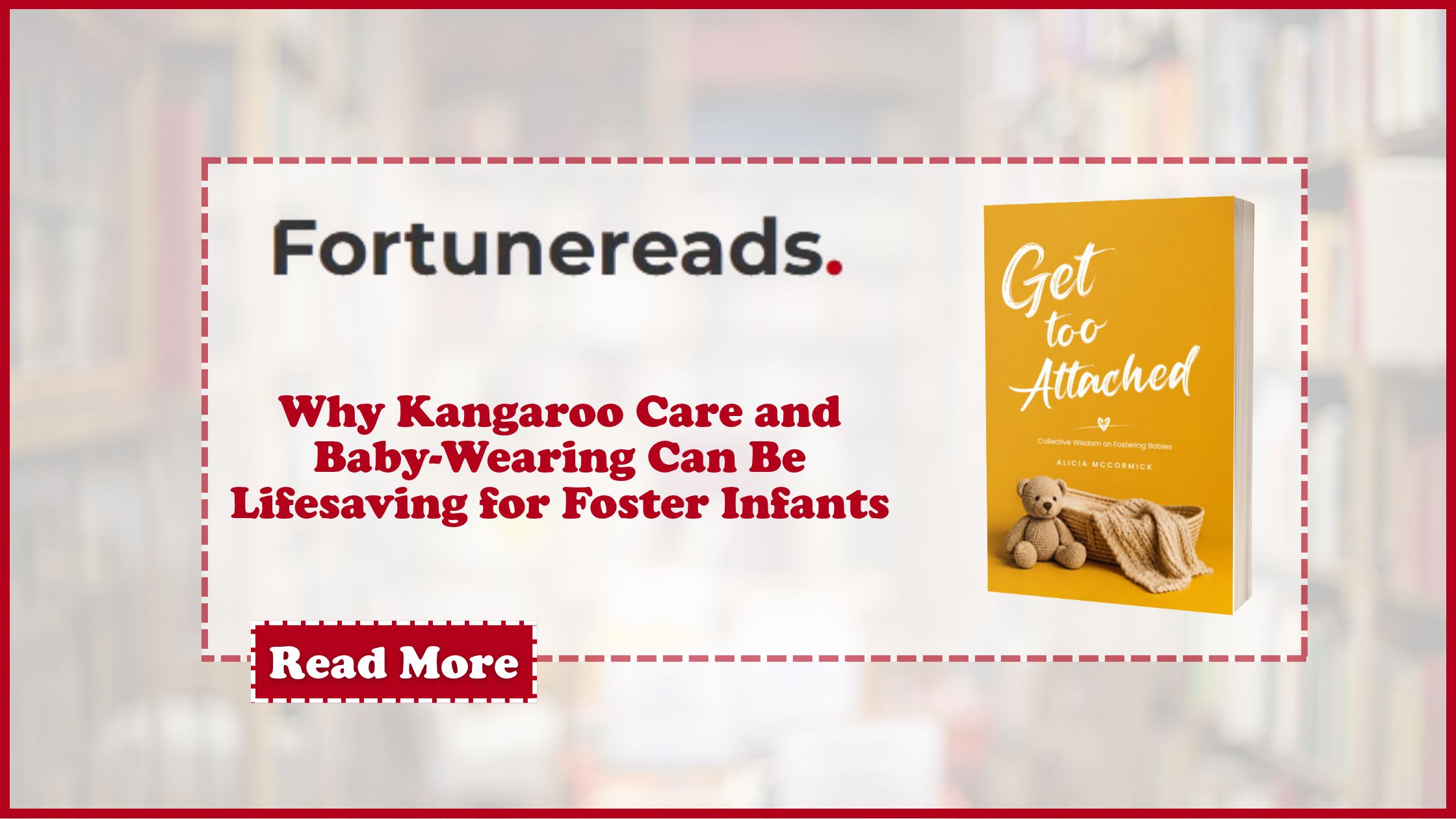
If you want to dive deeper into practical, attachment-focused strategies that heal infant trauma, we urge you to read Get Too Attached: Collective Wisdom on Fostering Babies by Alicia McCormick, PhD. Contrary to the common belief that babies are blank slates untouched by hardship, this book argues that infants entering foster care can invariably carry trauma, which could stem from prenatal stress, substance exposure, and the profound disruption of being separated from their biological families. Through diverse personal accounts, the book emphasizes the critical need for trauma-informed parenting, specialized infant development support, and resilient community networks. This would encourage foster parents to prioritize attachment, support reunification, and advocate fiercely for vulnerable children, helping them and the infant become a healthy, happy family.
Read the book on Amazon: https://a.co/d/021kJ9Y3