As intelligent systems move from experimentation to full scale deployment, organizations often focus their attention on implementation. Teams plan integration, test performance, and train users. Yet one of the most consequential risk decisions occurs much earlier. It happens at procurement. The moment a contract is signed, the trajectory of oversight, transparency, and accountability is largely set. In the age of AI, procurement is no longer an administrative function. It is the new frontline of risk management.
When organizations purchase AI enabled platforms, robotics, analytics engines, or monitoring tools, they are not simply acquiring software. They are introducing systems that will influence decisions, shape workflows, and potentially affect worker health and safety. If procurement focuses only on cost and functionality, critical risk considerations may be overlooked. Transparency clauses may be absent. Data governance standards may be unclear. Responsibility for system errors may remain ambiguous.
Vendors often present performance metrics that highlight efficiency and predictive accuracy. Far fewer provide detailed insight into system limitations, bias mitigation processes, stress impacts, or layered safety controls in human machine environments. Without explicit contractual requirements, organizations may lack access to audit trails, explainability features, or override mechanisms. In high hazard settings, this gap can translate into physical risk. In office environments, it can lead to psychosocial strain and erosion of trust.
Effective procurement must therefore embed governance from the outset. Contracts should define accountability structures, disclosure expectations, and monitoring rights. They should require evidence of risk assessment prior to deployment. They should establish clear lines of responsibility if harm occurs. Procurement teams must collaborate with safety professionals, legal counsel, and operational leaders to ensure that intelligent systems align with human centered safeguards.
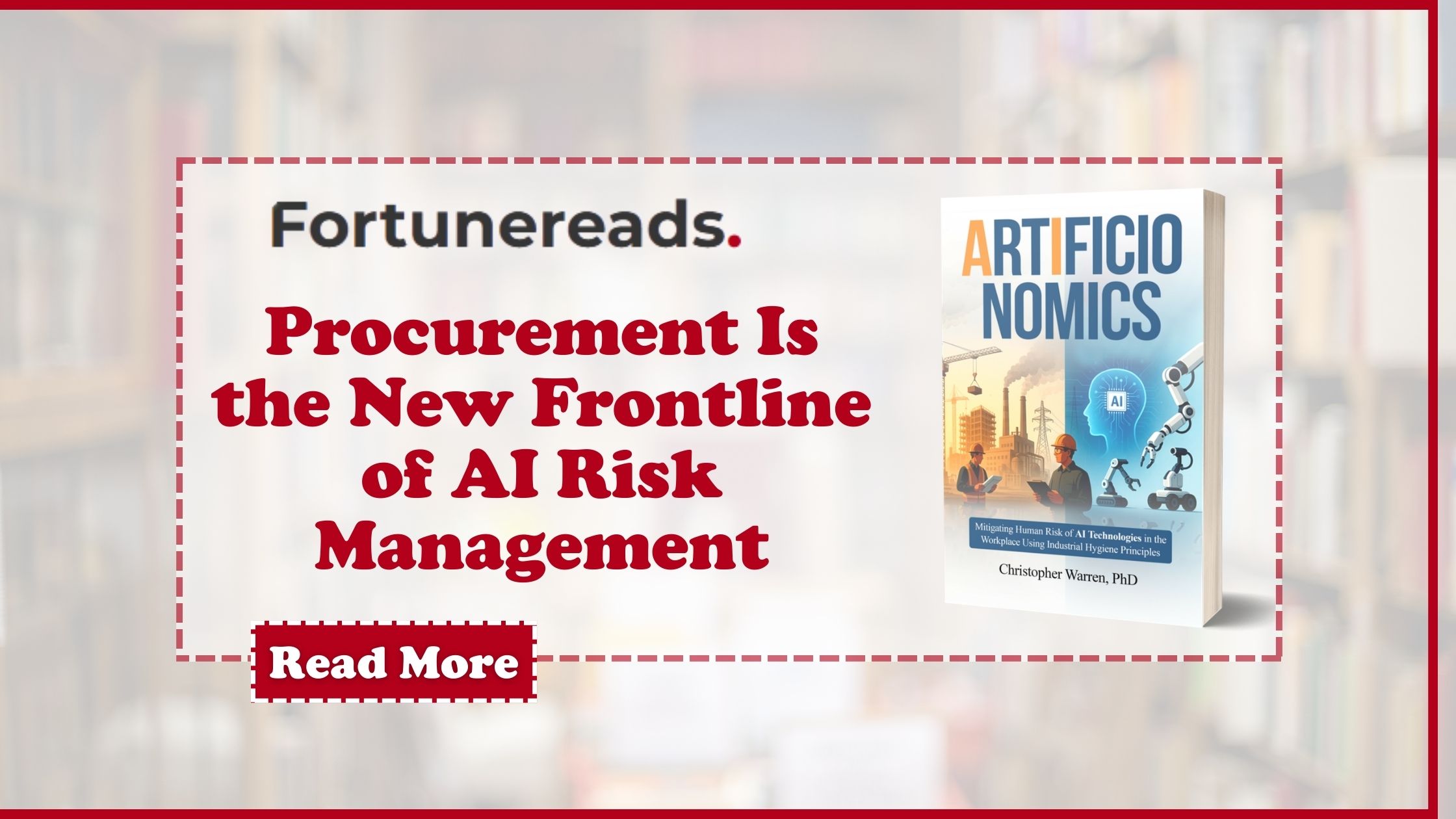
This strategic shift is central to Artificionomics: Mitigating Human Risk of AI Technologies in the Workplace Using Industrial Hygiene Principles by Dr. Christopher Warren. The book reframes AI integration as an occupational health issue and emphasizes that risk management begins before implementation. By applying the principles of anticipating, recognizing, evaluating, and controlling hazards at the procurement stage, organizations can prevent downstream instability.
Procurement driven governance also strengthens organizational resilience. When oversight requirements are embedded contractually, continuous monitoring becomes feasible. When transparency is mandatory, worker trust improves. When layered safeguards are specified in advance, safety performance becomes measurable rather than reactive.
The rapid adoption of intelligent systems will continue. Competitive pressure ensures that organizations will seek new tools to improve productivity and decision making. The differentiator will not be who deploys first, but who governs best. Procurement is the strategic inflection point where governance either takes root or is neglected.
Leaders who recognize procurement as the frontline of AI risk management position their organizations for sustainable innovation. They ensure that efficiency gains do not come at the expense of dignity, health, or safety. Artificionomics provides the framework to elevate procurement from transactional purchasing to disciplined stewardship in the age of intelligent systems.
Get your Copy Now on Amazon: https://www.amazon.com/dp/B0GFY4RL6B