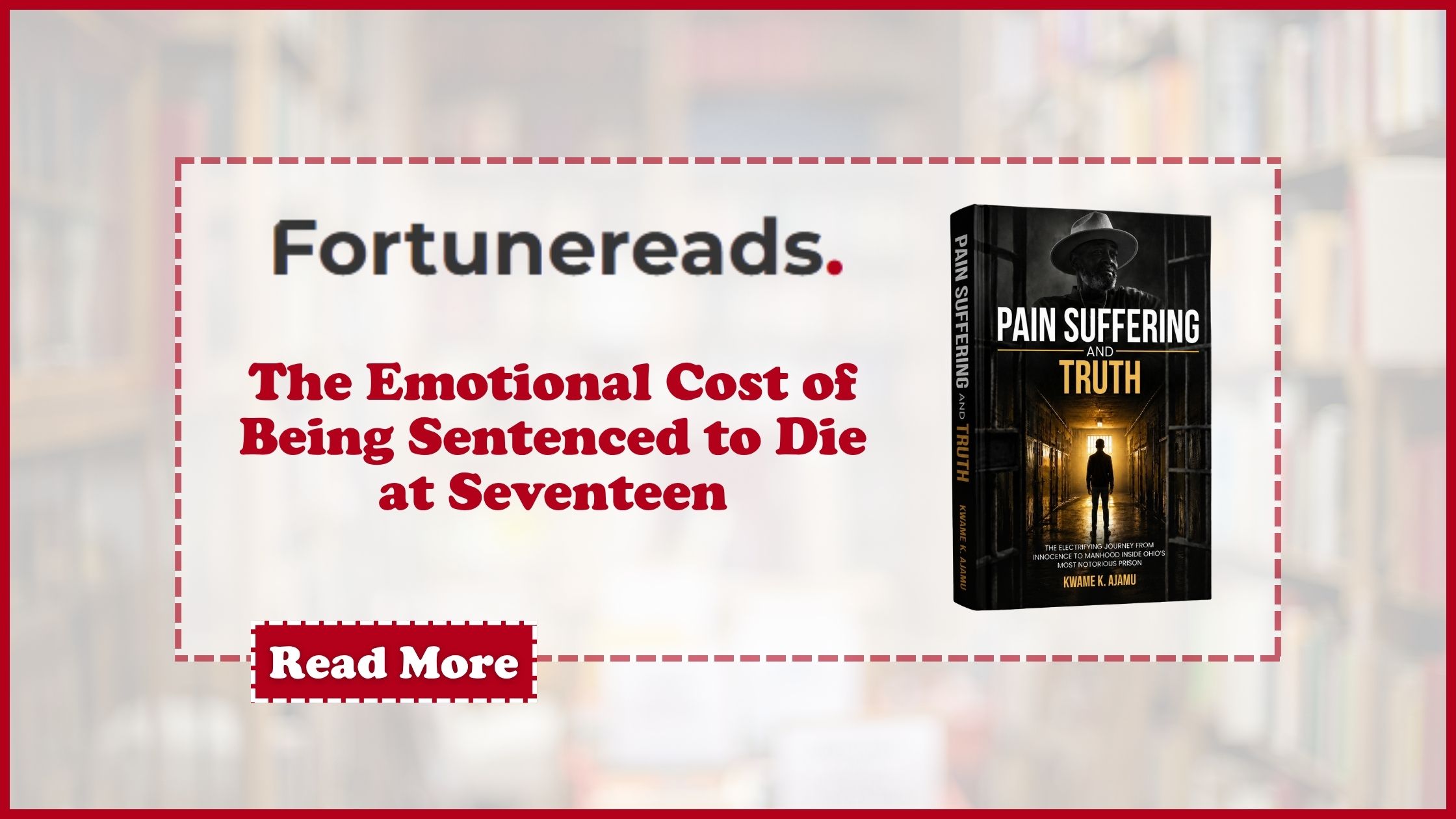
At seventeen, most boys are still trying to understand who they are. They are learning how to become men, how to make sense of the world, how to dream beyond the streets that raised them. Kwame K. Ajamu, born Ronnie Bridgeman, was not given that chance.
He was sentenced to die.
Pain, Suffering and Truth takes readers into the mind and heart of a young man forced to face death before he had truly begun to live. Accused of a crime he says he did not commit, Kwame was pushed into a legal nightmare that turned his youth into evidence, his fear into silence, and his future into a death sentence.
The emotional cost of that kind of punishment is almost impossible to measure. How does a seventeen year old sleep knowing the state has chosen a day for him to die? How does he breathe inside a cell built for waiting? How does he keep from breaking when every sound, every guard, every lock, and every passing hour reminds him that his life no longer belongs to him?
This book does not tell the story from a safe distance. It pulls the reader into the confusion of arrest, the shock of conviction, the terror of death row, and the slow damage done to the spirit when a person is treated as already dead. Kwame writes with the raw honesty of someone who remembers not only what happened, but how it felt.
There is anger in these pages, but there is also grief. There is the grief of a mother whose son is condemned. There is the grief of brothers separated by prison walls. There is the grief of losing years, birthdays, family moments, freedom, and innocence. There is also the private grief of a boy who must harden himself just to survive.
Pain, Suffering and Truth is not only about a wrongful conviction. It is about what wrongful conviction does to the body, the mind, the family, and the soul. It is about the unseen sentence that continues long after the courtroom empties. It is about trauma, memory, faith, survival, and the fight to remain human in a place designed to strip humanity away.
Kwame’s voice is direct, painful, and unforgettable. He does not ask the reader for pity. He asks the reader to witness what happened.
For anyone interested in true stories of injustice, prison survival, race, family, faith, and the long road toward freedom, this book is a necessary read.
A sentence can take away freedom. A death sentence can take away peace before death ever comes.
At seventeen, Kwame Ajamu was told his life was over.
Pain, Suffering and Truth shows how he survived anyway.