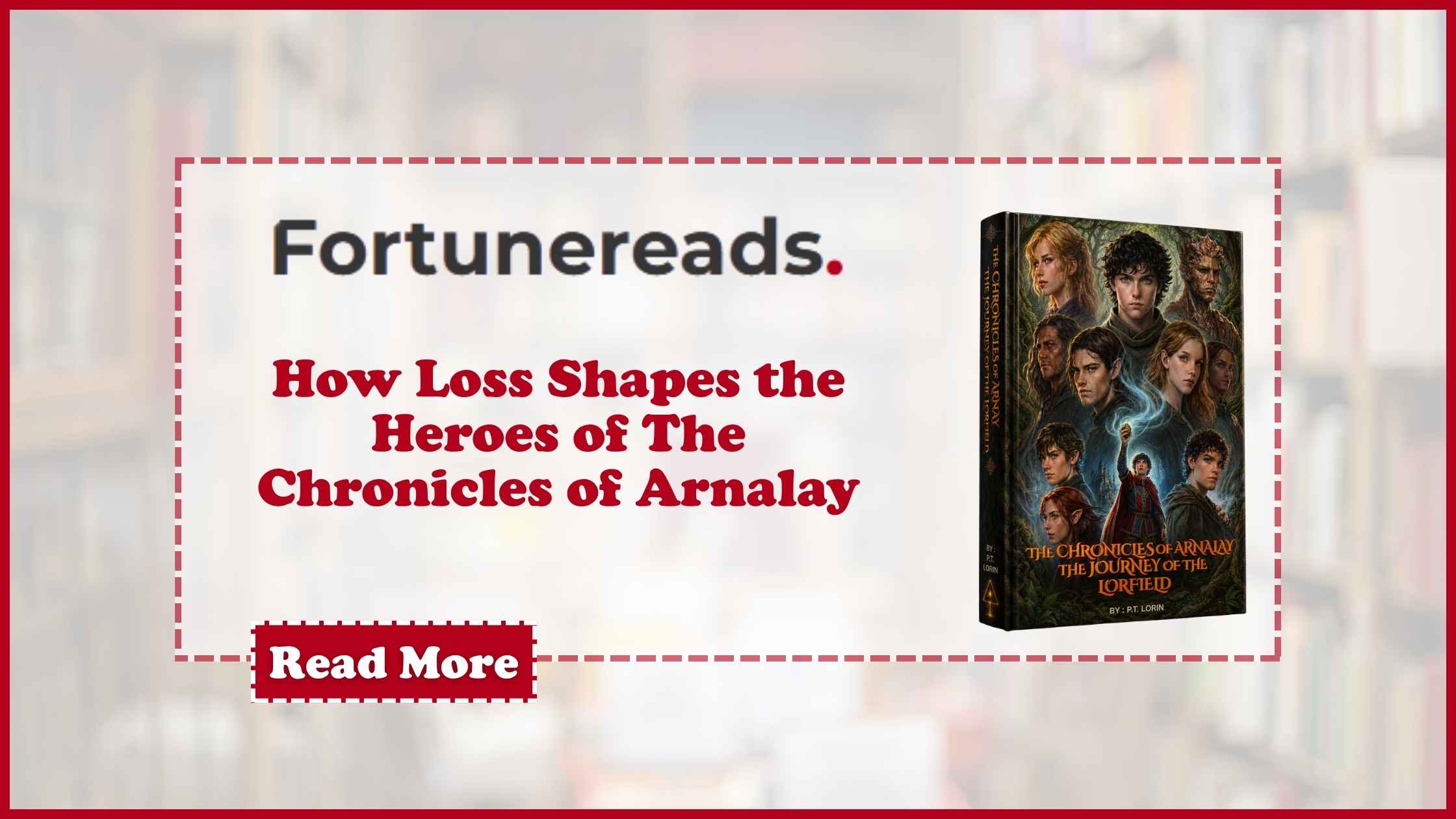
In epic fantasy, heroes are often remembered for the battles they win, the enemies they defeat and the powers they learn to control. Yet the most compelling heroes are usually shaped by something deeper: what they have lost. In The Chronicles of Arnalay: The Journey of the Lorfield by P.T. Lorin, loss becomes a powerful force shaping identity, friendship, courage and the choices that determine Skylight’s future.
At the center of the story is Persona Lorfield, a young man whose life changes after he receives a mysterious indigo mark. The mark connects him to seven companions, an ancient prophecy and the legendary Great Lorfield Seed. However, Persona’s journey is not driven by destiny alone. It is also shaped by grief.
Persona suffers a devastating personal loss when the woman who raised and protected him sacrifices herself so that he can survive. In a single night, he loses his home, his sense of safety and the person he knew as his mother. This tragedy leaves him carrying anger, confusion and guilt. He begins to question whether he should seek justice or surrender to revenge.
That emotional conflict makes Persona a believable hero. He does not immediately respond to loss with perfect courage. He struggles. He lashes out. He wonders whether greater power could prevent him from ever feeling helpless again. His pain becomes one of the most important tests of his character because the forces threatening Skylight are built on hatred, domination and suffering. If Persona allows grief to turn him cruel, he risks becoming similar to the enemies he wants to defeat.
Other characters also carry losses that affect how they face the journey. Abigail Animist has experienced family grief and has devoted herself to protecting animals, forests and vulnerable life. Her connection to nature is not simply a special ability. It reflects her desire to defend what others might destroy or abandon.
Rael Oilok lives beneath the pressure of royal expectations while carrying the absence of family members lost to war and disease. Pivot Paietom also understands what it means to live without the people who should have guided him. These experiences do not make the companions identical, but they give them reasons to recognize one another’s pain.
P.T. Lorin uses these different forms of loss to show that grief can lead people in opposite directions. Some characters become more compassionate because they understand suffering. Others become controlling, violent or obsessed with power because they fear losing anything again.
This contrast is especially important when Persona confronts enemies such as Maz Mavros and Babyl of the Black. Their actions spread destruction across villages, families, wildlife and entire communities. They use pain as a weapon, hoping that fear will weaken resistance. Persona and his companions must learn to transform their losses into a reason to protect life rather than destroy it.
That transformation gives the novel its emotional heart.
The Chronicles of Arnalay: The Journey of the Lorfield is filled with magical Siphon mirrors, ancient spirits, dangerous creatures, political conflict and large-scale battles. Beneath those fantasy elements lies a meaningful story about people learning to move forward after their lives have been changed forever.
Currently in the publishing phase, P.T. Lorin’s forthcoming novel reminds readers that heroes are not defined by living without pain. They are defined by what they choose to build from it.