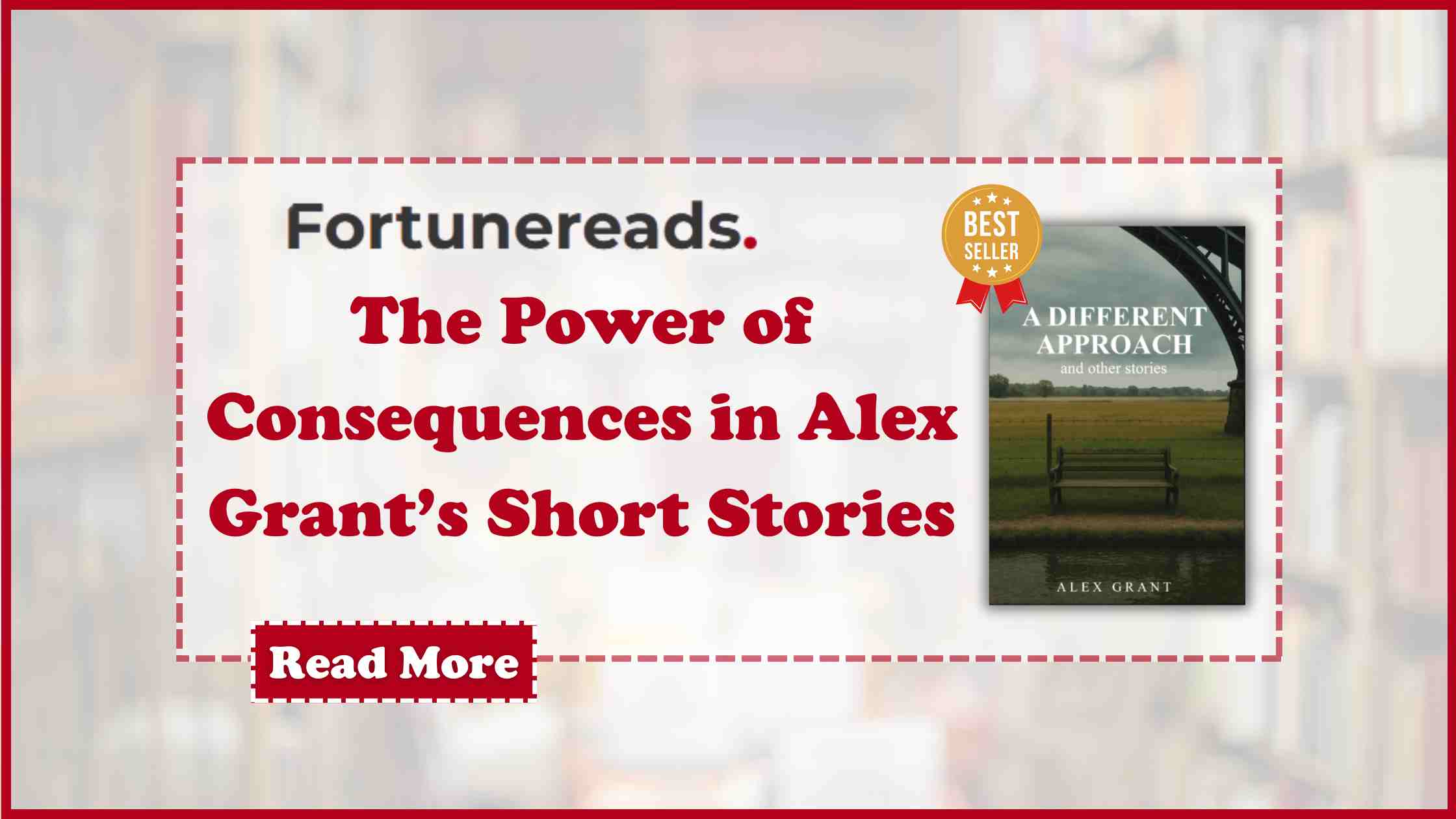
One of the most striking features of Alex Grant’s short stories is how firmly they are rooted in consequences. These are not stories where actions drift away without impact or where outcomes are softened for comfort. Instead, Grant repeatedly demonstrates how decisions carry weight, how systems produce results whether intended or not, and how people must live with the consequences that follow. The power of the stories lies not in dramatic twists but in the steady, unavoidable unfolding of cause and effect.
In many collections, consequences appear as lessons or morals delivered neatly at the end. In A Different Approach and Other Stories, consequences are not presented as teaching tools. They simply exist. Characters act, systems operate, and outcomes occur. No narrator steps in to explain whether those outcomes are fair. This restraint gives the stories their force. Readers are left to judge for themselves.
A recurring pattern in Grant’s work is that consequences often arrive indirectly. A character may believe they are acting responsibly or professionally, yet the result of their actions spreads beyond their awareness. This reflects real life more closely than stories where cause and effect are immediate. In reality, people rarely see the full impact of their actions, especially when operating within established institutions or rules.
Grant often places ordinary individuals inside structured systems. These systems have procedures, guidelines, and justifications. Once someone follows them, responsibility becomes blurred. The question arises of who is truly accountable when harm occurs. Is it the person who acted, the system that demanded it, or the culture that allowed it to exist? By refusing to answer this outright, the stories encourage readers to reflect on their own assumptions about responsibility.
Another important aspect of consequences in these stories is that they are not evenly distributed. Some characters suffer immediately. Others remain untouched, at least on the surface. This unevenness feels unsettling, but it is also honest. Life does not distribute outcomes fairly. Grant does not attempt to correct that imbalance for narrative satisfaction.
The emotional power of the stories often comes from this imbalance. Readers may feel frustration, discomfort, or even anger at outcomes that seem disproportionate to the effort invested. That emotional response is part of the experience. The stories are not designed to reassure. They are designed to linger.
Consequences in Grant’s work also extend beyond physical outcomes. Psychological consequences are just as important. Characters live with knowledge, guilt, or altered self-perception long after events have passed. Even when a character appears unchanged, the reader is aware that something fundamental has shifted. This quiet transformation is often more powerful than overt punishment or reward.
Importantly, consequences are not framed as fate. They arise from choices made within specific contexts. Even when characters feel trapped by circumstances, their actions still matter. This avoids fatalism while acknowledging constraint. People may have a degree of control, but they are never entirely removed from the chain of cause and effect.
Grant’s use of the short story form strengthens this focus, which allows consequences to be presented without distraction. There is no need for resolution in the traditional sense. A moment can be shown, its outcome revealed, and the story can end, leaving the reader to sit with what remains unresolved.
This approach respects the reader. It assumes they are capable of holding uncertainty and complexity. Rather than guiding interpretation, the stories open space for reflection. Readers may find themselves thinking about these consequences long after finishing a story, applying them to their own experiences or observations.
For readers interested in fiction that treats consequences seriously and without simplification, A Different Approach and Other Stories by Alex Grant is a compelling choice. With richly curated stories, this collection demonstrates the power of storytelling when actions are allowed to have a profound impact. If you enjoy the moral unease of Black Mirror, the dark irony of Roald Dahl’s Tales of the Unexpected, or the quiet dread of Ian McEwan’s early works, you’ll be riveted by Alex Grant’s unforgettable short fiction.
Here is a link to purchase this book: https://www.amazon.com/dp/B0FF3PZ1QT/.