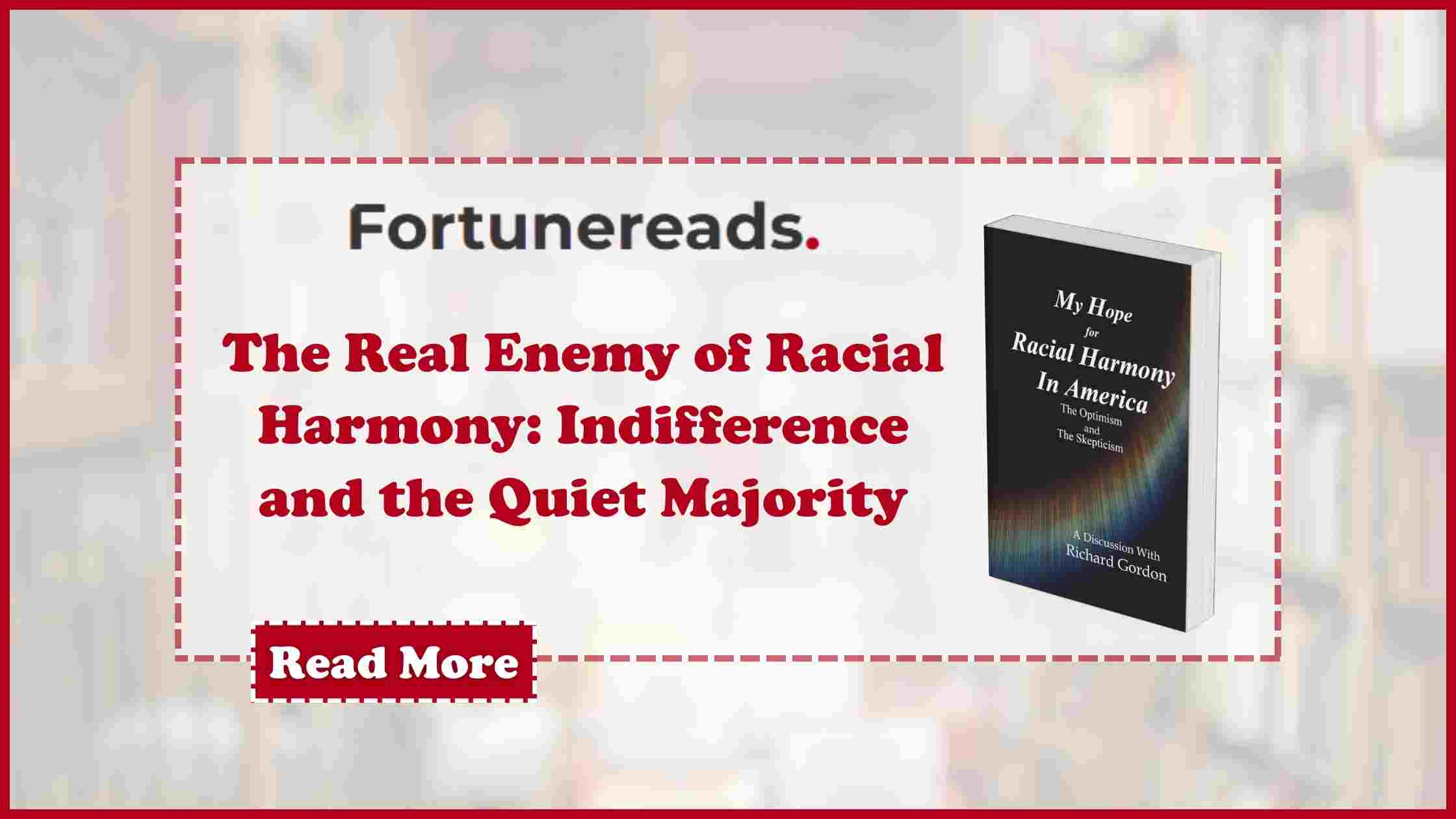
What has caused racial difference all these years? Well, you might not have an accurate response for it, but surely by getting your hands on this book, “My Hope for Racial Harmony in America”, by Richard D. Gordon you can comprehend what has been the major concern.
The author in his book has delivered a piercing and thoughtful reflection on America’s enduring struggle with race, justice, and societal harmony. More than just a recount of history, Gordon’s narrative is a call to moral courage—a challenge to every individual to choose between passive complacency and the active pursuit of justice. In one of the most poignant sections of the book, Gordon exposes the true villain in the fight for racial equity: not simply hatred, but the far more insidious force of ignorance and indifference.
Gordon acknowledges what many Americans recognize: that evil, in its most distilled and deliberate form, exists. There are those who are driven not by fear or misunderstanding but by a deep and unapologetic hatred—individuals for whom logic, compassion, and truth have no sway. These people, though relatively few, can cause immense damage if left unchecked. But Gordon warns that they are not the primary threat to racial harmony in America. Rather, the more profound danger lies in the quiet apathy of the uninvolved majority—the people who, while not actively endorsing racism, allow its presence to fester through silence and inaction.
This idea is not new, but Gordon revives it with fresh urgency. Historically, he writes, hate has always found its way into society, cloaked in the self-interest of those who stood to benefit from injustice. In early America, this manifested through slavery—a system built not only on hatred but also on greed, apathy, and systemic indifference. It thrived in the silence of those who stood by while others suffered. From slavery and lynchings to Jim Crow laws and the institutional lies that still infect culture today, the seeds of hate were watered by the inaction of the many.
Gordon emphasizes that history didn’t go unchallenged. There were always brave souls who rose up and pointed the moral compass toward justice. Abolitionists, civil rights leaders, educators, and everyday citizens all played their part in resisting hate and pushing the nation toward progress. Their sacrifices remind us that justice is never automatic; it is fought for, generation after generation. Without their vigilance, the country might have remained fully captive to hatred.
Yet, even as some progress has been made, Gordon notes that hate, though no longer fully in control, still “wields a mighty influence.” This influence seeps into institutions, media, schools, and public policy, often in ways that go unnoticed or unchallenged by those not directly affected. And this is where Gordon’s warning becomes most urgent: the uninvolved majority cannot remain spectators.
The true message in My Hope for Racial Harmony in America is a moral reckoning. Gordon challenges readers to evaluate their role in the ongoing fight for justice. Are they among the few who boldly oppose injustice, or among the many whose silence grants hate a quiet victory? He calls for vigilance—not in the sense of paranoia, but in the sense of moral awareness and civic responsibility.
Ultimately, Gordon’s vision is hopeful but conditional. There is hope for racial harmony—but only if we confront both the loud hate and the quiet indifference.