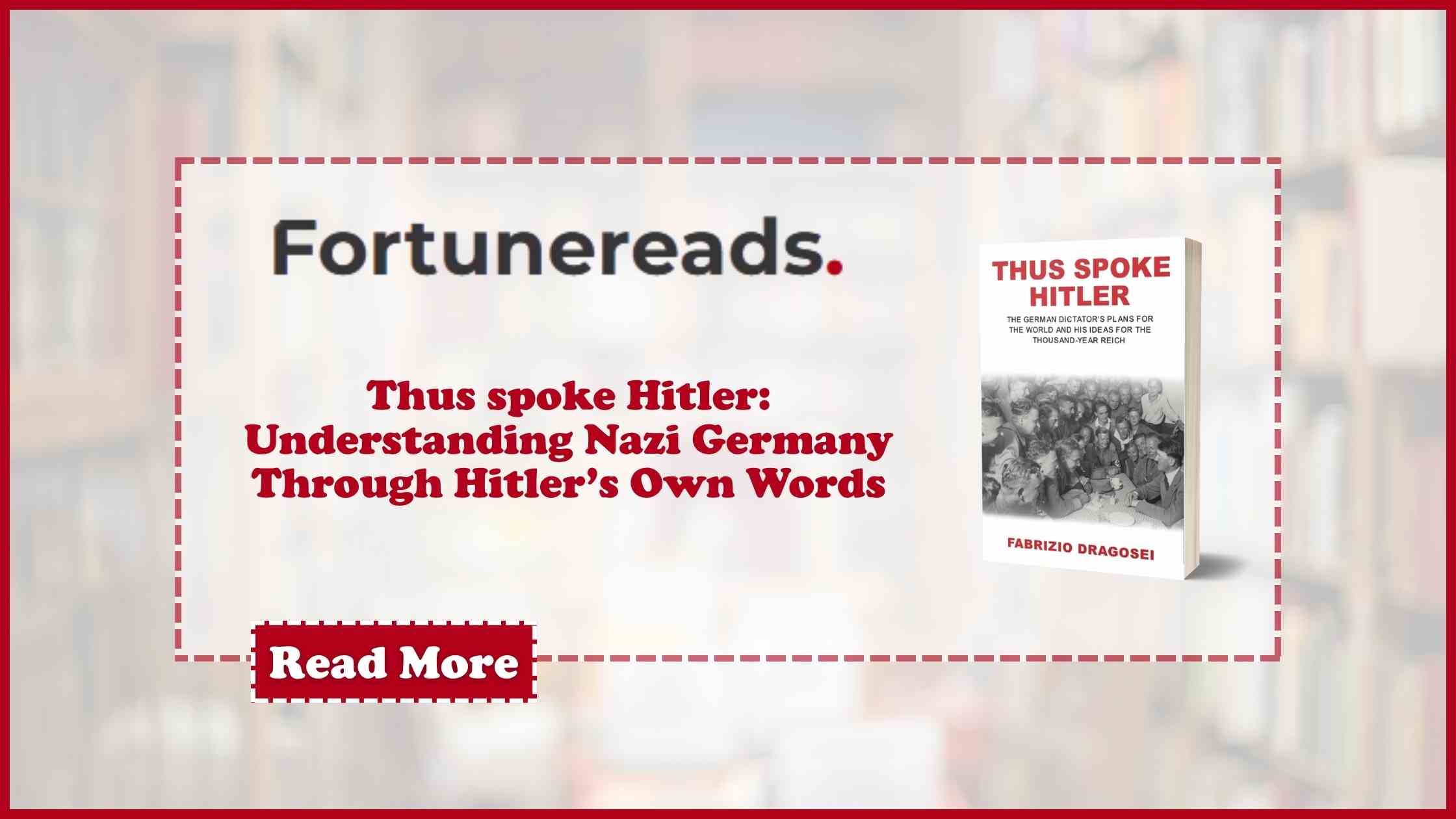
History is often told through the perspectives of historians, survivors and political leaders. But what if one of the most effective ways to understand one of history’s darkest chapters is to examine the words of the man who stood at its center? Thus spoke Hitler by acclaimed journalist and historian Fabrizio Dragosei offers readers exactly that opportunity, presenting the history of Nazi Germany through Adolf Hitler’s own speeches, conversations, military conferences and writings, carefully placed within their historical context.
Rather than relying on speculation or sensationalism, Dragosei draws extensively from primary historical sources, including Hitler’s public speeches, wartime discussions, official records and previously inaccessible archival documents. The result is a compelling historical narrative that allows readers to examine how Hitler explained his ideology, justified his decisions and communicated with military leaders and political allies throughout the rise and fall of the Third Reich.
One of the book’s greatest strengths lies in its commitment to historical evidence. Every chapter is built upon documented material, allowing readers to follow major events from Hitler’s rise to power and the expansion of Nazi Germany to the Second World War and the eventual collapse of the regime through the words that shaped those decisions. This approach offers valuable insight into the mechanisms of dictatorship, propaganda, political ambition and military strategy without losing sight of the devastating consequences of Nazi rule.
Fabrizio Dragosei’s extensive background as a journalist and historian shines throughout the book. His meticulous research combines well-known historical records with newly available archival materials, creating a richer understanding of the era. Rather than presenting isolated quotations, he carefully explains the historical circumstances surrounding each statement, helping readers understand why particular speeches, conversations and decisions mattered at specific moments in history.
The book also highlights an important lesson for modern readers: language can become a powerful political weapon. Hitler’s speeches did not merely express opinions; they were carefully crafted tools used to influence public opinion, justify aggression and reinforce authoritarian control. By examining these words alongside the historical events they accompanied, readers gain a deeper appreciation of how rhetoric can shape societies and alter the course of history.
For students of history, educators, researchers and anyone fascinated by World War II, Thus spoke Hitler offers far more than a chronological account of historical events. It provides an opportunity to engage directly with authentic historical documents while benefiting from the expert guidance of an experienced historian who carefully separates documented fact from myth and misconception.
In an age when misinformation can spread rapidly, returning to carefully researched primary sources has never been more valuable. Thus spoke Hitler encourages readers to approach history critically, examining evidence rather than assumptions. By placing Hitler’s own words within their proper historical framework, Fabrizio Dragosei delivers a thought-provoking study of one of history’s most influential and destructive political figures.
Whether you are passionate about World War II history, political leadership, military strategy or the importance of historical documentation, Thus spoke Hitler is a compelling addition to your reading list. It is a carefully researched work that reminds us why understanding the past remains essential for recognizing the warning signs of authoritarianism and protecting the future.