Adolf Hitler’s private conversations reveal a man who believed deeply in his own judgment and expected those around him to accept his opinions without question. Away from public rallies, he continued to dominate discussions, delivering lengthy monologues on politics, war, culture, religion, architecture, medicine, and the future of Europe.
He rarely treated conversation as an exchange of ideas. Instead, he used it as an opportunity to instruct, judge, and impress his listeners. His guests, secretaries, military officers, and advisers were often expected to remain silent while he moved from one subject to another. These conversations could continue late into the night and frequently became repetitive.
Hitler’s private remarks also reveal his contempt for many groups and individuals. He expressed racist beliefs, dismissed entire populations as inferior, and spoke openly about removing people from lands he wanted Germany to control. His plans for Eastern Europe were not limited to military occupation. He imagined German settlements, the displacement of local communities, and the permanent domination of territories by the Reich.
His conversations show how strongly he believed in his own historical importance. Hitler compared himself with major German leaders and presented his decisions as the work of a man chosen to reshape the nation. Military victories strengthened this conviction and encouraged him to trust his instincts above the advice of experienced commanders.
He could also be bitter, suspicious, and insulting. Political opponents were described as corrupt or weak, while generals who questioned his orders were treated as disloyal or incompetent. Even allies were frequently mocked in private. His praise could quickly become criticism when people failed to meet his expectations.
At the same time, these discussions reveal striking contradictions. Hitler spoke about nature, architecture, culture, and Germany’s future while directing a regime built on persecution, conquest, and mass murder. He imagined himself as a visionary leader, yet his ideas were shaped by hatred, racial obsession, and an increasing inability to accept reality.
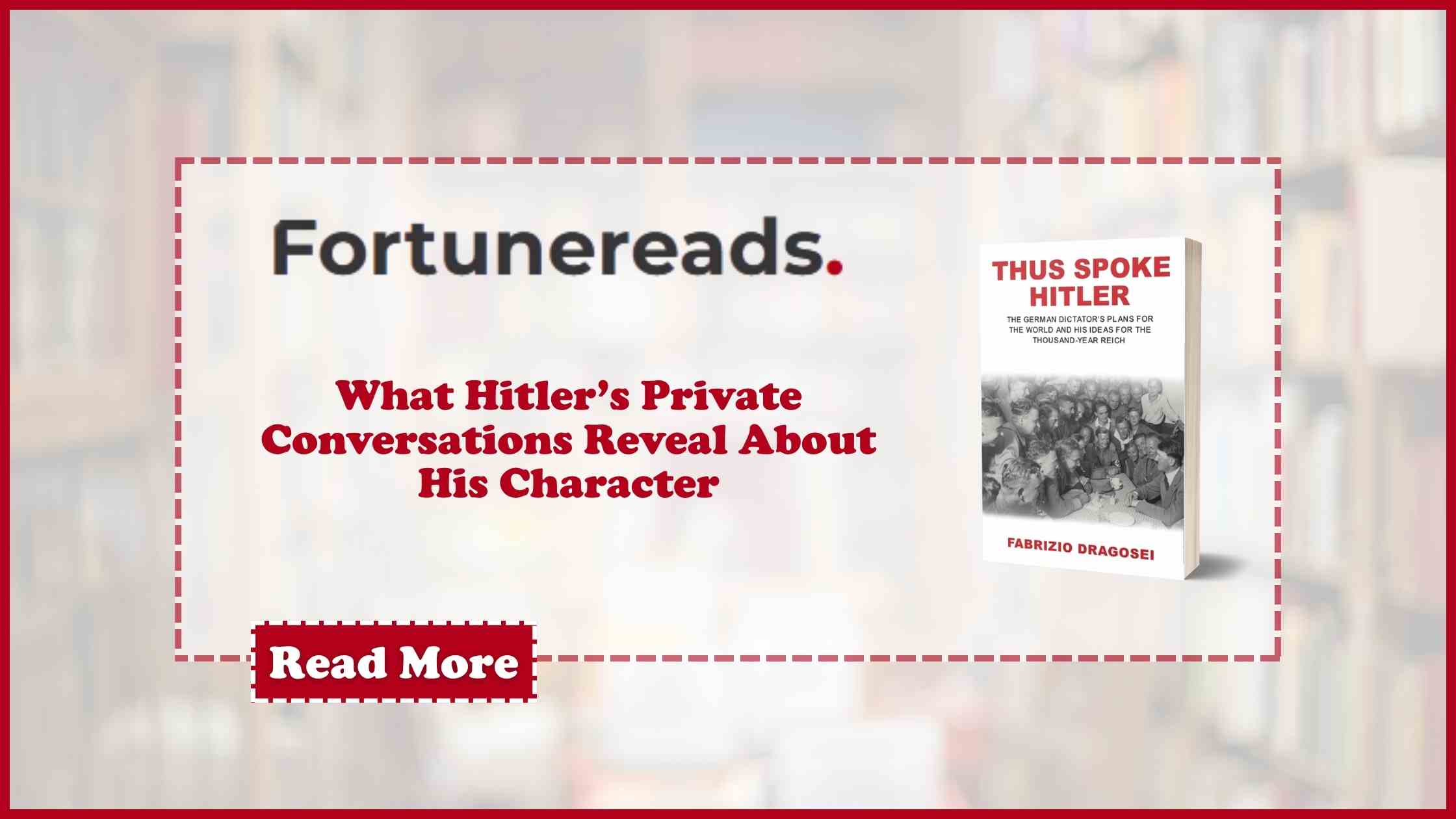
Thus Spoke Hitler by Fabrizio Dragosei examines these private statements alongside speeches, military conferences, and historical events. By placing Hitler’s words within the circumstances in which they were spoken, the book allows readers to study the personality behind the public image.
This carefully researched account offers a revealing examination of Hitler’s confidence, prejudice, ambition, and delusion. It shows how private convictions became political decisions and how one man’s obsessive beliefs contributed to dictatorship, destruction, and war.
Read the book and discover history through authentic sources. https://www.amazon.com/dp/B0FT68K2C2/