Children may not understand politics, governments or ideology, but they understand fear. They notice when adults lower their voices. They sense when home no longer feels safe. And when political repression enters family life, childhood can change long before a child fully understands why.
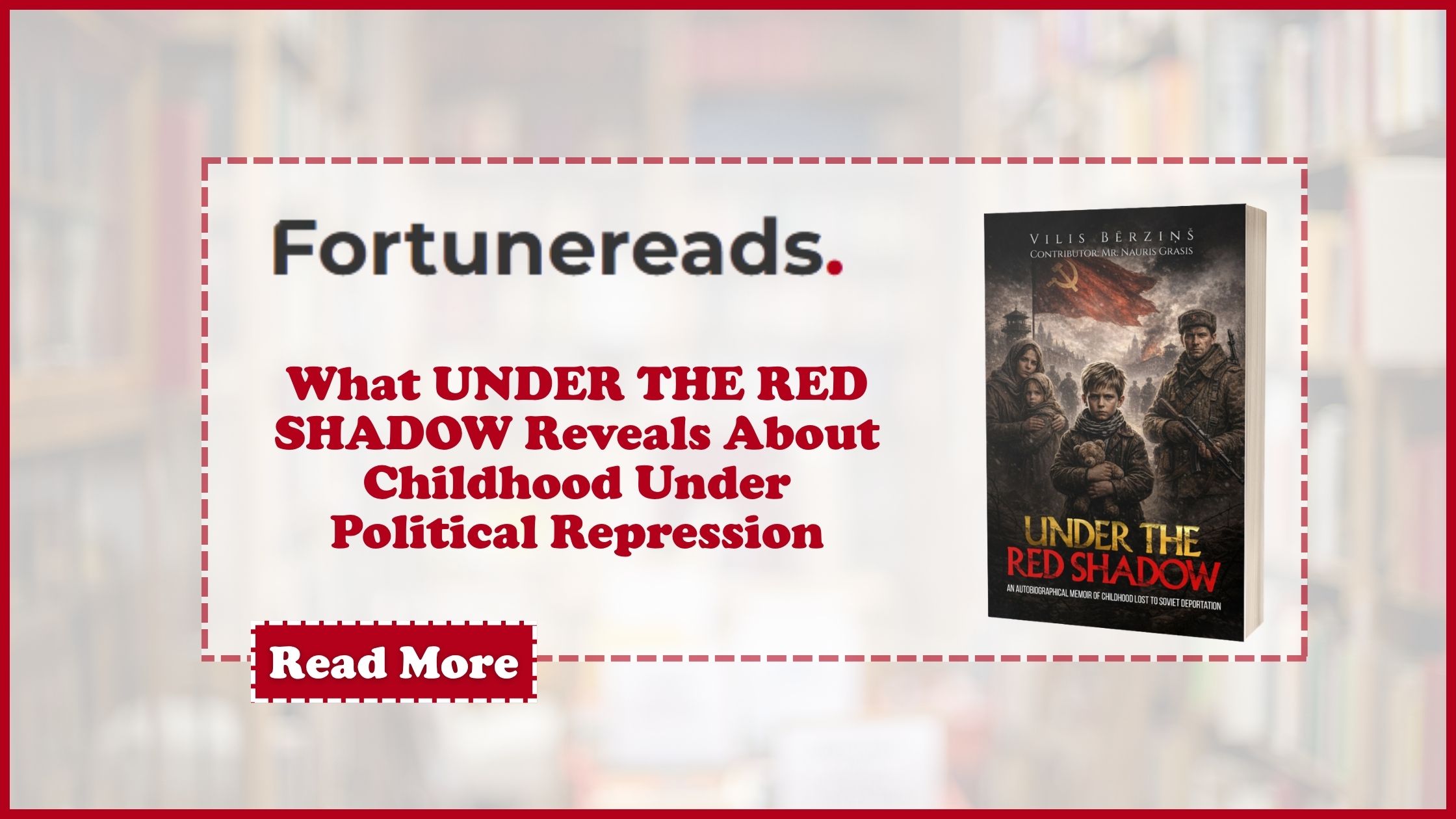
That reality is at the heart of UNDER THE RED SHADOW: An Autobiographical Memoir of Childhood Lost to Soviet Deportation by Vilis Bērziņš.
Bērziņš was born in Latvia in 1941 and was only eight years old when his family was forced from their home in 1949. Before that day arrived, however, repression had already shaped the emotional world around him. He remembers hearing adults speak about Siberia and slowly realizing that it was not simply a distant place, but something connected to danger, disappearance and punishment.
For a child, that kind of fear is especially powerful because it arrives without explanation.
In UNDER THE RED SHADOW, readers see how political repression reaches far beyond official orders and government institutions. It enters kitchens, bedrooms, family conversations and children’s imaginations. Bērziņš recalls how uncertainty became part of daily life and how adults’ anxiety naturally affected him, even before he fully understood the political forces surrounding his family.
Then came the moment when fear became reality.
Soldiers arrived, belongings were gathered quickly and the family was forced toward a truck and then to a railway station. Bērziņš describes the confusion of that day through the eyes of a child who was suddenly being removed from everything familiar.
The journey east only deepened that loss of childhood.
Crowded freight cars, bitter cold, limited food, illness, poor sanitation and uncertainty replaced school and ordinary routines. Bērziņš writes about children trying to adapt to conditions no child should have had to understand. Even simple needs such as warmth, water, sleep and safety became difficult to secure.
Yet one of the most striking elements of the memoir is that childhood does not disappear completely.
Even in confinement, children played. Adults told jokes. Families and strangers helped one another. Passengers gave better sleeping spaces to mothers and young children and small acts of generosity created moments of comfort in an otherwise frightening environment.
That contrast makes UNDER THE RED SHADOW especially affecting. Political repression can control movement, remove families from their homes and create fear, but it cannot completely erase the human instinct to care, adapt and endure.
The memoir also reveals how childhood trauma can continue long after childhood ends. Bērziņš began writing his memories decades later, in 1971 and continued into the early 1980s. His manuscript remained unpublished during his lifetime, suggesting how deeply those experiences continued to shape him.
For readers, UNDER THE RED SHADOW offers more than a historical account. It shows political repression at its most personal level: through the life of a child whose sense of safety, home and normality was transformed overnight.
For readers interested in memoir, history, survival and the human cost of authoritarian rule, Vilis Bērziņš’ story offers a deeply personal perspective that deserves to be remembered.
UNDER THE RED SHADOW is currently in the publishing phase and will be available soon.
Want To Discover More? Head Over To Our Website: https://www.librarything.com/profile/VilisBerzins