Injustice rarely begins with dramatic events. It often grows quietly in small decisions, overlooked actions, and systems that slowly move away from fairness and accountability. When these patterns go unchallenged, they create environments where inequality and abuse of power can take root. This is why the voices of ordinary citizens are essential in protecting the values that hold societies together.
Democracy and justice depend on the willingness of people to recognize when something is wrong and to speak about it. Governments, institutions, and leaders function best when they know that citizens are paying attention. Public awareness acts as a safeguard that discourages misuse of power and encourages decisions that respect the rights and dignity of every individual.
History shows that meaningful change often begins with individuals who refuse to remain silent. Many of the most important social and political transformations across the world have been driven not by powerful elites but by citizens who believed that injustice could not be ignored. Their courage helped expose problems that others were afraid to confront.
Speaking against injustice does not always require large demonstrations or national movements. It often begins in smaller spaces where people challenge harmful practices, question unfair policies, or demand accountability from those in authority. Community discussions, public advocacy, and civic participation can all become powerful tools that bring attention to issues affecting society.
Silence, on the other hand, allows injustice to grow stronger. When people feel powerless or choose not to act, systems that harm others may continue without challenge. Over time, this silence can create a culture where corruption, discrimination, or inequality become accepted as normal. Breaking that silence is therefore an important step toward restoring fairness and integrity in public life.
Ordinary citizens hold a unique position in shaping the moral direction of their societies. They are the ones who experience the consequences of political decisions, economic policies, and social structures in their daily lives. Their voices carry authenticity because they speak from lived experiences rather than from positions of privilege or authority.
Education and civic awareness play an important role in empowering citizens to speak against injustice. When people understand their rights and responsibilities, they are better prepared to question actions that violate democratic principles. Knowledge strengthens confidence and encourages participation in public conversations that shape national priorities.
Communities abroad also contribute to this effort. Citizens living outside their home countries often maintain strong emotional and cultural connections to the issues affecting their nations. Through advocacy, public discussion, and engagement with global audiences, diaspora communities frequently help draw attention to challenges that demand reform.
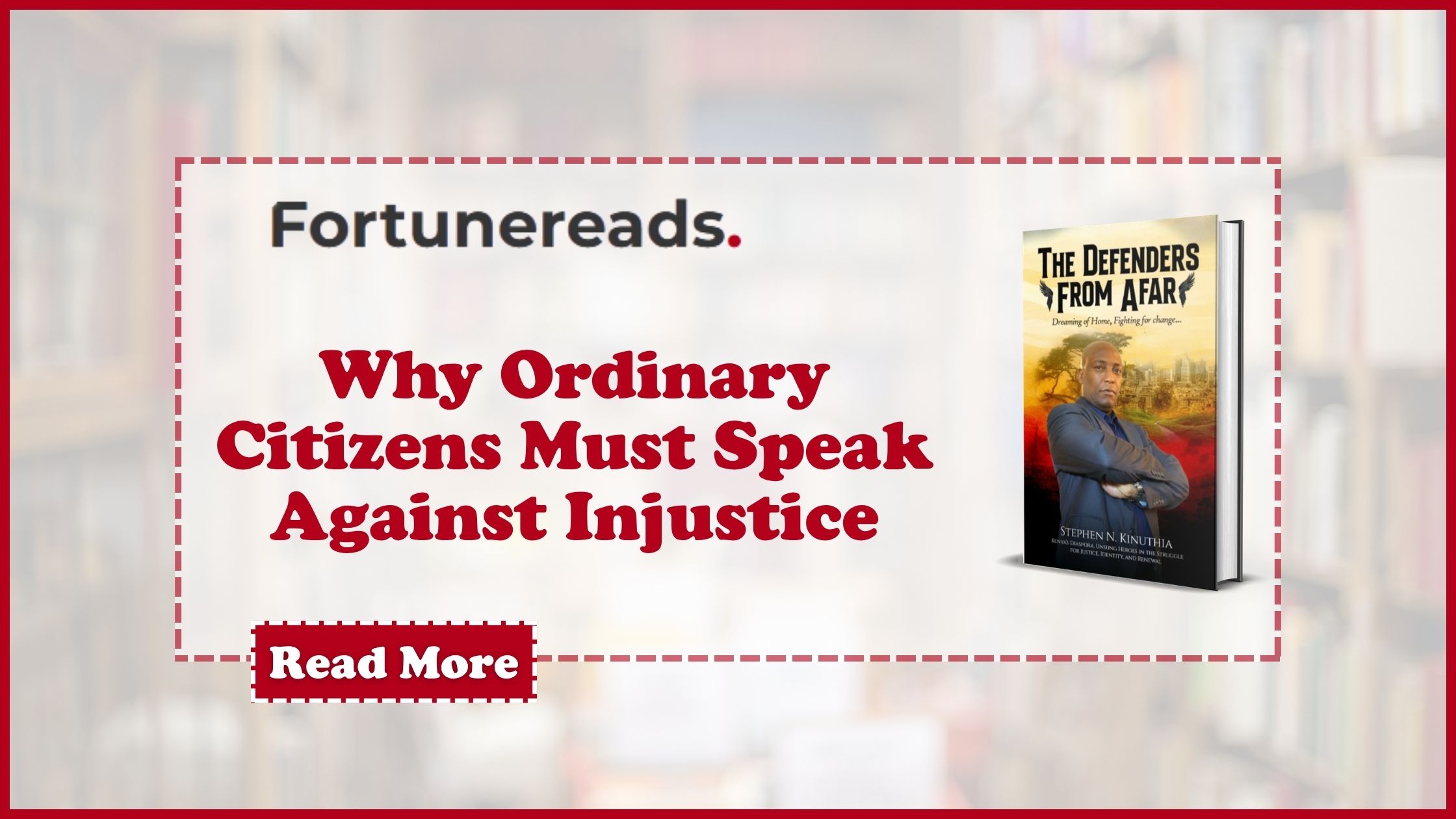
These themes are explored with powerful reflection in The Defenders from Afar: Dreaming of Home, Fighting for Change by Stephen N. Kinuthia. The book highlights the importance of courage, civic responsibility, and the determination of individuals who continue to care deeply about justice and accountability in their homeland. It invites readers to consider how ordinary voices can become catalysts for meaningful change.
A society becomes stronger when its citizens believe that injustice must never be ignored. By speaking out, questioning authority, and standing together in defense of fairness, ordinary people help protect the values that make justice possible for everyone.
The book is available on Amazon : https://www.amazon.com/dp/B0GT63CW82