In a globally interconnected world, education, philosophy, and theology have often defaulted to Eurocentric frameworks, treating Western thought as the universal standard for human knowledge. However, relying on a single intellectual tradition determines our capacity to address complex modern challenges and could change our worldview and perception of others as well as of ourselves. Opting for non-Western intellectual traditions is an essential step toward a richer, more comprehensive understanding of the human condition that we all should understand. If you are still concerned, here are 5 reasons why we should actively embrace non-Western intellectual traditions:
- Challenging Eurocentric Biases and Assumptions
Relying solely on Western paradigms often blinds us to alternative ways of organizing society, understanding nature, and defining human rights and dignity. Non-Western frameworks challenge these hidden biases and reveal overlooked dimensions of reality. - Embracing Relational Over Hyper-Individualistic Models
While Western philosophies frequently prioritize isolated autonomy and hyper-individualism, many non-Western traditions—such as Igbo cosmology—place human relationality and community at the center of existence. This offers a vital antidote to modern alienation and social fragmentation. - Fostering Genuine Intercultural Dialogue
True global progress requires mutual listening rather than cultural imposition. Engaging with non-Western thoughts allows for a true dialogical interface where different traditions mutually enrich one another without syncretism or erasure. - Reclaiming Depersonalized Histories and Dignity
Colonial and imperial histories systematically devalued indigenous intellectual depth, often portraying non-Western cultures as devoid of philosophy or history. Embracing these traditions acts as an act of intellectual restoration, returning dignity and voice to historically marginalized narratives. - Enriching Global Theological and Philosophical Discourse
Complex questions surrounding ethics, ecology, personhood, and the transcendent cannot be fully solved by one culture alone. Integrating non-Western concepts—such as the interplay between human agency and spiritual destiny—expands our collective toolbox for addressing twenty-first-century crises.
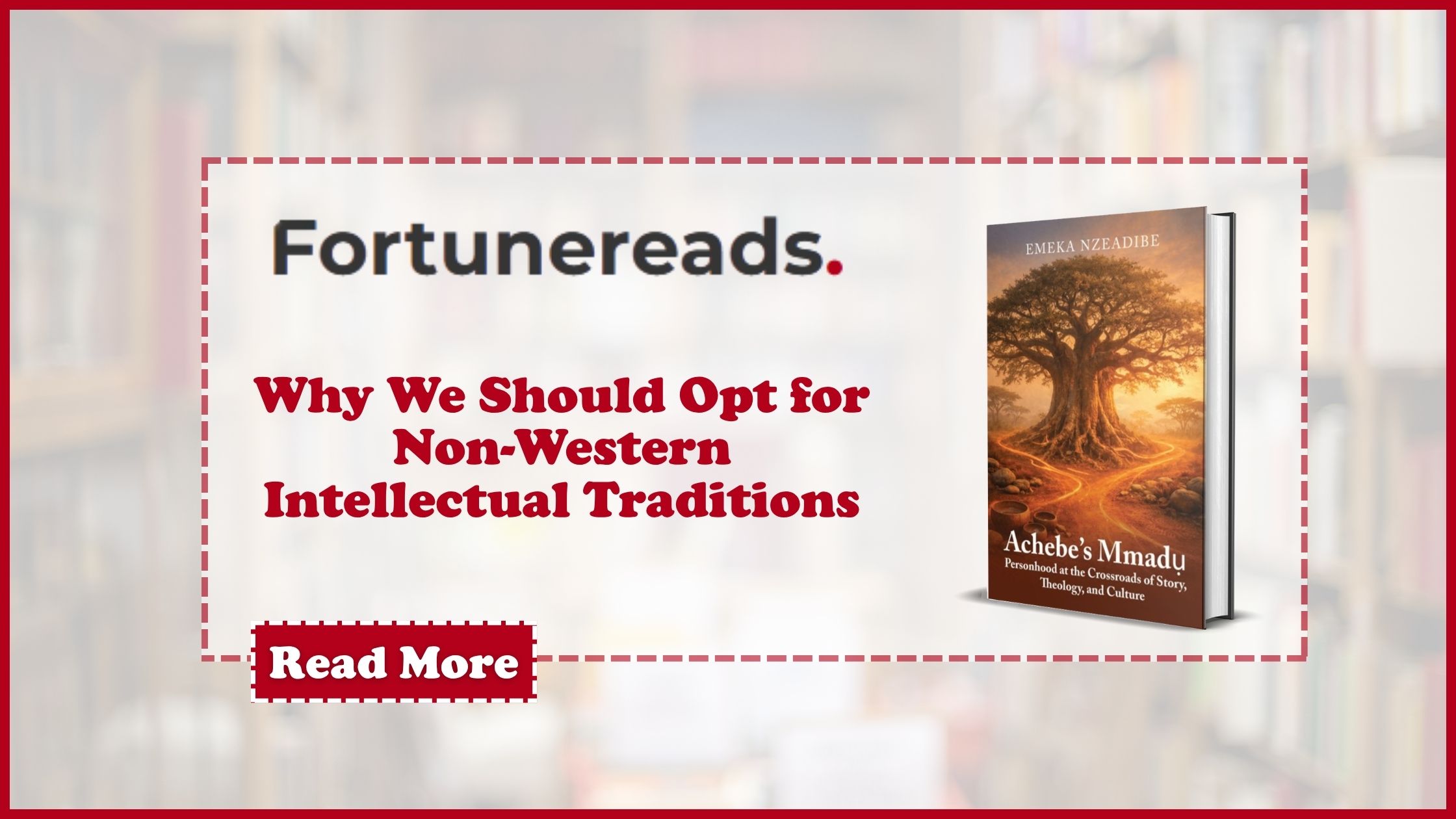
To dive deeper into the power of non-Western thought and its intersection with global discourse, you should read Achebe’s Mmadụ: Personhood at the Crossroads of Story, Theology, and Culture.
This monograph brilliantly demonstrates how literature can serve as a valuable resource for theology and philosophy, by deeply engaging with Chinua Achebe’s literary universe (Things Fall Apart and Arrow of God) alongside indigenous Igbo cosmology. The book constructs a robust, interculturally responsible theological anthropology and moves beyond rigid Western dualisms to present Mmadụ, or the human person, as inherently relational, embodied, and dynamically linked to the divine (Chi), offering a vital and inspiring roadmap for reimagining human dignity in our pluralistic world today.
Rather than idealising Achebe or romanticising Igbo culture, the book offers a careful and honest engagement with the ideas and draws on insights from philosophy, theology, and literature; it situates Achebe within a wider global conversation about identity, destiny, and spiritual meaning. Readers are invited to listen to Achebe’s wisdom, appreciate the depth of Igbo reflections on personhood, and reflect anew—interculturally and spiritually—on the sacred threads that bind us as human beings.
Head to Amazon to purcahse your book: https://www.amazon.com/dp/B0GZFB5P25/