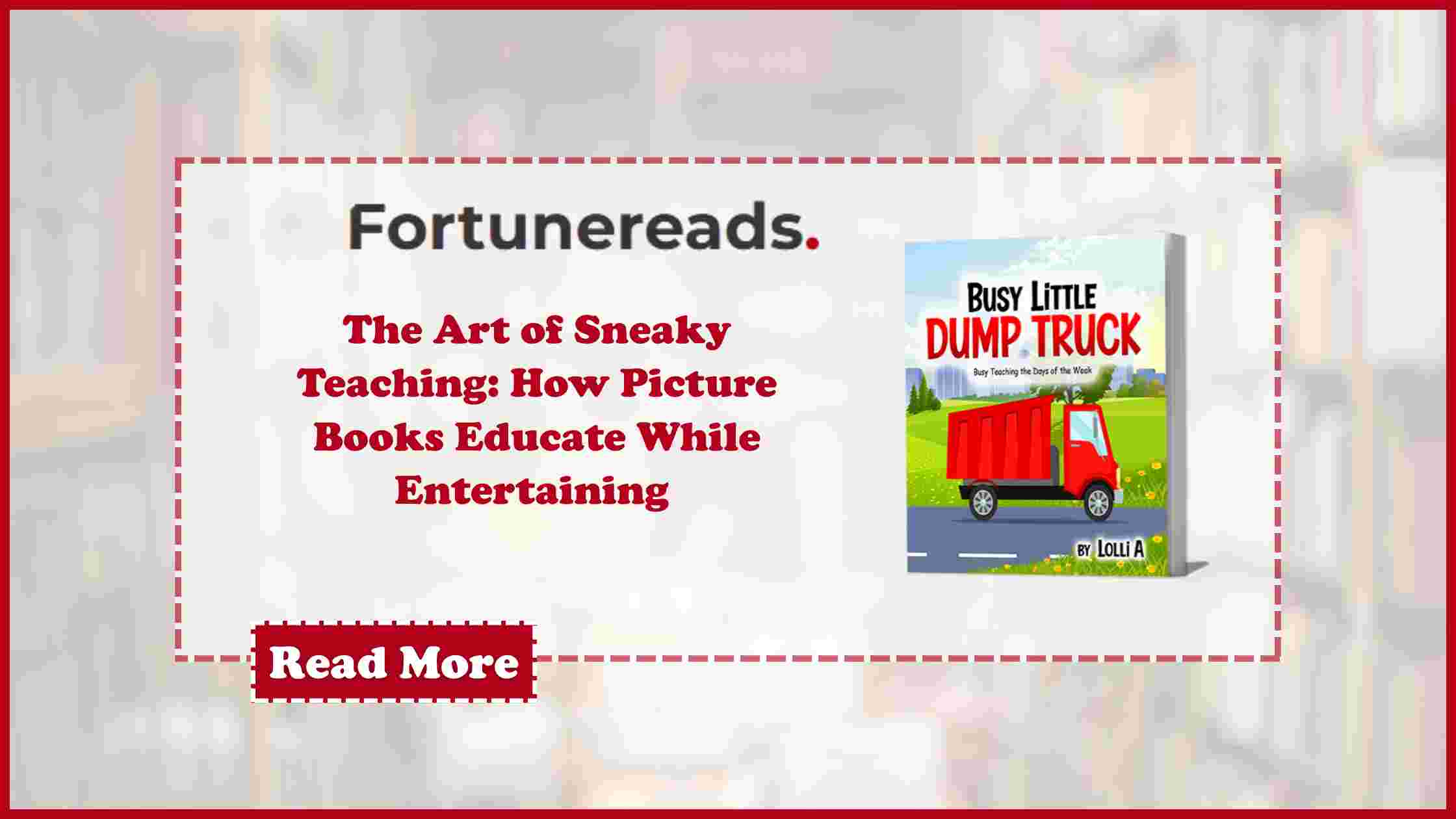
Ask any early childhood educator or parent what keeps a child engaged, and they’ll likely say the same thing: a good story. But within the bright illustrations and playful rhymes of a picture book lies something more subtle—a quiet method of teaching that feels nothing like a lesson. It’s what some like to call “sneaky teaching,” and it’s an art form that Lolli A has mastered in her charming book Busy Little Dump Truck: Busy Teaching the Days of the Week.
At its core, sneaky teaching is about disguising learning in fun. Children don’t sit down with picture books expecting to memorize facts or master new skills. They sit down for the adventure, the characters, the rhythm, the comfort of being read to. And yet, while they laugh at a silly dump truck or shout out the next rhyming word, they’re learning—without even realizing it.
Lolli A’s book is a perfect example. The storyline is straightforward: a hardworking dump truck takes on different tasks each day of the week. But through this simple structure, children are absorbing key concepts—sequencing, time recognition, cause and effect, and responsibility. They’re introduced to the names and order of the days of the week, but more importantly, they begin to understand how daily routines work and why each day matters.
The brilliance lies in how naturally it happens. The rhymes make the text memorable. The repetition reinforces patterns. The illustrations offer visual clues. Every element of the book works together to plant knowledge gently and joyfully in a child’s mind.
What makes sneaky teaching so effective is that it invites children to participate. Instead of being passive receivers of information, they become active listeners, guessers, and even storytellers. They start to anticipate what comes next, repeat lines, and relate the events of the story to their own lives. In this way, the lessons learned go far beyond what’s on the page.
Lolli A’s background in education and her passion for storytelling come together beautifully in Busy Little Dump Truck. She understands that young children learn best when they’re emotionally engaged, when learning feels like play, and when a book can make them feel seen and valued. Her story doesn’t just teach—it connects.
In the end, sneaky teaching isn’t really sneaky at all. It’s intentional. It’s thoughtful. And it’s rooted in love. Picture books like Lolli A’s prove that entertainment and education don’t have to be separate. In fact, when they come together, the results are magical.
So the next time you’re reading a story to a little one and they’re giggling or pointing out their favorite page, remember—beneath the fun, something wonderful is happening. They’re learning, growing, and developing a lifelong love for books. And they don’t even know it yet.