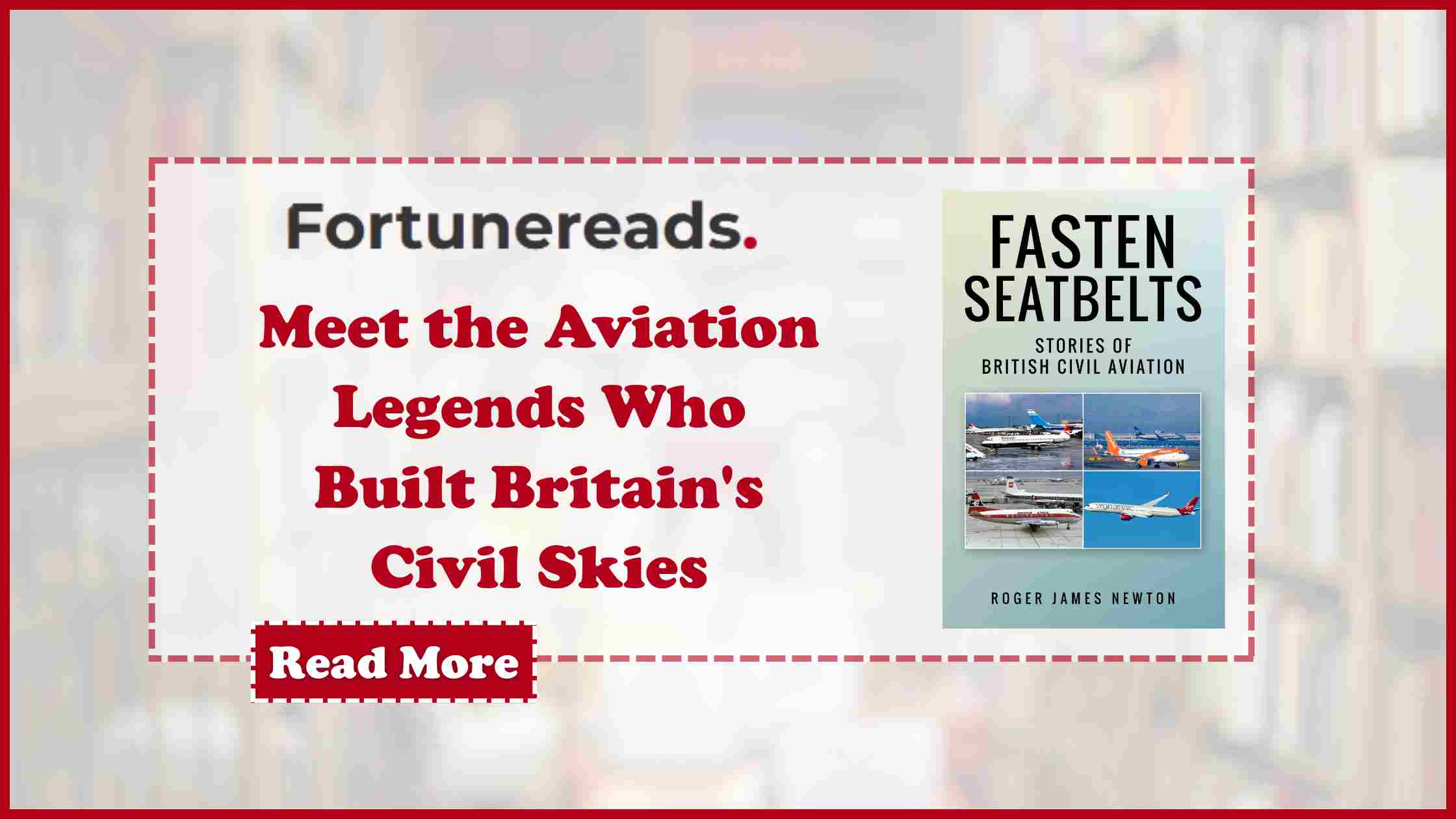
Behind every landmark flight and iconic aircraft is a visionary, a pioneer, or a risk-taker who dared to defy gravity. In Fasten seatbelts – Stories of British Civil Aviation, Roger James Newton brings these aviation legends to life—engineers, entrepreneurs, pilots, and politicians whose courage and foresight built Britain’s airways.
Let’s meet a few of these heroes who helped craft the history of British civil aviation.
Geoffrey de Havilland – The Dream Designer
Engineer, pilot, and visionary, de Havilland was the man behind the Mosquito fighter/bomber, the Dragon Rapide and the revolutionary Comet. His aircraft shaped early British air travel, combining elegance with technological daring. As Newton shows, despite his personal tragedies de Havilland, continued his commitment to aviation and his designs captured the romance and promise of flight.
Freddie Laker – The People’s Airline Pioneer
Perhaps one of the most charismatic figures in aviation history, Freddie Laker revolutionized transatlantic travel with Skytrain, offering affordable flights to everyday passengers. He challenged giants, broke price barriers, counselled his successors and remains an inspiration for today’s low-cost carriers.
Sir Frank Whittle – The Jet Age Catalyst
Despite many bureaucratic set backs, Whittle persevered and his invention of the turbojet engine changed aviation forever. Newton captures how his invention, initially met with skepticism, became the backbone of modern aviation, with Rolls-Royce playing a key part in turning vision into reality.
R.J. Mitchell – The Reluctant Hero
Best known for designing the Spitfire, Mitchell also influenced civil aviation through his aerodynamic expertise and collaborative efforts with Rolls-Royce. His life was tragically cut short but his understanding of performance and form carried into post-war airliner design.
Richard Branson – The Upstart with a Smile
While a modern figure, Branson’s fight against British Airways in the 1990s echoes the battles of early aviation pioneers. He took a tremendous gamble but, with Virgin Atlantic, he later brought fun, style, and competition to an industry in danger of stagnation.
Alan Cobham – Empire Route Pathfinder
A test pilot and adventurer, Cobham blazed the trail for long-distance flights. His efforts helped map the British Empire routes in the 1920s and 30s, laying the groundwork for global air travel.
Women of the ATA – The Unsung Heroines
Newton highlights the critical role of the Air Transport Auxiliary during WWII. Female pilots like Pauline Gower broke barriers by ferrying aircraft with precision and bravery, redefining the image of a pilot in wartime Britain. The British Independent airlines later provided the opportunities for women to pilot civil civil airliners, which had previously been denied them by the State-owned airline corporations.
Britain’s civil skies weren’t built by machines alone. They were crafted by bold, brilliant individuals who believed the sky wasn’t the limit but just the beginning. Newton’s book gives them the recognition they deserve, inspiring us to look up and remember who got us there and how these determined individuals helped shape modern Civil Aviation.