Most careers are defined by routine. Medicine, especially emergency and surgical care, is defined by moments that can change everything in seconds. For doctors working in these settings, life and death are not abstract concepts. They are daily realities that shape how decisions are made and how the world is seen.
From the start of medical training, doctors learn that outcomes are never guaranteed. A patient may arrive stable and decline suddenly. Another may survive against all expectations. Working in emergency rooms, operating rooms, and critical care units places physicians at the edge where medicine meets uncertainty. It is a place where knowledge, instinct, and experience must come together quickly.
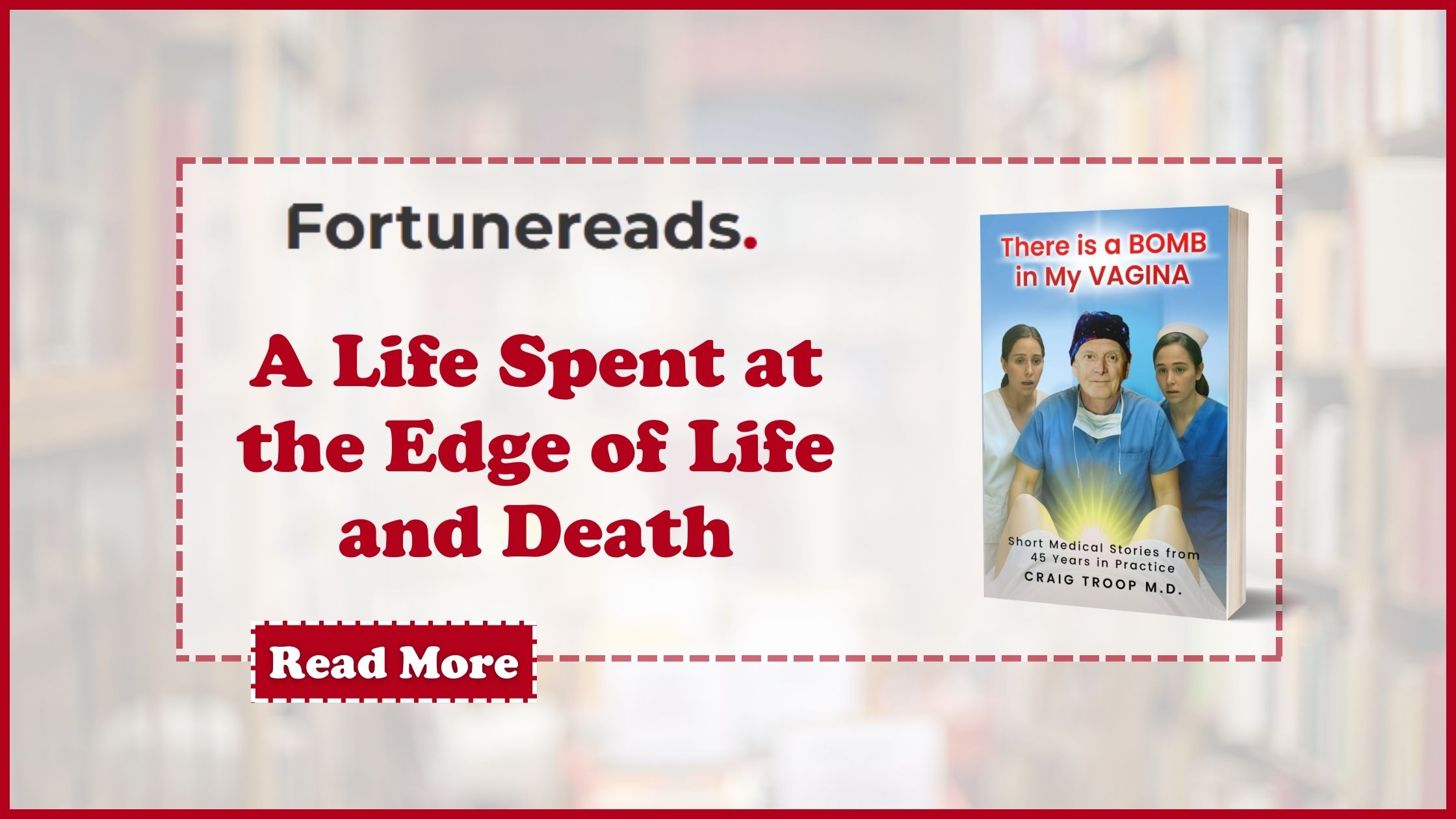
In There is a Bomb in My Vagina: Short Medical Stories from 45 Years in Practice by Craig Troop, M.D., this edge is the constant setting. Dr. Troop’s career spans multiple medical disciplines, beginning in emergency medicine and later moving into anesthesiology. This progression offers a rare breadth of perspective. Few physicians experience both the chaos of the emergency room and the controlled intensity of the operating room over such a prolonged period.
Emergency medicine introduces doctors to unpredictability. Patients arrive without warning, often with little information and high stakes. Decisions must be made fast, sometimes with only fragments of a story. Dr. Troop’s early years reflect this environment, where critical thinking and calm action can mean the difference between life and death. These moments teach humility, as even the best decisions do not always lead to the desired outcome.
Transitioning into anesthesiology brings a unique set of responsibilities. While the setting may appear more controlled, the risks remain real. Anesthesia requires constant vigilance. A patient placed into a medically induced unconscious state relies entirely on the care team to maintain breathing, circulation, and safety. This role places the physician in a position of quiet yet total control over a fragile balance.
Across both disciplines, one theme remains consistent. Doctors live with the knowledge that their actions have a deep impact. However, outcomes are not fully within their control. This awareness shapes how physicians approach their work and their lives. It encourages respect for the limits of medicine and for the unpredictability of the human body.
The stories in the book show how experience builds over time. A young doctor may rely heavily on protocols and textbooks. A seasoned physician learns to recognize patterns, anticipate complications, and trust hard-earned judgment. This growth does not stem solely from success. It comes from mistakes, close calls, and moments that stay with you long after a shift ends.
For readers outside the medical world, this perspective can be eye-opening. A life spent near life and death does not create detachment. More often, it creates clarity. Doctors learn what truly matters and what does not. They learn to focus on the task at hand while carrying the weight of past experiences quietly.
For those interested in understanding this world more fully, There is a Bomb in My Vagina by Craig Troop, M.D., offers an honest and grounded account. It reflects a career shaped by responsibility, adaptability, and decades spent working at the edge where every decision counts.
Explore this book now, available on Amazon: https://www.amazon.com//dp/196964446X.