Children learn best when they are interested, involved, and able to connect new ideas with an enjoyable experience. Children’s opera brings these elements together through music, storytelling, movement, humour, costumes, and performance. Instead of simply listening to information, children become part of the lesson.
Music helps information remain in the memory. A melody can make words easier to recall, while rhythm gives ideas a clear structure. When educational material is placed within a song, children often remember it long after the performance has ended. Opera also repeats important words, emotions, and themes, allowing young learners to absorb them without feeling that they are completing a formal lesson.
Theatre gives children a reason to explore ideas through action. A student playing a scientist, singer, animal, alien, or historical figure must understand the character well enough to speak, sing, and respond on stage. This active participation strengthens comprehension. It also allows children to experience subjects from different perspectives.
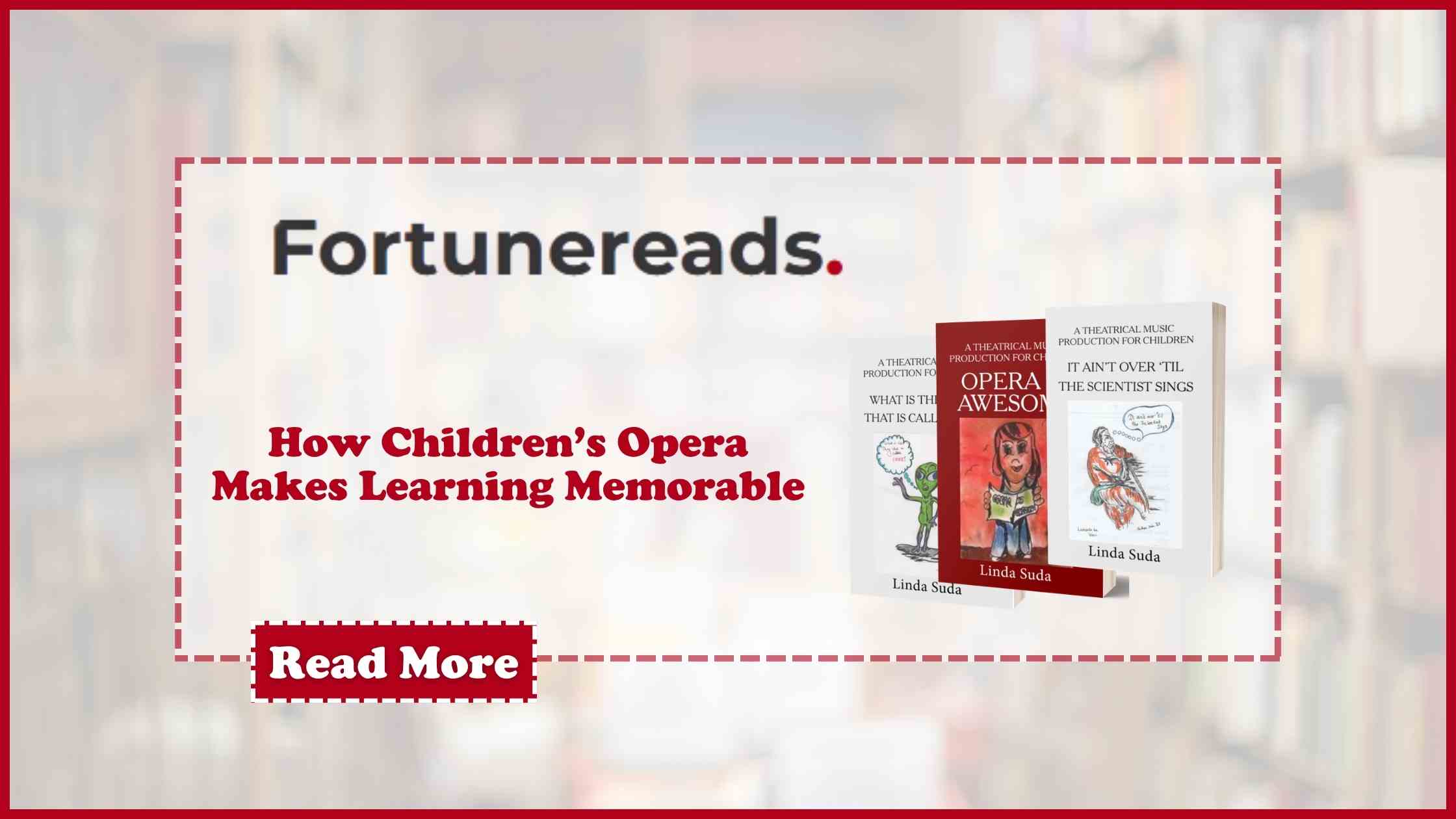
Linda Suda’s theatrical music productions show how opera can be used to teach far more than singing. Opera Is Awesome introduces children to the vocal apparatus through memorable characters representing the diaphragm, vocal cords, resonators, and articulators. Technical information about breathing, posture, diction, and sound production becomes lively and understandable through comedy and music.
It Ain’t Over ’Til the Scientist Sings connects science with the arts. Children meet figures such as George Washington Carver, Marie Curie, Leonardo da Vinci, the Wright brothers, Albert Schweitzer, and Johann Sebastian Bach. Their stories show that discovery does not depend on knowledge alone. Curiosity, imagination, creativity, balance, and persistence also matter.
What Is This Thing That Is Called Love? helps children examine the many forms love can take. Through visiting aliens who are trying to understand human emotion, the production explores friendship, care for animals, love of work, respect for nature, peace, adventure, confidence, and inner beauty. These themes give children a safe and enjoyable way to discuss emotions and relationships.
Performing opera also develops practical skills. Children learn to speak clearly, listen carefully, remember cues, cooperate with others, and perform with confidence. Every singer, dancer, narrator, teacher, and stage helper contributes to the final production. This teaches responsibility and teamwork in a way that feels rewarding.
Linda Suda’s children’s opera books offer schools, teachers, theatre groups, and families a creative approach to education. By combining classical music with accessible dialogue, humour, movement, and meaningful lessons, these productions make learning something children can hear, see, perform, and remember.
Get Your Copy On Amazon: https://www.amazon.com/dp/B0GLTHGZV4/