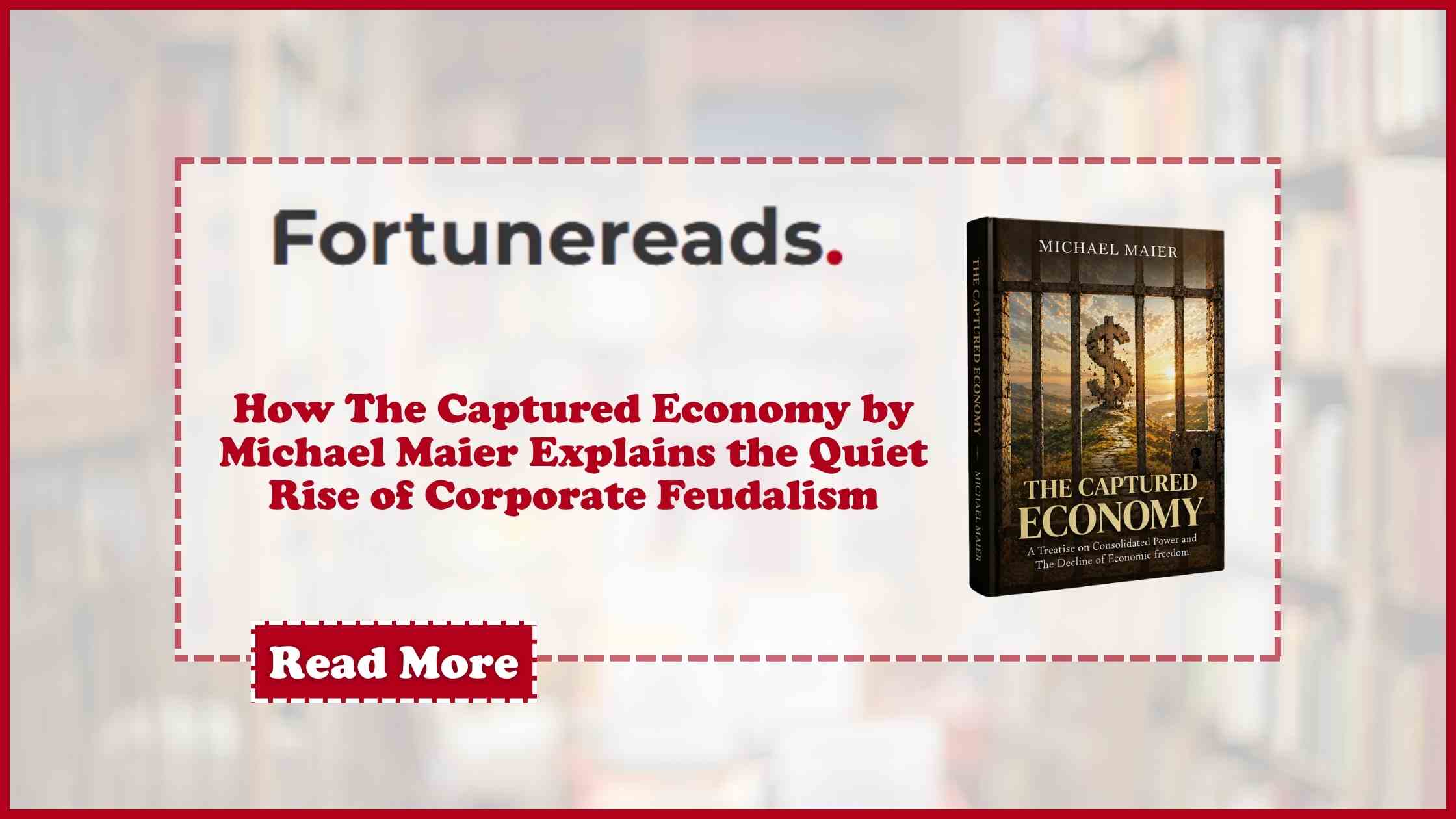
In The Captured Economy: A Treatise on Consolidated Power and The Decline of Economic Freedom, Michael Maier gives readers a sharp and timely look at a problem many people feel but struggle to name. The modern economy still appears active, open, and full of choice, yet beneath the surface, power has been moving into fewer hands. Maier calls attention to this quiet shift and frames it as the rise of corporate feudalism.
This is not a story of sudden collapse. It is a story of drift. Markets still function, stores still open, jobs still exist, and consumers still see rows of options in front of them. But Maier asks an important question: how much real freedom remains when ownership, decision making, hiring power, supply chains, and access are controlled by a shrinking group of institutions?
The strength of The Captured Economy lies in its ability to connect everyday frustration with larger economic structure. People work harder but often feel less secure. Small businesses struggle to compete against giants with deeper capital and stronger legal support. Workers may change jobs, yet find the same wage limits and corporate practices waiting for them. Communities can be shaped by decisions made far away, by people who will never live with the consequences.
Maier’s argument is not that scale is always bad. His concern is what happens when scale becomes dominance. When markets consolidate, alternatives disappear. When alternatives disappear, freedom becomes more symbolic than practical. A person may still have the right to choose, but if every choice leads back to the same small group of powers, that freedom begins to lose substance.
The book also challenges the comforting language often used to defend consolidation. Efficiency, protection, safety, modernisation, and stability can sound harmless, even responsible. Yet Maier shows how those words can hide deeper costs. A system built for maximum efficiency may lose resilience. A regulation designed to protect consumers may also make it harder for smaller competitors to survive. A workplace designed for productivity may gradually reduce workers to data points.
What makes The Captured Economy especially compelling is its moral urgency. Maier does not write only about economics. He writes about agency, responsibility, and the human need for real alternatives. His warning is clear: a society does not need chains to become confined. It only needs enough dependency, enough complexity, and enough acceptance of the idea that no other path is possible.
For readers interested in economic freedom, corporate power, worker dignity, and the future of individual choice, The Captured Economy by Michael Maier offers a bold and thought provoking examination of the system taking shape around us. It is a book for anyone who senses that something has changed in modern economic life and wants language for what that change truly means.