In tightly controlled societies, authority often depends on moral certainty. In early Salem, religious belief shaped not only personal conduct but also governance, justice, and social hierarchy. Leaders were expected to interpret God’s will, enforce moral law, and protect the community from potential threats. This concentration of authority created a system where questioning decisions was seen as disobedience rather than a learning process.
Power in Salem was rarely challenged openly. Ministers, magistrates, and elders held positions that blended spiritual leadership with civic control. Their interpretations of events carried weight because belief was treated as absolute truth. When misfortune occurred, explanations flowed from those in power, leaving little room for alternative understanding.
Moral certainty provided comfort in an uncertain world. It offered clear rules in a time of hardship, illness, and instability. Yet certainty also limited compassion. Once a conclusion was reached, it became difficult to revisit. Doubt was dangerous. Silence was safer.
Authority relied heavily on fear of disorder. Anything that threatened unity was treated as a risk to survival. This mindset justified brutal judgments. Individuals became symbols of perceived danger rather than people with meanings or complexity. The system protected itself by reinforcing rigid boundaries.
Salem’s history shows how easily power becomes self-reinforcing. Authority figures interpreted events in ways that supported existing structures. Challenges were framed as defiance. Mercy was often overshadowed by the need to appear righteous. In this environment, justice became secondary to control.
Understanding this dynamic helps modern readers recognize similar patterns elsewhere. When belief is tied too closely to authority, it resists accountability. When leaders claim moral certainty, they often dismiss empathy. Salem serves as a reminder that unchecked power thrives on fear and unquestioned belief.
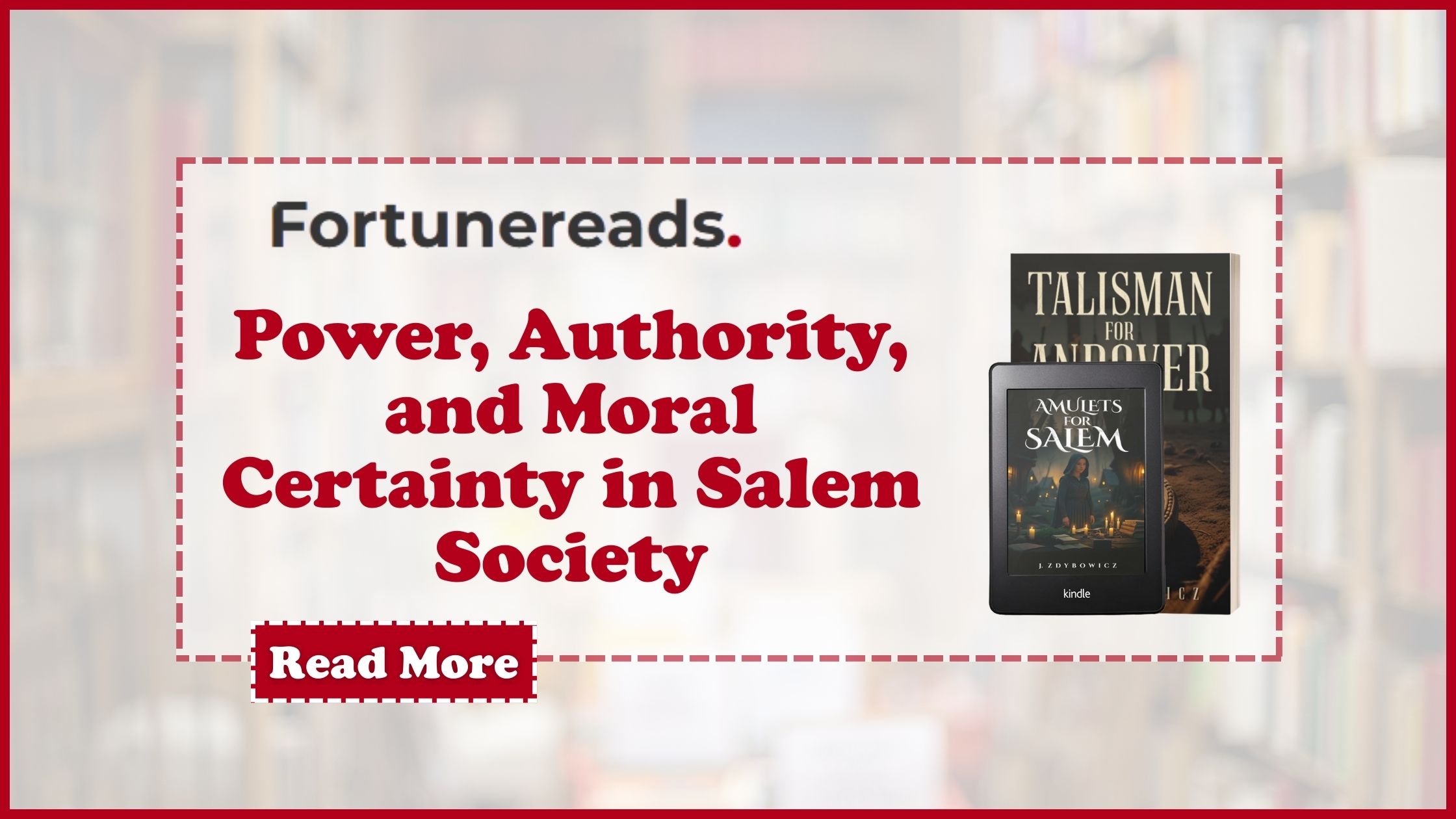
These themes are explored in depth in Amulets for Salem, a historical novel that examines authority, belief, and moral judgment within a Puritan community struggling to maintain control amid fear. This is the story of silent watchwomen, secret spells, and a quiet rebellion against a world that fears what it cannot control. A resistance built not on vengeance, but on healing, ancestral knowledge, and the unbreakable bond between women who refuse to vanish.
Perfect for fans of Ļe Crucible, Ļe Witch, and Ļe Bear and the Nightingale, Ļe Hollow Rebellion is a haunting historical fantasy about the cost of silence, the strength of sisterhood, and the kind of magic that endures in blood, roots, and memory.
Here’s a link for Amulets for Salem: https://www.amazon.com/dp/1969868244/.
Here’s a link for Talisman for Andover: https://www.amazon.com/dp/B0GF4738J6
Examining this period allows readers to reflect on how communities define righteousness and who is allowed to interpret it. It raises important questions about leadership, responsibility, and humility.