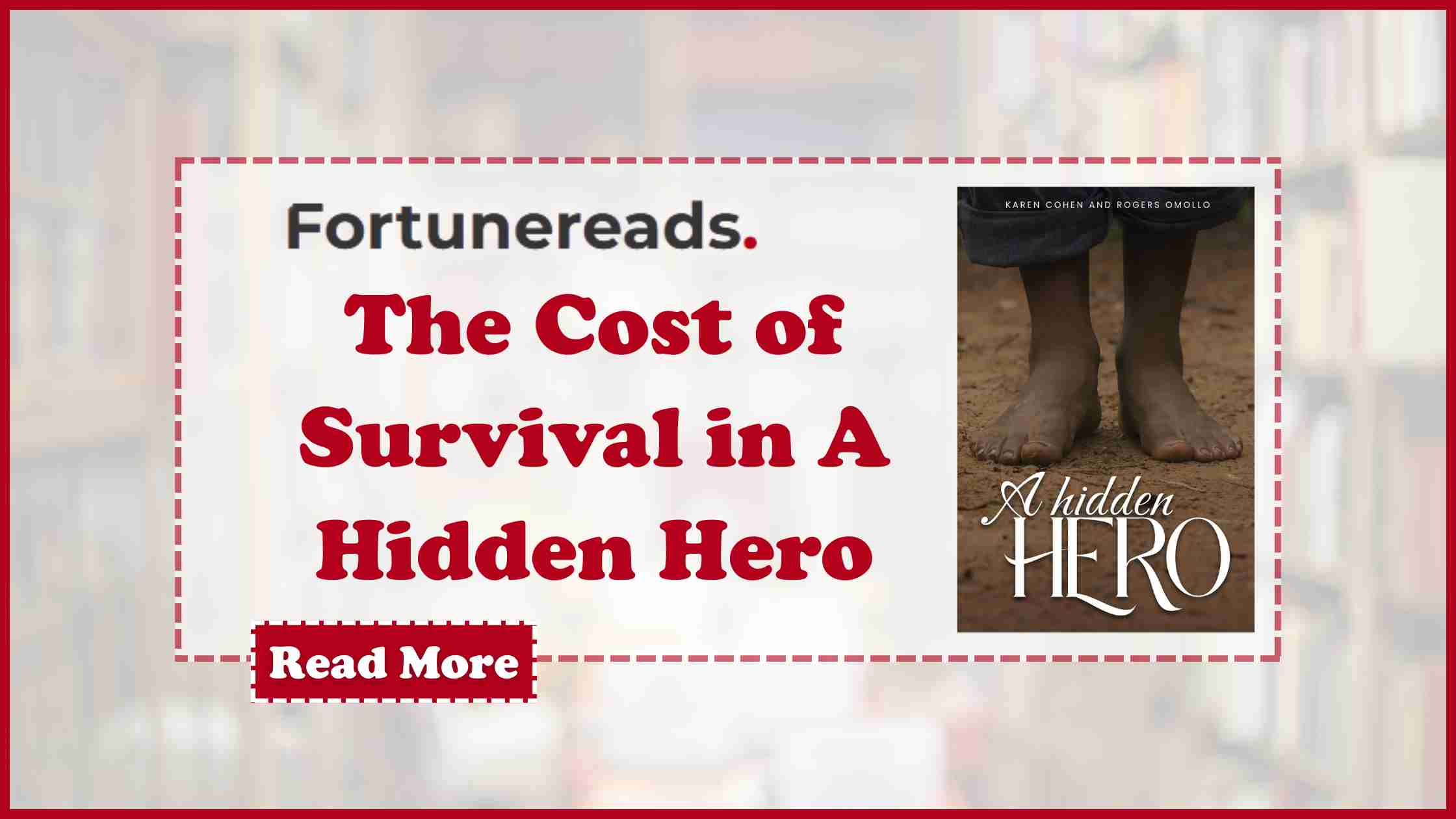
In the memoir A Hidden Hero, Rogers Omollo doesn’t merely recount his life—he etches it onto your soul. One of the most haunting images from his story is not of grand victories or uplifting speeches, but of a solitary boy, crossing an icy river at dawn, his body trembling from cold, his spirit burning with hope.
Each morning, while others slept or prepared for school, young Rogers stepped into the darkness, both literal and symbolic. The river he crossed on foot was not just a physical barrier but a metaphor for the life he was struggling to escape. The mist that rose like a ghostly shroud mirrored the uncertainty that loomed over his future. Yet, day after day, he walked through it.
The harshness of his environment was unforgiving. The sun blazed by noon, baking the soil and the skin of every field worker. Sweat became a second skin, and the smell of sunbaked plants and soaked clothes clung like a memory that wouldn’t fade. By evening, the heat gave way to a biting wind that cut through the fields like a blade, offering no comfort—only the promise of another punishing day.
What is most striking is the absence of food. In Rogers’ world, a proper meal wasn’t a daily right—it was a miracle. He often chewed on sugarcane not for its sweetness, but for survival. On many days, even that wasn’t available. Still, his legs moved, his hands worked, and his soul endured. Hunger didn’t stop him. It became a shadow he worked beside.
Then came the floods. The already-difficult terrain transformed into a swamp. Still, he waded through it—knee-deep, freezing, and soaked. These fields, where he labored for mere dollars a month, demanded more than just physical effort. They asked for the kind of sacrifice that not many see: the willingness to suffer silently, to believe in a better future even when the present offers nothing but pain.
But here’s where A Hidden Hero becomes more than a memoir. These bleak conditions did not defeat Rogers—they defined his strength. Every shivering morning, every sun-scorched hour, and every missed meal carved out a deeper resilience in him. His struggle was not romantic; it was real, raw, and unrelenting. Yet he kept going.
Why? Because somewhere beneath that hunger and hardship lived a vision. He believed that education could change everything—not just for him, but for those who came after him. That belief became his compass. Through this lens, the suffering he endured takes on sacred meaning. It wasn’t just hard work—it was a slow, painful investment in a life of dignity and impact.
Today, Rogers Omollo stands not as a victim of poverty but as a visionary who founded Activate Action, a nonprofit that uplifts youth in under-resourced communities. His current achievements—his university degree, his advocacy work, his leadership—are the fruit of a tree watered by the sweat of those hungry days in the fields.
The rivers he once crossed with numb feet now lie behind him. But he has never forgotten them. And that is what makes A Hidden Hero essential reading. It reminds us that for some, survival is an act of daily defiance, and success is born not in comfort, but in unimaginable sacrifice.
Rogers’ journey teaches us that when food is a luxury and comfort is absent, hard work becomes the currency of hope. And for those willing to pay its price, even rivers can be crossed, and dreams, no matter how distant, can be reached.