The Fighting 69th—an iconic name that reverberates across American military history—has never been just one regiment. It is a symbol of evolving patriotism, flexibility in the face of war, and the relentless spirit of soldiers who carried its banner from 19th-century battlefields to 21st-century deserts.
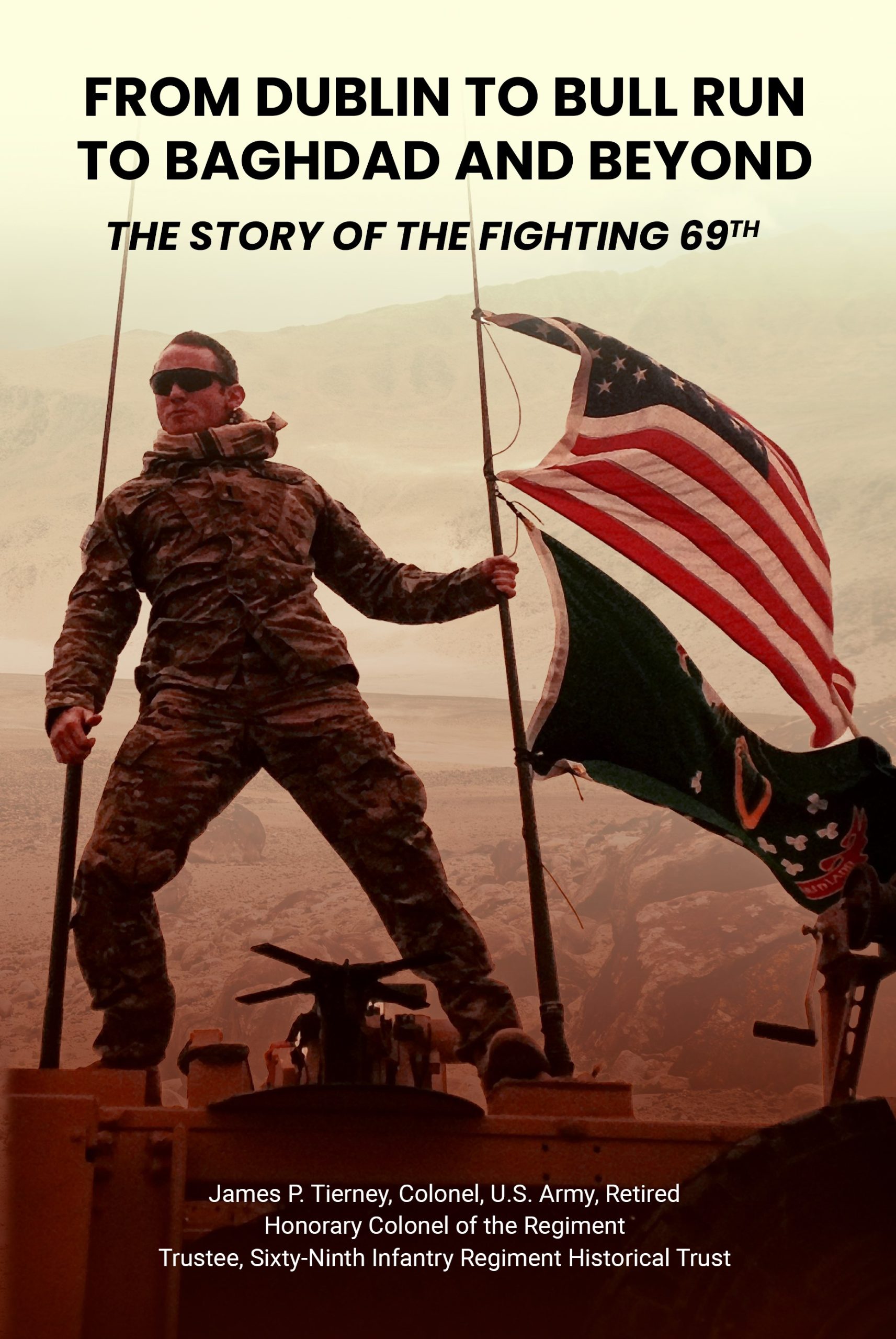
James Tierney’s “From Dublin to Bull Run to Baghdad and Beyond” offers an expansive lens into the transformative journey of this fabled unit. More than just a military chronicle, the book is a testament to the fact that while names and roles may shift, lineage binds generations in service to a common cause.
During World War I and II, the dual-structure of the Fighting 69th reflected the demands of total war. When the National Guard regiment was federalized and deployed, New York quickly formed a State Guard Regiment to fill the vacuum. This wasn’t just ceremonial; these home-based soldiers ensured local stability and readiness during wartime uncertainty. Meanwhile, their federal counterparts—now designated as the 165th Infantry Regiment—fought valiantly in the trenches of Europe and the islands of the Pacific.
The true magic lies in how these multiple identities all tie back to a singular living tradition. The U.S. Army’s way of preserving history isn’t through name alone but through people and continuity of service. This is why every unit that shared the Fighting 69th’s lifeblood—whether it was called the 69th Artillery Regiment, the 69th Air Defense Artillery, or the 182d Infantry Regiment—remains part of its lineage.
After World War II, America’s military structure adapted to the complexities of modern conflict. In wars like Iraq, there was no need to raise an entirely new State Guard Regiment. Instead, a cadre of personnel stayed behind, maintaining operations at home while others served abroad. This decision reflects not just military efficiency but the enduring trust in the 69th’s ability to adapt without sacrificing its legacy.
Tierney’s narrative is powerful in showing how this regiment, through all its transformations, remains united by its core values: honor, bravery, and resilience. He traces their roots back to Irish immigrants in the Civil War, carrying their stories forward to Baghdad and beyond. His work helps us understand that history is not fixed—it moves with the people who inherit it.
The Fighting 69th’s long list of designations is more than just a catalog of names. It is a living map of America’s military evolution, a timeline of shifting warfare needs, regional commitments, and the ever-present call to service. This lineage proves that identity in the military is as much about continuity as it is about adaptation.
In times of peace and war alike, the Fighting 69th continues to be a vital part of New York’s and America’s defense framework. It stands as a reminder that behind every patch and insignia lies a story of dedication—often unsung, but never forgotten.
As readers dive into Tierney’s work, they’ll find themselves not just learning history but experiencing legacy—a thread that connects the past with the present in the heartbeats of the men and women who still wear the number 69 with pride.