Few political leaders of the twentieth century have inspired as much fascination, debate, admiration and criticism as Fidel Castro. To some, he was a revolutionary hero who challenged global power structures and defended national sovereignty. To others, he was one of the most controversial political figures of the modern era. Yet regardless of viewpoint, Fidel Castro remains impossible to ignore in discussions about revolution, socialism, leadership and political ideology.
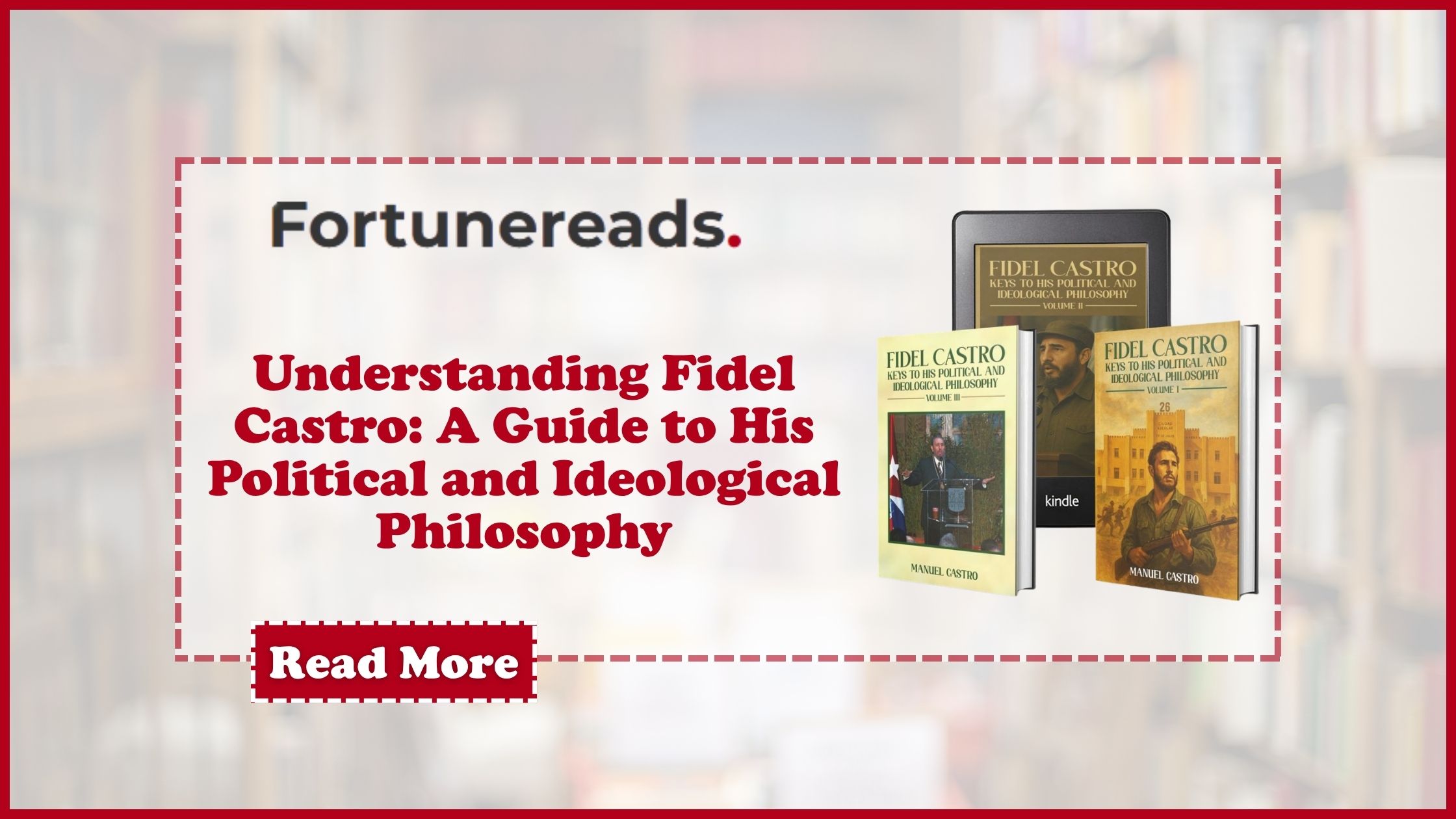
For readers seeking to move beyond headlines and simplistic portrayals, Fidel Castro: Keys to His Political and Ideological Philosophy (Volume I), Fidel Castro: Keys to His Political and Ideological Philosophy (Volume II) and Fidel Castro: Keys to His Political and Ideological Philosophy (Volume III) by Manuel A. Castro provide a detailed and thought-provoking guide to the ideas that shaped Fidel Castro’s political worldview.
This remarkable trilogy is not simply a biography or historical timeline. Instead, it serves as a comprehensive exploration of Fidel Castro’s revolutionary philosophy, political strategy and ideological framework through decades of speeches, reflections and thematic analysis. Manuel Castro organizes Fidel’s thought into hundreds of key concepts, allowing readers to understand how his political vision evolved and why it continues to influence political discussions worldwide.
One of the trilogy’s greatest strengths is its focus on the intellectual foundation of the Cuban Revolution. Fidel Castro consistently argued that revolutions are not sustained by military victories alone. They require political consciousness, education, unity and ideological commitment. Throughout the books, readers see how Castro viewed ideas themselves as powerful instruments capable of transforming societies and resisting external domination.
The trilogy explores major themes that defined Fidel’s political philosophy, including revolution, socialism, nationalism, sovereignty, education, ethics, internationalism, culture, media, democracy and anti-imperialism. Rather than treating these as isolated topics, the books reveal how they were interconnected within Castro’s broader vision for Cuba and the developing world.
Readers also gain insight into Fidel Castro’s extraordinary communication style. His speeches became one of the central tools of the revolutionary movement, blending history, political theory, economics and moral arguments into persuasive narratives designed to educate and mobilize the public. Manuel Castro carefully documents how Fidel used rhetoric not only to defend political policies but also to create a shared sense of identity and purpose.
Another compelling aspect of the trilogy is its global perspective. Fidel Castro was not only a Cuban leader but also an influential figure in international politics during the Cold War and beyond. The books examine his views on colonialism, globalization, inequality, international solidarity and the relationship between powerful and developing nations. These discussions remain relevant today as countries continue to debate economic independence, political sovereignty and global power structures.
What makes Fidel Castro: Keys to His Political and Ideological Philosophy especially valuable is its accessibility to a wide audience. Students of political science, historians, researchers, educators and general readers interested in revolutionary movements will all find meaningful insights within its pages. The thematic organization allows readers to explore specific ideas while also understanding the larger political and philosophical system behind Fidel Castro’s leadership.
At a time when political conversations are often reduced to short headlines and polarized opinions, this trilogy offers readers something deeper: an opportunity to engage seriously with one of the most influential political minds of the twentieth century. It encourages readers to examine the relationship between ideology, leadership, communication and social transformation through the lens of a figure who shaped global political debate for decades.
For anyone interested in the intellectual history of the and the ideas that continue to define its legacy, Manuel Castro’s trilogy provides an ambitious, informative and compelling guide to understanding Fidel Castro’s political and ideological philosophy.