Imagine a world where a single military miscalculation between two powerful nations could trigger a conflict with devastating global consequences. As tensions between the United States and China continue to shape international politics, the possibility of confrontation raises an urgent question: Can diplomacy prevent a crisis before it spirals beyond control?
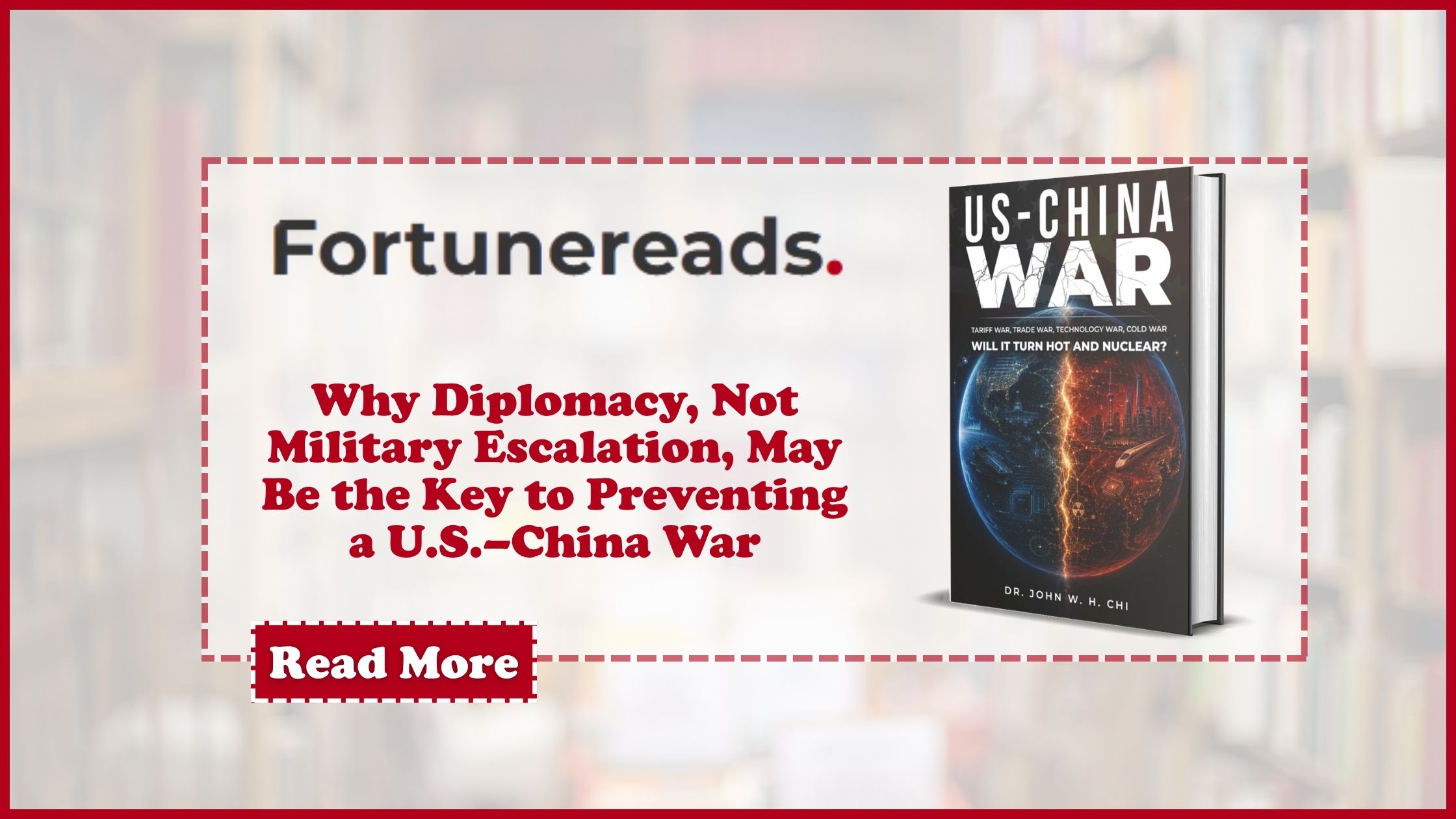
In his thought-provoking book, US-China War: Will It Turn Hot and Nuclear?, Dr. John W. H. Chi examines this unsettling possibility. Through historical analysis, geopolitical commentary and his experience in nuclear engineering, he argues that peaceful coexistence, rather than escalating military competition, offers the most responsible path forward.
How U.S.–China Competition Became a Global Security Concern
The relationship between Washington and Beijing has shifted from economic cooperation to an increasingly complex rivalry.
Trade disputes, technological restrictions, military alliances and disagreements over regional security have created significant friction. Meanwhile, China’s expanding economic influence has challenged the international balance of power that developed after World War II.
Dr. Chi argues that America’s determination to maintain global supremacy has contributed to growing tensions. He questions whether policies meant to contain China’s influence ultimately increase hostility rather than strengthen international security.
His analysis encourages readers to consider whether competition must inevitably produce confrontation or whether mutual understanding can create opportunities for cooperation.
Why Military Escalation Could Have Catastrophic Consequences
Military power has traditionally played a central role in international relations. However, when nuclear-armed nations become involved, the consequences of confrontation can extend far beyond conventional warfare.
Taiwan remains one of the most sensitive issues in U.S.–China relations. Differences over its political status, American security commitments and Beijing’s territorial claims create circumstances in which diplomatic mistakes could have serious consequences.
In US-China War: Will It Turn Hot and Nuclear?, Dr. Chi examines these tensions and warns against policies that could transform political disagreements into armed confrontation.
Drawing upon his professional experience at Westinghouse Electric Corporation, where he worked on nuclear technology and defense-related projects, he emphasizes the extraordinary dangers of nuclear escalation.
For Dr. Chi, a direct military confrontation between the United States and China would offer no meaningful victory if its consequences threatened global peace and human survival.
Can Diplomacy Build a Safer International Future?
Diplomacy does not require nations to abandon their interests or overlook disagreements. Instead, it creates opportunities to manage differences through communication, negotiation and mutual understanding.
Dr. Chi advocates peaceful coexistence and argues that nations should prioritize economic development, international cooperation and their citizens’ well-being.
His book encourages readers to examine how historical grievances, political narratives and strategic mistrust influence international relationships.
Furthermore, he challenges the assumption that one nation’s progress must come at another’s expense. In his view, cooperation between major powers could create greater opportunities for shared prosperity.
Choosing Dialogue Before Confrontation Becomes Unavoidable
Perhaps the book’s most important message is that preventing war requires conscious political choices.
Dr. Chi questions whether enormous military expenditures and confrontational foreign policies genuinely serve ordinary people. He encourages greater attention to diplomacy, social development and the peaceful resolution of international disputes.
Rather than presenting global rivalry as unavoidable, US-China War: Will It Turn Hot and Nuclear? invites readers to reconsider the decisions that could determine humanity’s future.
At a time when international tensions remain a serious concern, his message highlights the importance of understanding competing perspectives before disagreements become irreversible conflicts.
Can diplomacy succeed where military intimidation risks failure?
Explore Dr. John W. H. Chi’s perspective on international rivalry, nuclear danger and the pursuit of peace in US-China War: Will It Turn Hot and Nuclear?
Read the book and discover why peaceful coexistence matters. Get your copy on Amazon: https://www.amazon.com/dp/B0HLR9TXH9/